Online Reporter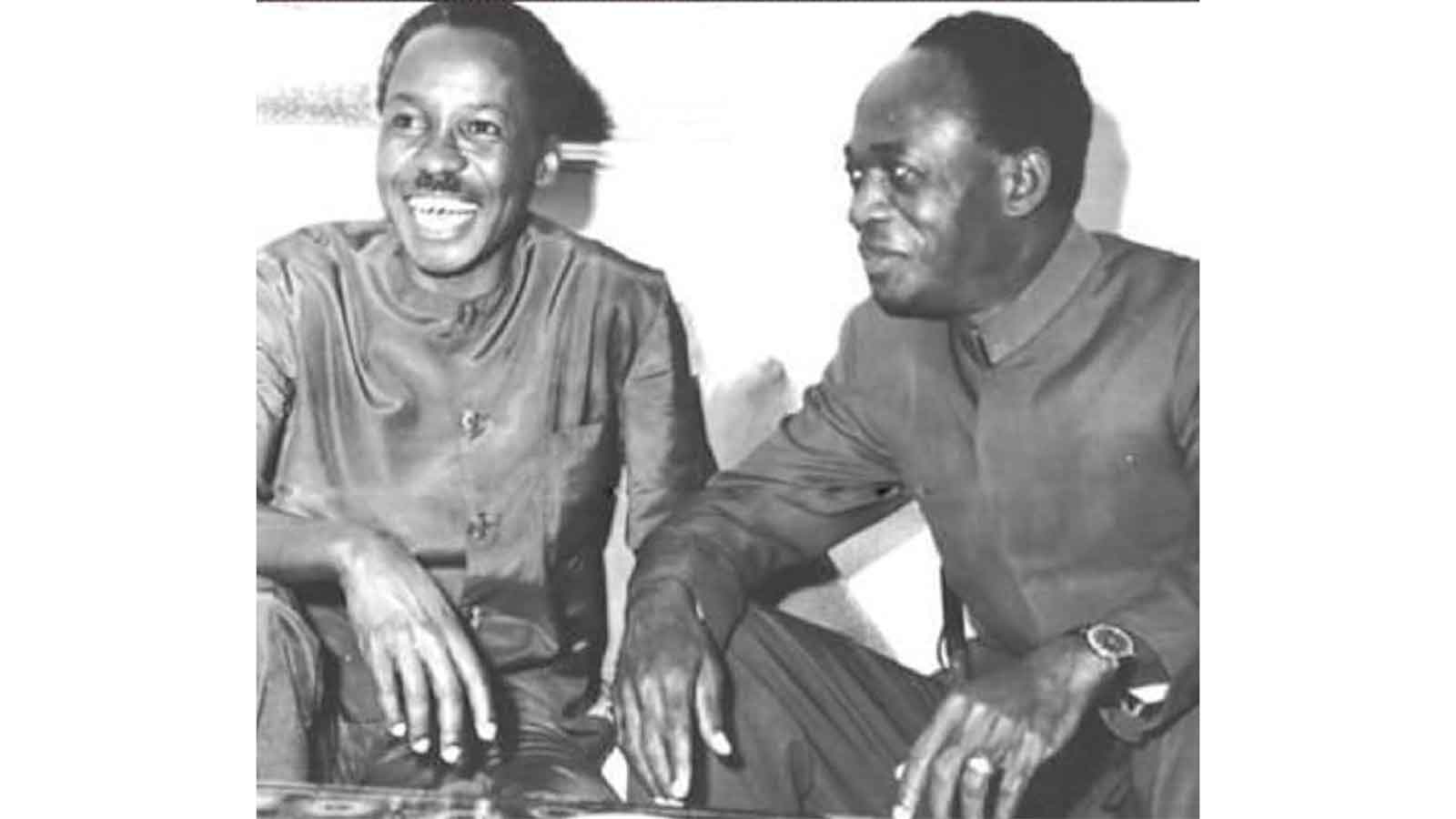
Gibson Nyikadzino-Zimpapers Politics Hub
SOCIALISM is an old idea that refuses to die!
States live by it and societies hold it dearly because it is an idea that people curate for their society to represent their values without obfuscation. In every epoch of a society or nation’s existence, the need to have a collective conscience, reducing class divisions, ensuring social and economic equality and fostering community cooperation is attractive.
The Constitutional Amendment Act No.3 is one step to the return to ideological innocence, giving priority to the socialist egalitarianist reflection as represented by the red star on the national flag. At this moment, the CAA3 is the mark of a trajectory to uphold socialist usefulness as the successive and changing political, social and economic dynamics press for that.
Socialism is an idea that will never die and as such, Zimbabweans at the same time need to reflect through deeds, that they are able to live through the socialist rubrics as identified on the national emblem, the flag, that all citizens honour and respect.
It is essential to modify and domesticate aspects of socialism as the Chinese have done by giving identity to “socialism with Chinese characteristics”. In the Islamic world, some leaders have implemented socialism based on the idea of Islamic resurgence which has been referred to as the second indigenisation in which people are able to do their own, with their own and informed by their own.
If China, the Asian tigers of Hong Kong, Singapore, South Korea, Taiwan and countries in the Arab world have their versions of economic and political recreations that relate with their environment.
Should Zimbabwe not have its own?
An Africa or Zimbabwe that forgets the teachings, ideas and philosophies of Ghana’s Kwame Nkrumah, Guinea’s Sékou Touré, Guinea Bissau’s Amilcar Cabral and Tanzania’s Julius Nyerere is one that ought to work hard and re-orient itself around African identity politics, economic and cultural living. The praxis of Africa’s social, political and economic development is one that has to be informed by the actions and ideas leaning towards Africanism.
In explaining African socialism, Nkrumah came up with a philosophy called “consciencism”, Touré adopted “communaucracy” and Nyerere spoke of the “ujamaa”. On the other hand, Cabral presented himself as a developmental nationalist and humanist who believed that in socialist Africa, political leaders should deliver the political benefits the people want in order to enhance their continuity.
It was Cabral who also intimated that there are only two pathways that can be taken by any independent African state, that is a return to imperialist domination or taking the socialist route, to which he recommends that latter. Socialism is good for Zimbabwe because it is amenable to the pre-colonial social set-up and norms. It is not only to be understood as socialism, but also, “social living”.
From these African philosophical giants, the binding denominator from their philosophies was that African socialism exists in the traditional communalistic African society and that its expresses the fraternity and solidarity inherent in traditional Africa where individual interests are always subordinated to communal interests.
It is, therefore, difficult to adopt the capitalist philosophy for it is irreconcilable with Africa; hence most of the challenges that post-independent African states continue facing are a result of trying to implement capitalist and liberal democratic frameworks in an environment that has neither been capitalist nor practiced liberal democracy.
It is in this framework that Nkrumah, Touré, Cabral and Nyerere’s philosophies give insights to the black man on the importance of ideal thoughts and practices that are implementable in Africa’s context and born out of our social milieu.
Reconditioning the cosmopolitan man
While at state level there are signs of progress that Zimbabwe’s expanding principles are providing leadership to other nations to negate the imperialist claws as seen with the cooperation being done by Mali, Guinea and Burkina Faso to resist French imperialism, at individual level the cosmopolitan citizen needs reconditioning.
There are many African citizens, Zimbabweans too, who are departing from their ancestry and philosophical connection because of enticements induced by the capitalist and liberal democratic advances. Some citizens are slowly becoming the Dead Sea. They can no longer argue for the value and importance of their culture as they are always consuming foreign ideas that excite their imaginations but do not initiate them into liberating pragmatism.
If both the young and older generations are not ideologised in the framework of identifying who they are as Africans, fashioning the legacy they want for their communities in the scope of African socialism, the repercussions and consequences maybe dire as they may come unanticipated.
With CAA3, it is ideal for government to use the institutions available to help recreate a new Zimbabwean citizen different from the one who lived in the colonial times, subjugated by the white man. The institutions that serve to do this, that is the school, church, media and family among others need to help make a great trek to the source of the founding principles and even recreate the idea of what democracy is in our context, formulated and implemented in the local framework.
This will help in articulating the cultural, political and economic assertiveness of Zimbabwe and do away with elements of divide and rule prominent in the Western nomenclature.
Growth through egalitarianism
Growth and economic prosperity can be acquired using African socialist economic models. As the East Asian countries have done, infusing Confucianism with their traditional values, Zimbabwe is rethinking that in terms of development, modernisation and industrialisation.
The alternatives that are there to develop include the rejection of using Western frameworks, accepting them and borrowing some and overlooking some. It has to be highlighted that the national cake is huge and the thrust of government is to ensure that everyone benefits from it.
When citizens defy the elements that make them who they are and shape their values, it can be attributed to their in-access to a share of the national cake. According to one’s ability, government needs to continue its deliberate policies of allocating resources to the people, especially as cooperatives, in order that no individual should feel more important than others.
On the other hand, if private entities are coming through, their usefulness should be tolerated when they fit in the goals of state. It is also important to let people, with government’s help, continue assume control of the means of production which were deprived them by the colonial system. This will help in order to understand the circumstances that influence how Zimbabwe develops and the conditions of our people.
From this point of view, the emancipation of the African continent through African-socialist philosophy means the emancipation of man.
Zimbabweans, remember we are one. This is homeland!