Online Reporter
Nqobile Tshili, [email protected]
CABINET has approved a 10-point national priorities guideline to drive the country towards an upper-middle-income economy by 2030, as it accelerates efforts under the second phase of the National Development Strategy (NDS2).
The second phase builds on the milestones achieved under NDS1, which recorded major successes despite unforeseen challenges such as Covid-19, El Niño-induced droughts, and disruptive geopolitical tensions.
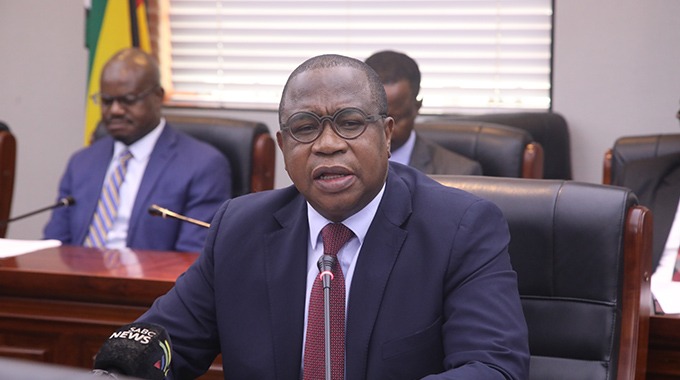
Finance, Economic Development and Investment Promotion Minister, Professor Mthuli Ncube, presented the 10-point plan to Cabinet as he outlined the national priorities for NDS2.
The 10-point plan includes macroeconomic stability, deepening the financial sector, as well as fostering inclusive economic growth and structural transformation, said Information, Publicity and Broadcasting Services Minister, Dr Jenfan Muswere, in a post-Cabinet media briefing yesterday.
He said the approved national priorities would serve as a driving force towards the attainment of Vision 2030. NDS2 (2026-2030) is the successor to NDS1, whose implementation concludes at the end of this year.
“As such, the NDS2: 2026-2030 will be the Second Republic’s second five-year Medium-Term Plan for achieving the country’s Vision 2030,” said Dr Muswere.
“Government has now adopted 10 national priorities that will guide and underpin the formulation and implementation of the NDS2 blueprint as follows: macroeconomic stability and financial sector deepening, inclusive economic growth and structural transformation, infrastructural development, housing, and food security, climate resilience, and environmental protection,” said Dr Muswere.
Other priorities include technology, innovation, and human capital development, job creation, youth development, the creative industry, and culture.
Dr Muswere added that NDS2 will also focus on social development and social protection, regional development and inclusivity through devolution and decentralisation, as well as strengthening the country’s image-building, international diplomacy, trade, good governance, institution building, and security.
He stated that the Government would conduct an inclusive consultation process before the strategy’s launch in October.
“The streamlined national priorities are designed to optimise resource allocation and strengthen sectoral coordination for the effective and impactful delivery of services to the citizenry,” he said.
“A broad-based consultative process will support Thematic Working Group re-alignment across the different socio-economic sectors, leading to the drafting and launch of NDS2 by October 2025,” said Dr Muswere.
He also mentioned that Cabinet had approved the compendium for the first 100-Day Cycle Projects for 2025, which commenced on February 3 and are expected to be completed by 13 May.
The Government targets implementing 236 projects spread across all of the country’s provinces.
“The cycle covers 236 projects, involving ministries and the Rural Infrastructure Development Agency (RIDA). Of the total, 33 projects are being implemented nationwide, while 10 projects will be implemented outside Zimbabwe,” said Dr Muswere.
“Some of the projects are replicated in more than one province. The nation is informed that the projects were selected based on their potential contribution to the aspirations of Vision 2030, primarily focusing on improving the livelihoods of citizens in all communities,” said Dr Muswere.
He added that the projects are distributed according to the 14 thematic areas under NDS1 and are expected to unlock socio-economic growth, with 43 of them falling under the infrastructure and utilities pillar. Of these, 25 projects are being implemented under the devolution and decentralisation thematic area, with Binga in Matabeleland North dominating the transformative projects.
“Eleven projects contribute to the Binga Development Initiative, covering the construction of a new clinic, completion of new registry offices, and installation of solar energy infrastructure in clinics and registry offices,” said Dr Muswere.
“Additionally, 62 projects across the selected 14 ministries, departments, and agencies are aligned with the 21st National People’s Conference Resolutions.
“To strengthen internal monitoring by the respective ministries, a regular tracking schedule will be followed, while progress as of day 50 will be publicised, in line with standing practice. Site visits to selected projects will be conducted to validate progress across the country,” he said.
Dr Muswere also noted that following the December 2024 approval of the Presidential Solarisation Programme, significant progress has been made towards providing solar power to 200 000 households.
He stated that President Mnangagwa will soon launch the Presidential Solarisation Programme to mark the official commencement of the first year of the programme, with a date to be advised.
“Guidelines for the implementation of the programme have been established, with stakeholder mapping and identification of beneficiaries in villages across the eight rural provinces already completed,” said Dr Muswere.
“Community mobilisation and awareness processes, spearheaded by the Ministers of State for Provincial Affairs and Devolution, have also been completed.
“Graduates of the Youth Service in Zimbabwe, with assistance from experts from the Harare Institute of Technology and the Rural Electrification Agency, will install a total of 200 000 solar kits in the identified households,” said Dr Muswere.