Online Reporter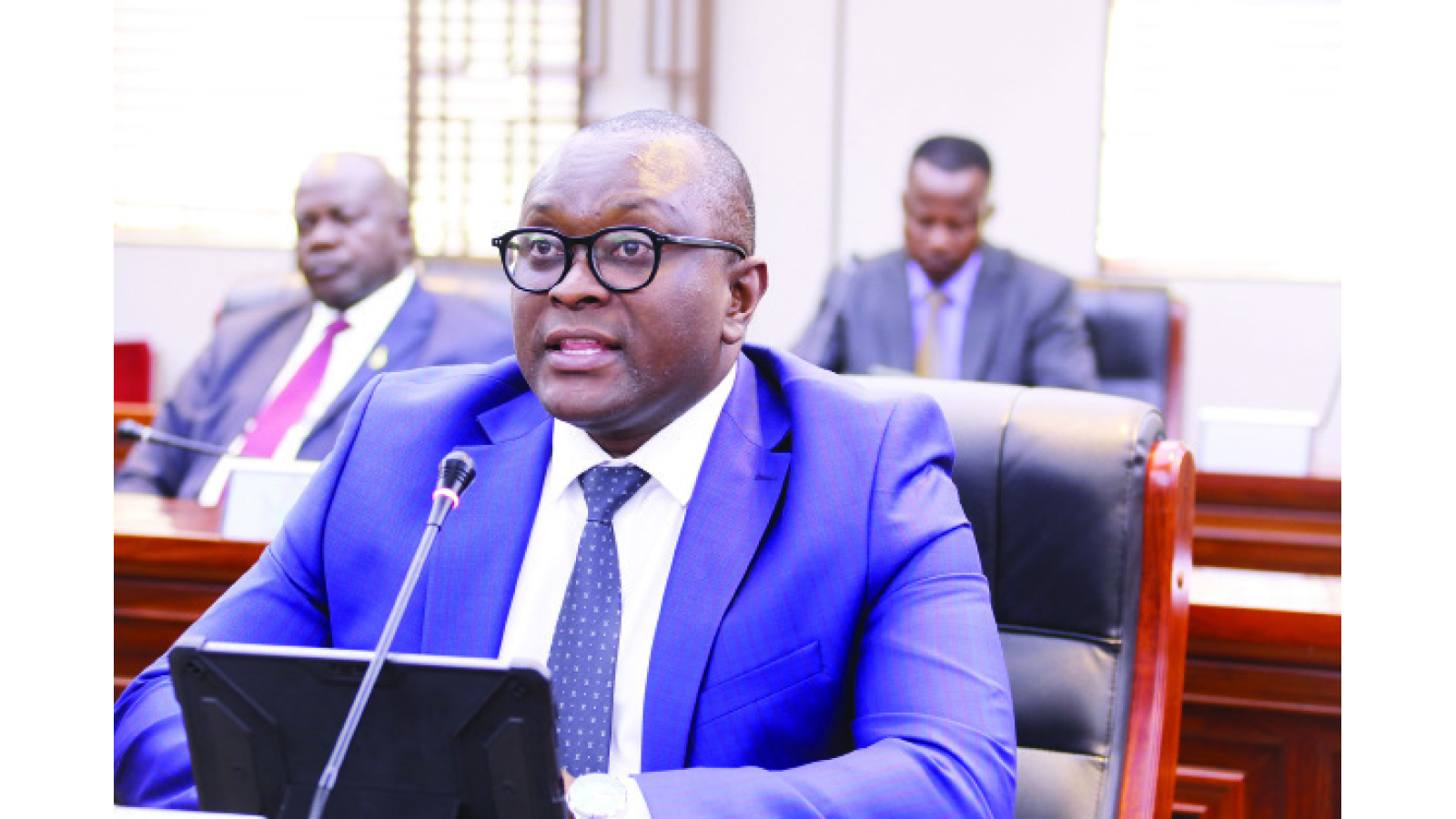
We publish here the 24th post-Cabinet media briefing presented by Information, Publicity and Broadcasting Services Minister, Dr Jenfan Muswere, in Harare yesterday.
The Cabinet of Zimbabwe has approved the National Youth Empowerment Strategy for 2026-2030, which seeks to create an environment that encourages young people to participate in the formal economy.
The strategy will be used by ministries, Government agencies, local authorities, the private sector, and development partners to start programmes and projects that empower young people through job creation and entrepreneurship.
The National Youth Empowerment Strategy will also function as a tool for implementing the National Development Strategy 2 by incorporating youth-related issues into the national development agenda.
The strategy is based on national legal frameworks that aim to promote youth empowerment, such as the Constitution of Zimbabwe, the Zimbabwe Youth Council Act, and the National Youth Policy (2021).
It was developed following extensive consultations with the private sector, development partners, and young people to address the challenges faced by youth.
The Government is dedicated to empowering this demographic by ensuring their access to education, training, political participation, economic opportunities, recreational facilities, and protection from harmful practices. The strategy recognises both in-school and out-of-school youth.
The National Youth Empowerment Strategy is built on five pillars:
Economic Empowerment
Technology and Digital Transformation
Education and Skills Development
Governance
Health and Wellbeing
Additionally, there are three cross-cutting pillars:
Climate Change Adaptation and Mitigation
Gender Equality and Inclusivity
Governance, Coordination and Partnerships
The strategy includes a monitoring and evaluation framework, an implementation matrix, and a communication plan. The monitoring and evaluation plan will be used to assess the performance of the programs, policies, and projects that support the strategy. Young people will be involved in every stage of the monitoring and evaluation process.
The communication plan will use local languages and culturally-relevant content to raise awareness, engage stakeholders, and ensure transparency.
A resource needs and mobilisation plan will identify and mobilise the necessary financial, human, and material resources for youth initiatives, including those for marginalised youth.
PROPOSED HOSTING OF THE 7TH INTER-GENERATIONAL RETREAT OF THE AFRICAN WOMEN LEADERS NETWORK (AWLN) FROM SEPTEMBER 5-7, 2025 AT THE RAINBOW TOWERS, HARARE
Cabinet has approved Zimbabwe’s hosting of the 7th Inter-Generational Retreat of the African Women Leaders Network (AWLN).
The AWLN is a joint initiative of the African Union (AU) and the United Nations (UN) dedicated to increasing women’s participation in leadership.
The retreat provides a platform to formally acknowledge Zimbabwe’s support for women’s leadership, which is demonstrated by constitutional requirements for equal rights and opportunities for women.
The retreat aims to promote intergenerational dialogue between women leaders and young women, and to share experiences and strategies for advancing gender equality and women’s empowerment.
It also seeks to strengthen networks among African women leaders to improve collaboration on policy advocacy, governance, and peacebuilding.
The retreat will also develop actionable plans to address new challenges affecting women’s leadership and empowerment in Africa.
Hosting the event will enhance the country’s visibility as a champion of gender equality, positioning Zimbabwe as a thought leader on the continent.
It will also showcase Zimbabwe’s progress on gender equality, potentially attracting partnerships and investments from international development organisations and boosting local economic activities in the tourism and hospitality sectors.
REPORTS ON PRIORITY PROJECTS FOR THE 2ND 100-DAY CYCLE OF 2025
Under the “Human Capital Development” pillar of National Development Strategy 1, the Primary and Secondary Education Minister Torerayi Moyo reported the following achievements:
Registration of 60 schools across the country.
Construction of administration blocks is progressing at RioZim High School in Chegutu, Mashonaland West Province, and Globe and Phoenix Primary School in Kwekwe, Midlands Province.
Upgrading of Kundayi High School in Mazowe, Mashonaland Central Province, has been completed and awaits commissioning.
Construction works are at an advanced stage at Jerera Primary School in Zaka, Masvingo Province; Tsanzaguru Primary School in Makoni and Beaulieu Toronto Primary School in Mutasa, Manicaland Province; Gangarahwe Primary School in Hurungwe and Kuredza Primary School in Sanyati, Mashonaland West Province.
Construction of laboratories is at an advanced stage at several schools, including St Francis Tshitshi and Mtetengwe Primary School in Matabeleland South Province; Ingwalo Secondary School in Bulawayo; Nembudziya Government Secondary School in Midlands Province; Dinhe Primary School in Masvingo Province; and AMR Convent Secondary School and Don Bosco Secondary School in Matabeleland North Province.
Construction of boarding facilities has been completed at Collen Bawn Secondary School in Gwanda, Matabeleland South Province.
Construction of boarding facilities is nearing completion at Chibuwe High School in Chipinge, Manicaland Province; Marist Brothers High School in Hwange, Tshabanda High School, and Khumbula High School in Tsholotsho, Matabeleland North Province.
Skills Audit and Development Minister Paul Mavima also highlighted achievements under the “Human Capital Development” pillar:
A training needs assessment was conducted in five wards in Binga District, Matabeleland North Province.
A review of skills development policies was undertaken, and the findings will be presented to Cabinet later.
A framework for a digital database of retired professionals and experts has been developed, and the information is being populated.
The training of Vocational Training Centre (VTC) staff in digital skills is currently underway in Harare, Mutare, Masvingo, Gweru and Bulawayo.
Under the “Youth, Sport and Culture” pillar, the acting Minister of Sport, Recreation, Arts and Culture reported the following:
Site preparation for the Oliver Juru Multipurpose Court in Goromonzi District, Mashonaland East Province, is in progress.
Refurbishment work at the National Sports Stadium in Harare is underway, with the installation of bucket seats and a new draining system for the turf completed.
Refurbishment of the wrestling ring in Warren Park, Harare, is also underway.
Other ongoing projects include the establishment of Shangwe Culture Centre in Gokwe, Midlands Province; the Amabhiza Community-based Intangible Cultural Heritage Inventory in Bulilima, Matabeleland South Province; refurbishment of the National Gallery of Zimbabwe in Harare; and the development of the Zezuru Cultural Village in Murehwa, Mashonaland East Province.
Under the “Environmental Protection, Climate Resilience and Natural Resources Management” pillar, Environment, Climate and Wildlife Minister Evelyn Ndlovu highlighted the following:
The rehabilitation of 50 hectares under the Malilangombe wetland and restroration and protection project in Matobo District, Matabeleland South Province, is 95 percent complete.
The establishment of a 1-hectare orchard at Inyagui GZI Primary School in Goromonzi, Mashonaland East, is 85 percent complete.
Ongoing projects include the fencing of Chipinge Safari Game in Manicaland Province; the rehabilitation of a 2-hectare wetland at Mazembe wetland restoration and protection project in Midlands Province; and the construction of the Chitindiva nursery office in Hurungwe, Mashonaland West Province.
PRINCIPLES FOR THE AMENDMENT OF THE ZIMBABWE NATIONAL FAMILY PLANNING COUNCIL ACT [CHAPTER 15:11]
Cabinet approved the principles for the amendment of the Zimbabwe National Family Planning Council Act [Chapter 15:11].
The review aims to enhance the Act’s effectiveness by aligning it with current realities in reproductive health and family planning, particularly the needs of adolescents and youth.
These current realities include evolving health needs, demographic issues, updated policies that reflect the unique reproductive health needs of different communities, gender equality, rights-based approaches, technological advancements, increased demand for services, male involvement in sexual and reproductive health, and the rise of non-communicable diseases.
The amendments will also harmonise the Act with global, regional, and national commitments, such as the Sustainable Development Goals (SDGs), the International Conference on Population and Development (ICPD), Family Planning 2030, Vision 2030, and the Public Entities Corporate Governance Act.
This will strengthen governance, accountability, and quality assurance in service delivery.
REPORT ON HIS EXCELLENCY THE PRESIDENT’S VISIT TO MOZAMBIQUE ON THE OCCASION OF THE HAND-OVER OF ZIMAID DONATION
President Mnangagwa visited Chimoio, Mozambique, on August 9, 2025, to officially hand over humanitarian assistance to Mozambique following Tropical Cyclone Chido.
In his remarks, President Mnangagwa reaffirmed the historical solidarity between the two countries, which is rooted in the liberation struggle and strengthened through cooperation during times of adversity.
Mozambican President Daniel Chapo, expressed gratitude for Zimbabwe’s support, noting that Zimbabwe had also donated grain to victims of terrorist activities in Cabo Delgado in 2022.
The two leaders also held bilateral discussions to strengthen cooperation between their nations.