Oliver Kazunga
Senior Business Reporter
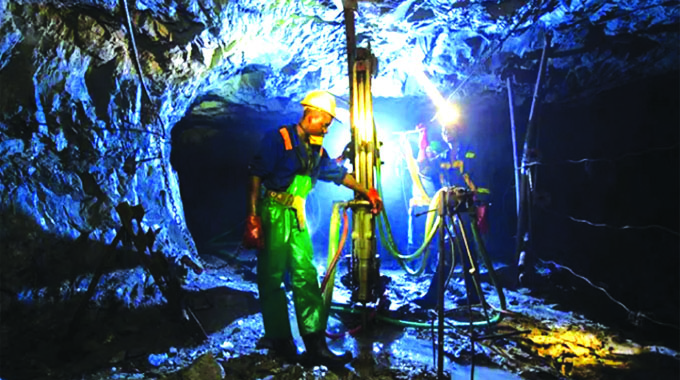
CABINET has agreed that a Responsible Mining Audit (RMA) be conducted across the country over the next two months to ensure that all mining activities are undertaken within the confines of Zimbabwe’s laws, a Cabinet minister said.
The mining industry is a key sector for Zimbabwe and is expected to generate US$12 billion in exports by the end of 2023 following the launch of the strategic roadmap by the Government in 2019.
Prior to the launch of the US$12 billion mining industry strategy in 2018, mining was a US$2,7 billion economy but has over the years registered significant growth.
The positive growth trajectory is underpinned by expansion programmes being undertaken by existing mines, re-opening of closed mines and the emergence of new mines in line with the Government’s vision of attaining an upper-middle-income economy status by 2030.
So far, the mining sector accounts for 73 percent of foreign direct investment, 83 percent of exports, 19 percent of Government revenue, 2 percent of formal employment and 11 percent of individual incomes.
In a post-Cabinet media briefing on Wednesday, Information, Publicity and Broadcasting Services Minister Monica Mutsvangwa said; “Cabinet agreed that for a period of two months, May and June 2023, a Responsible Mining Audit will be conducted countrywide.
“The objective of the Initiative is to ensure that all mining operations are conducted in accordance with the country’s laws.”
The Ministry of Mines and Mining Development will coordinate the audit which is set to start on May 10, 2023.
The audit team will comprise meambers from the ministries of Mines and Mining Development; Lands, Agriculture, Fisheries, Water and Rural Development; Local Government and Public Works; Energy and Power Development; Environment, Climate, Tourism and Hospitality Industry, as well as Government departments and agencies such as the Zimbabwe Republic Police, Environmental Management Agency, the Zimbabwe Revenue Authority and the Department of Immigration.
Meanwhile, Cabinet has approved the Lithium Ore Policy and a Statutory Instrument will be issued on the commodity based on principles that any individual or entity owning a lithium concession can mine the ores for either processing at its own approved processing plant, or for sale to those with approved processing plants locally.
In addition, any individual and or entity wishing to process lithium ores will be required to construct an approved processing plant locally; ore movement permits for lithium ores will only be issued where such ores are destined for a local approved processing plant; lithium ores can only be stored at the mining site where such ores were mined, or at an approved local processing plant.
Any entity will require a Lithium Ore Purchase Licence to buy ores from miners and a local approved processing plant will be a condition for obtaining the licence.
All players in the lithium sector, whether miners or holders of approved processing plant, shall submit a summary of monthly reconciliations of ore movements to the Ministry of Mines and Mining Development; and for any material to qualify as a concentrate for approval for export, it shall have to meet the minimum set technical specifications and the minimum selling price as set by the Minerals Marketing Corporation of Zimbabwe on a regular basis.