Online Reporter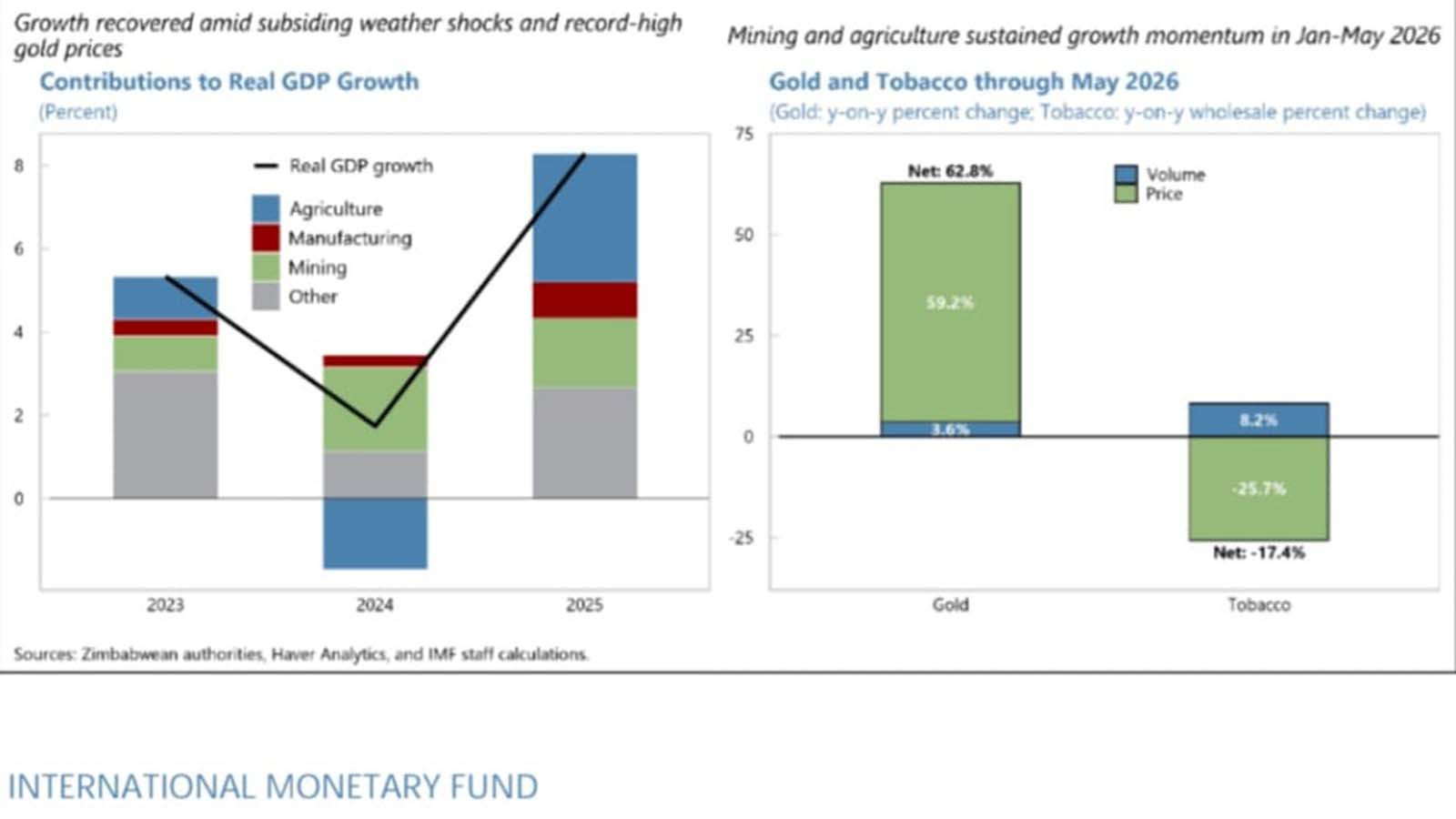
Business Reporter
IMF Management has approved the completion of the first review under Zimbabwe’s 10-month Staff-Monitored Programme (SMP), following strong programme implementation through end-March 2026.
All five quantitative targets were met, including those on the primary budget balance, net international reserves, Reserve Bank of Zimbabwe credit to the non-financial public sector, external borrowing, and monetary base growth. However, the indicative target on protected social and priority spending was missed, reflecting under-execution in key programmes including the Basic Education Assistance Module, the Pfumvudza/Intwasa agricultural scheme, and the Social Protection Management Information System.
Zimbabwe’s economy grew by 8.3 percent in 2025, up from 1.7 percent in 2024, supported by improved agricultural production, robust mining activity, and favourable gold prices. Growth momentum continued into early 2026. Inflation has remained low, with annual CPI inflation reaching 3.2 percent in July, reflecting tight monetary conditions and relative exchange rate stability. The IMF projects growth at 5 percent in 2026 and 4.2 percent over the medium term, with inflation expected to remain in single digits under tight policies. The current account surplus is projected to narrow but remain robust at 3.2 percent of GDP this year.
The fiscal primary balance through end-March exceeded programme targets by about US$320 million (0.5 percent of GDP), supported by robust revenue collection. However, spending exceeded programme targets by 0.4 percent of GDP, mainly in transfers and subsidies. The programme supports the authorities’ commitment to maintain spending within the approved 2026 National Budget, while saving additional revenues to build buffers for potential food-security needs in 2027. To address fiscal risks, staff proposed adding a new quarterly floor on government deposits and a ceiling on gold-incentive payments of US$300 million. The authorities also committed to reviewing regulations under the Public Debt Management Act governing liability-management operations, and to ensuring domestic arrears are cleared through budget allocations after verification and audit.
The Reserve Bank of Zimbabwe maintained a tight monetary policy stance through contained money growth. The exchange rate market has remained stable, with the Willing-Buyer-Willing-Seller ZiG-USD exchange rate appreciating slightly through Q1 before weakening more recently. The parallel market premium fell marginally from around 19 percent at the beginning of the year to around 16 percent in the latest data. Staff welcomed the operationalisation of the ZiG-denominated term deposit facility as a step toward indirect monetary policy instruments, and recommended phasing out non-negotiable certificates of deposit as reliance on market-based tools increases.
Zimbabwe’s external public debt is assessed as unsustainable and in distress, with total public and publicly guaranteed debt estimated at US$22.7 billion (38 percent of GDP) at end-2025. The successful completion of the first review marks an important step in consolidating recent stabilisation gains and strengthening Zimbabwe’s track record of policy implementation in support of arrears clearance, debt restructuring, and re-engagement with the international community.
IMF Management approved the review on July 27, 2026. The remaining test dates under the 10-month SMP are set for end-June and end-September 2026.