Online Reporter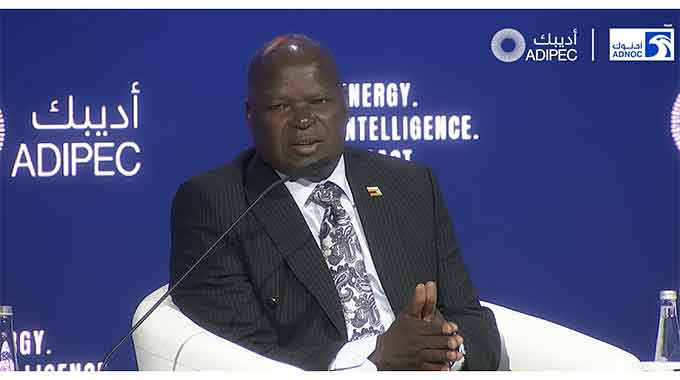
Zvamaida Murwira Senior Reporter
CABINET has approved the restructuring of the Zesa Group, which will consolidate electricity generation, transmission and distribution entities into a leaner, vertically integrated structure to improve efficiency and strengthen the power utility’s viability.
The move will also result in the rationalisation of excess workers through retirement and retrenchment, with the exercise to be funded through in-ternally-mobilised resources.
The development was announced at a post-Cabinet briefing in Harare yesterday, chaired by Women Affairs, Community, Small and Medium En-terprises Development Minister Senator Monica Mutsvangwa.
“As part of ongoing efforts to ensure energy self-sufficiency under Vision 2030 targets, the Minister of Energy and Power Development, Honour-able July Moyo, presented the Status Report on the
Restructuring and Re-organisation of the ZESA Group, which was approved by Cabinet,” said Sen Mutsvangwa.
“The nation is advised that, following the placement of the ZESA Group shareholding under the Mutapa Investment Fund, and in line with an ear-lier Cabinet resolution to reorganise the electricity utility into a vertically integrated platform, the principal restructuring workstreams have been sub-stantially completed and are now in the implementation phase.
“The strategic corporate restructuring intends to create a bankable, accountable and operationally integrated electricity platform, which consolidates generation, transmission, distribution, system planning, commercial services and shared corporate functions under ZESA (Private) Limited.”
The envisaged model, Sen Mutsvangwa said, would consolidate the separate legal entities that previously managed interdependent parts of the elec-tricity system.
“The model reduces the fragmentation that previously arose from separate legal entities managing interdependent parts of the same electricity sys-tem.
“Consequently, a single operating company will allow for enhanced coordination of all electricity value chain facets from generation, transmission, distribution performance, outages, maintenance planning, load forecasting and investment prioritisation to consumption, on a single integrated command structure,” said Sen Mutsvangwa.
She said Minister Moyo had also presented a report on the impact of the proposed tariff reduction on the restructuring, operations and financial po-sition of the Zesa Group, which was also adopted by Cabinet.
“In order to ensure electricity self-sufficiency, Cabinet has already established a comprehensive reform framework in which tariff reform, restructur-ing of utility operations, investment mobilisation and improved revenue collection were recognised as interconnected measures necessary for imple-mentation to that end,” she said.
“Cabinet notes that the current improvements in electricity supply reliability, financial performance, infrastructure rehabilitation and investor con-fidence indicate that the electricity sector is on a trajectory towards long-term sustainability.”
Minister Mutsvangwa said key interventions under the reform programme would continue, including the rollout of smart metering and debt re-covery from Government institutions, local authorities and other strategic consumers.
“The reform programme approved by Cabinet therefore remains under implementation, with key interventions ongoing, including among others, the following: rollout of smart-metering for medium and large-scale electricity consumers; and debt recovery from Government institutions, local authorities and other strategic consumers.
“Furthermore, Cabinet directed the Ministry of Energy and Power Development to come up with a roadmap on reducing the cost of production of electricity in the country,” said Minister Mutsvangwa.
Commenting on the restructuring, Minister Moyo said Zesa would mobilise resources to meet the costs associated with workers affected by the ex-ercise.
He said some workers had volunteered to leave, while others had reached retirement age, with those who would be retrenched being dealt with in ac-cordance with the Labour Act.
“Retrenchment is governed by the Labour Act and that will be followed,” said Minister Moyo.
He said cost-reflective tariffs had gone a long way in improving the efficiency and viability of the State-owned power utility.
“We want to assure the nation that Zesa will continue to supply electricity thanks to the cost-reflective tariffs. They are able to put money aside to cover whatever shortfall that might be there. If there is a shortfall of whatever size, you go into the market in the region; there are places with excesses which will be mopped up by those with shortages.
“That is why there is no load-shedding. We have taken measures so that there will be fewer disruptions of supply by Zesa because energy, as an ena-bler, is very critical,” said Minister Moyo.
He said Zesa Group would continue presenting detailed plans on investments in electricity generation, transmission and distribution.