Online Reporter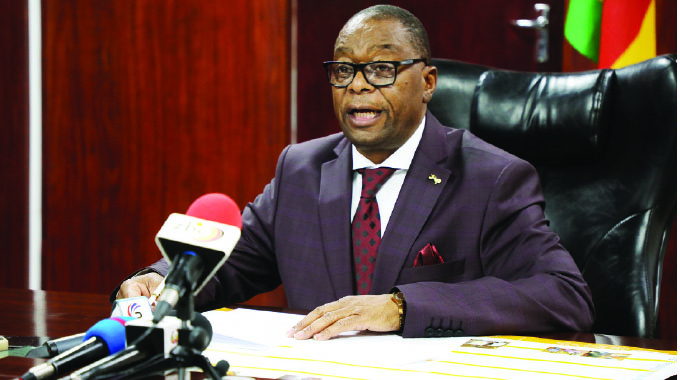
Rutendo Nyeve , Victoria Falls Reporter
THE Government has finalised the long-awaited National Health Insurance (NHI) Bill, which is now ready for Cabinet consideration this month, paving the way for the scheme to become operational by 2026.
Seen as a game-changer for Zimbabwe’s healthcare system, the NHI is poised to anchor the country’s journey towards Universal Health Coverage (UHC), ensuring that every citizen can access essential health services without the risk of financial hardship.
Speaking at the Association of Health Care Funders of Zimbabwe (AHFoZ) annual conference in Victoria Falls, the Minister of Health and Child Care, Dr Douglas Mombeshora, said the scheme is built on the principle of protecting households from impoverishment due to healthcare costs.
“Our vision, as articulated in the National Health Strategy (2021–2025), is to achieve a healthy and productive nation that enjoys equitable access to quality health services. This vision is not achievable without robust partnerships,” he said.
Dr Mombeshora acknowledged the critical challenge of health financing, particularly as external donor funding continues to decline. To address this, the Government has adopted a non-contributory funding model for the NHI, drawing from earmarked taxes such as the Aids levy, airtime levy and proposed levies on fast foods, sugar, tobacco, alcohol and potentially the mining sector.
“The Government has already increased health funding from US$117 million in 2020 to an average of US$463 million between 2021 and 2023. This is a decisive step towards health sovereignty as reliance on external support becomes increasingly uncertain,” said Dr Mombeshora.
He said the proposed benefit package guarantees 100 percent coverage for community and primary care level interventions, ensuring that the most basic and essential care is fully accessible.
This incremental design, Dr Mombeshora said, ensures affordability while addressing Zimbabwe’s dual burden of communicable and non-communicable diseases.
“This coverage scales to 80 percent at the district level, 60 percent at the tertiary level, and 40 percent at the quaternary level, all guided by principles of equity — services accessible to all citizens, especially vulnerable groups — and affordability, with a focus on high-impact, low-cost interventions.
“The importance of this scheme cannot be overstated, as it directly addresses the critical state of health financing in the country. Current public health funding has been inadequate to finance the NHS fully and continues to miss various per capita spending benchmarks,” said Dr Mombeshora.
By pooling resources and spreading risk across the population, the NHI aims to shield families from catastrophic health expenses — a major barrier to care, especially for women, 64 percent of whom report difficulties in accessing healthcare due to financial constraint.
“Furthermore, the health sector faces a significant decline in funding from the rest of the world and corporations compared to previous years, creating uncertainty in external funding levels, which remains a concern,” said Dr Mombeshora.
This is compounded by the fact that committed domestic budgets are vulnerable to inflation and exchange rate volatility.
Dr Mombeshora stressed that the NHI is a home-grown solution to Zimbabwe’s pressing health financing crisis. It builds on past health gains, such as the reduction in maternal mortality rates from 651 deaths per 100 000 live births in 2015 to 212 in recent years, as well as significant advances in HIV and TB responses.
“The Ministry of Health and Child Care is exploring sustainable and equitable financing mechanisms that reduce the out-of-pocket burden on our citizens. This includes exploring innovative risk-pooling mechanisms. To that end, the
Ministry of Health and Child Care has made great strides in compiling a National Health Insurance (NHI) model, and the Draft NHI Bill is now at an advanced stage,” said Dr Mombeshora.