

 daniel chigunwe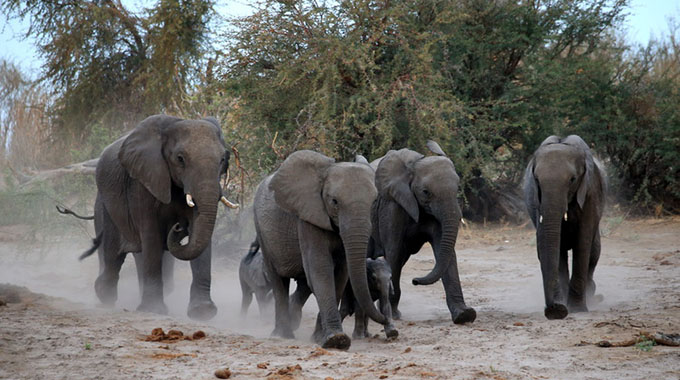
A group of international scientists said Thursday that the hunting of elephants along the Kenya-Tanzania border for their tusks should be stopped to save the giant land mammals from extinction.
In a letter published by Science, an international journal, 24 biologists, zoologists, and conservationists warned against trophy hunting of elephants along the Amboseli ecosystem that spans the Kenya-Tanzania border amid threat to tourism and the livelihoods of local communities.
According to scientists, five male adult elephants with tusks weighing more than 45 kg were shot by trophy hunters in Tanzania in late 2023 and early 2024, posing a new threat to the survival of the iconic giant herbivore. These elephants, according to wildlife biologists, were among the most magnificent species of the cross-border population studied for 51 years by the Amboseli Elephant Research Project (AERP) in Kenya.
Despite being banned in Kenya for the last 50 years, trophy hunting is permitted in neighbouring Tanzania. However, to help protect the cross-border species, hunters are not allowed to shoot elephants in the vicinity of Amboseli National Park.
Cynthia Moss, founder and director of the AERP, noted that elephants in this ecosystem that straddles Kenya and Tanzania have thrived in the decades when the hunting ban was honoured.
“These elephants are not only sources of great scientific knowledge and key attractions for the ecotourism economy, but also represent a unique and irreplaceable natural wildlife heritage for the people of both countries and the world,” Moss said. – The East African



 Peter Tanyanyiwa
 Online Reporter