Online Reporter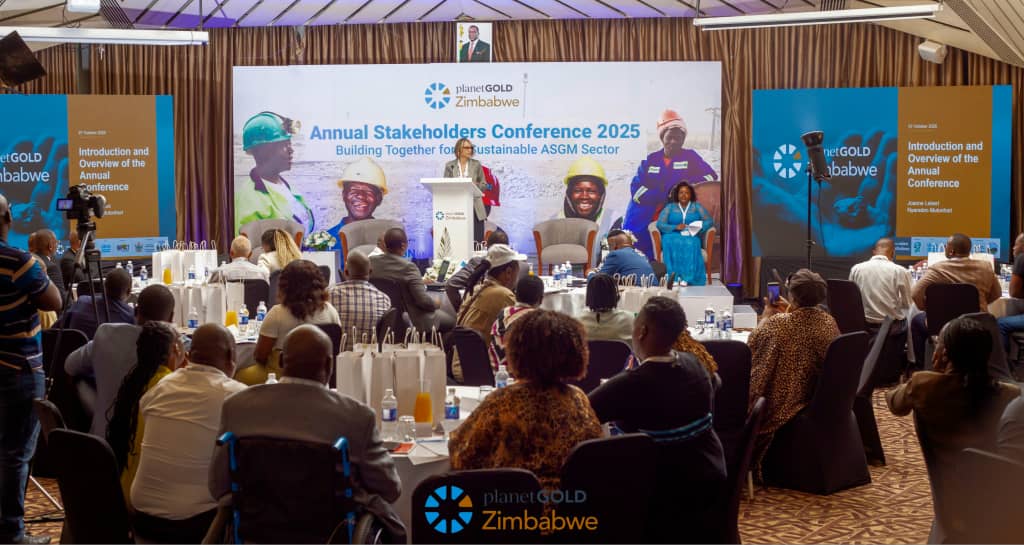
Nqobile Bhebhe, Zimpapers Business Hub
THERE are calls for the formalisation of artisanal and small-scale miners (ASM) to be undertaken through a structured, phased process that recognises the realities of the sector and treats compliance as a progressive achievement rather than an immediate demand.
Stakeholders have emphasised the need for the forthcoming Bill to establish an explicit roadmap that recognises formalisation as a “progressive realisation of regulatory duties,” anchored in capacity building and practical support measures.
This is according to the planetGOLD Zimbabwe report titled “Strengthening the Mines and Minerals Bill – Advancing Reforms for the Benefit of Artisanal and Small-Scale Gold Miners in Zimbabwe,” launched in Harare on Monday.

The launch formed part of the planetGOLD Zimbabwe Annual Stakeholders Conference 2025 that is held under the theme “Building Together for a Sustainable ASGM Sector.”
“For decades, artisanal and small-scale miners have operated within informal systems that lack exposure to statutory procedures, credit markets, and structured technical training,” reads part of the report.
“It is recommended that the Bill adopt a phased, capacity-building approach to the formalisation of artisanal and small-scale miners, rather than expecting immediate parity with the compliance regime applicable to large-scale operators.”
According to the analysis of the Mines and Minerals Bills, proper formalisation should not be reduced to mere legal compliance but should be seen as “a developmental process that involves regulatory sequencing, graduated obligations, and targeted state support so that compliance is achievable and not merely imposed.”
“The Bill should therefore establish an explicit roadmap that recognises formalisation as a progressive realisation of regulatory duties.
“At the outset, the law should provide for a time-bound Transitional Compliance Period during which artisanal and small-scale miners move from basic legal recognition and simplified obligations to full compliance.”
This Transitional Compliance Period, it is proposed, would be anchored in a statutory instrument issued by the Minister on the recommendation of the Provincial Mining Directors (PMDs).
The instrument would “set out milestone obligations, timeframes, and the support measures to be delivered by state institutions.”
During this phase, “compliance expectations should be calibrated to the artisanal and small-scale miner’s operational scale and demonstrated capacity, with obligations intensifying only as capacity is built.”
To make the transition meaningful, the submission proposes that “the Bill should mandate the Ministry of Mines and Mining Development, working with accredited institutions such as the Zimbabwe School of Mines and relevant agencies, to deliver structured programs in environmental management, occupational safety, rudimentary mine planning, bookkeeping, and basic governance.”
Added to that, “the law should connect successful participation in these programs to access to opportunities for working capital, machinery-hire facilities, and technical advisory services, so that knowledge acquisition is complemented by the means to implement it.”
“Access should be framed as a statutory duty of the implementing authorities during the Transitional Compliance Period,” the report notes.
The document further proposes a tiered compliance framework, “The compliance architecture should be tiered. At entry, obligations should be confined to registration, adherence to minimum safety standards, and adoption of a simplified environmental management instrument appropriate to the scale of activity.”
“Thereafter, obligations should expand in defined stages to encompass fuller environmental, social, and fiscal requirements as capacity, finance, and technical competence accumulate.”
This approach, according to the report “preserves the integrity of the regulatory objectives while avoiding the legal fiction that immediate, full compliance is practicable for artisanal and small-scale miners, many of whom will be emerging from informality.”