Online Reporter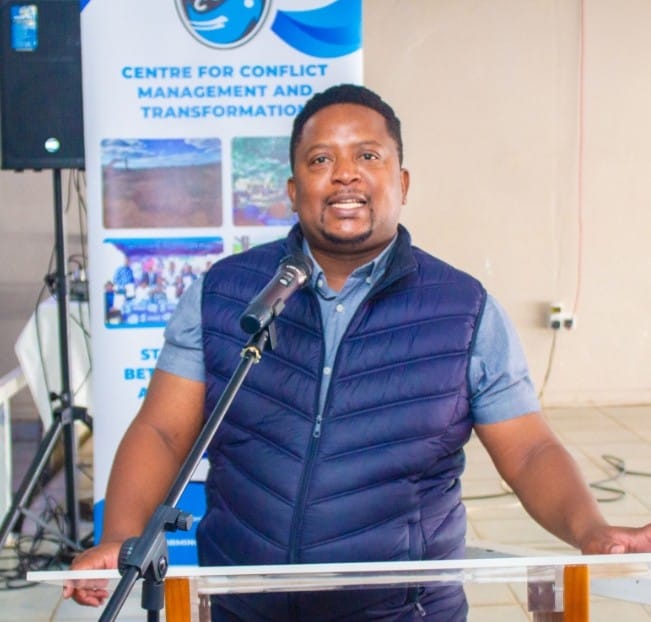
Patrick Chitumba [email protected]
SECRETARY for the Midlands Provincial Affairs and Devolution, Dr Edgar Seenza, has called for responsible mining-induced displacement processes, saying development must remain centred on people as Zimbabwe modernises its extractive sector.
Speaking at the recent second validation workshop of the draft development-induced displacement best practice handbook in Midlands, Dr Seenza, who was represented by the provincial director for infrastructure, Mr Tendai Forichi, said the dedicated focus on mining-induced displacement was timely as the country pursues growth under National Development Strategy 2 (NDS2).
The workshop was organised by local non-governmental organisation Centre for Conflict Management and Transformation (CCMT), working with the Government.
“Zimbabwe is on a path of growth and transformation. Guided by our National Development Strategy 2, we’re working hard to build a prosperous and empowered upper-middle-income society.
“Mining, in particular, remains one of the most significant drivers of this transformation,” he said.
Dr Seenza said while mining had generated employment, attracted investment and contributed to national output and export earnings, it also presented unique challenges.
“New mining operations frequently require the relocation of communities and in doing so, introduce compounding complexities that extend far beyond simple physical relocation,” he said.
“Mining brings long-term environmental realities, such as soil degradation that can permanently alter ecosystems and strip communities of their traditional agrarian livelihoods, health security and access to clean natural resources.”
Dr Seenza said Government was now pushing for socially responsible mining, in line with President Mnangagwa’s call last week for operators to move away from models that extract wealth without building local capacity.
He reiterated President Mnangagwa’s call on mining operators and the private sector to move away from business models that extract wealth without building long-term local capacity.
“The ongoing development of the Mines and Minerals Amendment Bill, alongside recent Government measures to regulate strategic minerals, underscores our national commitment to maximising the value of our mineral resources for the benefit of both the economy and the public,” said Dr Seenza.
He singled out Mberengwa as a district that exemplified both the opportunities and challenges of mining-driven growth.
“Here in Midlands Province, and particularly in Mberengwa District, we see many of the opportunities and challenges associated with mining-driven growth. Midlands is one of Zimbabwe’s key mining provinces,” he said.
“We have witnessed continued investment in mining activities alongside genuine efforts at community engagement, but also the practical difficulties that arise when agreements on land, water and livelihoods must be implemented and sustained over time.”
He commended the collaborative process that produced the handbook, involving Government, academia, civil society, technical experts and affected communities.
As Zimbabwe continues to develop its mineral wealth, Dr Seenza said there is a need to be guided by the principle of people-centred development.
“This way, we strengthen not only individual mining projects but also the broader national vision of inclusive growth, shared prosperity and sustainable development,” he said.
To proactively manage the challenge, a multi-phase process was initiated to establish a standardised regulatory guide. Following two participatory workshops last year where stakeholders contributed to an initial framework, the third phase has convened a technical working group to undertake a structured validation of the draft DID handbook.
The group brings together specialists in land governance, environmental law, resettlement planning, community development, and human rights to critically review the handbook, assess the feasibility of proposed practices, identify gaps and recommend strategic refinements.
CCMT director Mr Xavier Mudangwe said DID in Zimbabwe spans four distinct but interconnected contexts, which include urbanisation, infrastructure development, agricultural expansion and mining.
Each is governed by separate legal frameworks and institutional arrangements, and affects different population groups.
He noted that historically, displacement in mining had frequently been treated as an ad-hoc operational afterthought rather than being managed through comprehensive, rights-based frameworks.
“When communities lack robust protection, mining-induced displacement results in the irreversible loss of land, shelter, livelihoods, natural resources and cultural heritage, harms that are disproportionately borne by the most vulnerable demographics,” said Mr Mudangwe.