

 admin
admin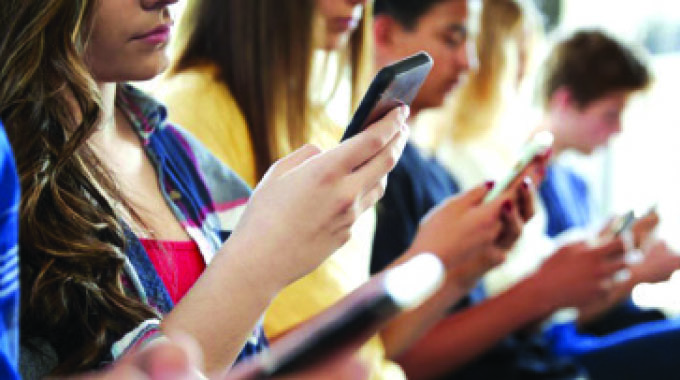
Latwell Nyangu Youth Interactive Writer
Social media is not a safe space!
Telling students what they can and can’t do can be a sure way of getting them to do the opposite.
But one of the biggest problems with social media is that it can be a breeding ground for negativity.
People can say things online that they would never say to someone’s face, and this can lead to bullying, hurt feelings, damaged relationships and exasperating or causing mental health issues.
Another problem with social media is that it can be addictive. People can get so caught up in the online world that they start to neglect their real-world relationships and responsibilities in life, which can of course have far-reaching implications.
And most of the time, students are found wanting.
Fellow students, the digital media has become a significant factor in many of our day to day routines and it’s important we become technophile to it.
Fellow students, you have become often incapable of submitting academic work in the specified time frame because you are more concentrated on applying social media platforms.
Productivity wise, procrastination and media platforms go hand in hand when it comes to completing homework on time or concentrating during lesson time.
Doing anything in excess is never a good thing, and spending too much time staring at a screen is definitely no different.
But however, fellow students have become addicted to it and in the end failed to take the positive route.
Social media use is distracting us, disrupting our sleep, and exposing us to bullying, rumour spreading, unrealistic views of other people’s lives and peer pressure.
I am writing this with a concerned heart that many of us are no longer utilising this new phenomenon for the benefit of their academic pursuit or enriching skills.
Most of us, I am told, are always so busy on their mobile applications, on the internet that they are no longer concentrating on their academic work.
It is essential to remember that social media has its benefits and can be a healthy and positive medium when it isn’t being abused.
Introducing alternate ways to combat boredom can be your first step as a concerned part to remind students that happiness does not rely on a digital presence.
A few days ago, I had a conversation with a father who was angry about his daughter over her conduct when at home.
He said, the daughter is always glued to her mobile phone with earphones on, in which in most cases, she doesn’t even hear what they will be discussing.
At times she only removes one earphone when responding and it’s hard to see her away from her phone.
While, I received some shocking statistics from a certain university that most students are always playing on the internet not for purposes of research but watching explicit content.
On an academic level, social media has many negative effects on student’s productivity when it comes to concentration in the classroom, timekeeping, and conscientiousness.
Most of the time some students will be on their mobile phones while in class.
There is no way you can balance, paying attention to the lecture and paying attention to the phone.
Fellow students, it’s important to discuss ways to combat these issues raised without attacking each other.
It is without a doubt that platforms such as Facebook, Twitter, and Instagram have introduced many beneficial aspects to modern day society and its users, us students included.
It’s not bad to be technologically updated, but let’s know what time, when and where to do it.
At home, we have become bad where we no longer listen to our parents, we no longer do some duties at home.
Our parents are complaining about how we are behaving and failing to respect our parents over social media.
Dear fellow students, social media has some damaging effects on self-image and mental health, productivity in college and issues with privacy and data protection are all attributes that students need to be educated on.
Adoption of social media sites with slight carelessness can have mental and also physical effects on one’s health.
You are no longer taking your meals on time, do not take proper rest, and are continuously on a phone or laptop which also have adverse effects on eyes.
Such actions are making us slow and unambitious to study or even go out and meet people.
We should be responsible on our own rather than having other people keep an eye on what we will be doing when using the internet.
Fellow students, social media has turned into an essential element of our lives including us students in today’s world of communication.
Its use is growing significantly more than ever before, especially in the post-pandemic era, marked by a great revolution happening to the educational systems.
Social media can be incredibly addictive — we all know what it feels like to tell ourselves we will only check our notifications, and before we know it, we have been mindlessly scrolling for hours.
Using devices can have an especially detrimental effect if done near bedtime, as the blue light emanating from our devices tricks our bodies into thinking it’s still daylight outside, which upsets our natural rhythms.
Nowadays, in the world of connecting learning, the impact of social media on education is becoming a driving factor, fellow students.
Though social media has created tremendous chances for sharing ideas and emotions, the kind of social support it provides might fail to meet our emotional needs, or the alleged positive effects might be short-lasting.
In recent years, several studies have been conducted to explore the potential effects of social media on students’ affective traits, such as stress, anxiety, depression, and so on.
Fellow students, social should be used properly since most of us are still failing yet we have it at our disposal.
The reasons are that we are not using it for the benefit but for character assassination.
In the end, if you are on social media, and you are not learning, not laughing, not being inspired or not networking, then you are using it wrong.
Yours fellow student



 Online Reporter