Chronicle Editor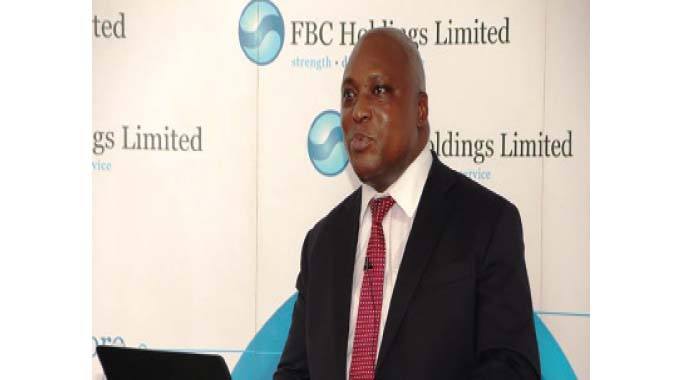
Prosper Ndlovu, Business Editor
THE gradual increase in inflationary pressures requires that businesses maintain the focus on value and capital preservation as a safeguard in the outlook, economic experts have said.
Although the Government has made strides in taming annual inflation, which had decelerated to 50,2 percent in August 2021, compared to a post-dollarisation record of 837,5 percent, the trend has been creeping upwards recently, reaching 60,7 percent by December 2021.
Latest official data released by the Zimbabwe Statistics Agency (Zimstat) indicates that year-on-year inflation rate for March 2022 stood at 72,7 percent.
The month-on-month inflation rate on one hand has been pegged at 6,3 percent for March 2022 after shedding 0,7 percent points on the February 2022 rate of 7,0 percent.
Inflation, which refers to the rate of increase in prices over a given period of time, is a typical indicator of the cost of living in a particular country.
“The resurgence of inflationary pressures indicate that value and capital preservation will remain critical in the outlook period,” said Stanbic Bank Zimbabwe chairman, Mr Gregory Sebborn, in a recent statement accompanying the bank’s financial results for the year ended 31 December 2021.
Last week the official exchange rate between the Zimbabwean dollar and the United States dollar stands 1:142 in favour of the greenback compared to 1:138 last week.
Financial experts link the surge in inflationary pressures to the “excessive money” supply, which is manifesting in the dislocation between the foreign currency auction rate and parallel rates.
The parallel market exchange rate is hovering around US$1:220 and above, which authorities blame on speculative behaviour by some influential market players.
Business leaders have noted the continued concern regarding the weakening of the local currency against the United States dollar, which has been blamed for erosion of incomes and loss of purchasing power amid price escalation.
Foreign exchange rates volatility and the existence of an alternative market has tended to drive business operating costs up, as price indexing to the United States dollar has become rampant, said FBC Holdings Limited group chief executive officer, Mr John Mushayavanhu.
“The widening differential of foreign exchange premiums between the official and the alternative markets rates has significant through effects on inflation,” he said.
“We, however, remain hopeful that the current monetary and fiscal policy objectives will deflate inflationary tendencies.”
Concurring, Mr Sebborn has stressed the need to tackle the inefficiencies on the foreign currency auction system, which has resulted in external payment backlogs.
He, however, said the Zimbabwean economy is also positioned to benefit from the growing trade prospects arising from the positive global economic outlook.
The country’s economy grew by an estimated six percent in 2021 buoyed by a good rainfall season, which resulted in improved agricultural output.
“The growth momentum is expected to progress into 2022, with forecasts ranging from three percent (IMF) to five percent (Government).
Mining and agriculture are envisaged to be the key growth drivers during 2022,” he said.
Notwithstanding the positive Gross Domestic Product outlook for 2022, he said the bank remains cautious of potential business risks.
These include; erratic rains, which could reduce productivity for non-irrigated crops and the Covid-19 pandemic, which remains a major threat.
Although Stanbic Bank achieved an annual inflation adjusted profit after tax of $5,2 billion, it said operating expenses grew by three from $8,6 billion in 2020 to $8,9 billion.
This growth was largely driven by the once off costs, which were incurred as the Bank completed its staff optimization project.
“This was compounded by the impact of exchange rate movements on our foreign denominated operating expenses, which include, among others, licence fees, data lines, insurance and franchise fees,” said the bank.
“The bank’s customer deposit base grew on a historical cost basis from $35,5 billion in 2020 to $91,8 billion largely underpinned by the uplift in our foreign currency deposits combined with the increase in money supply.”



 Online Reporter