admin
admin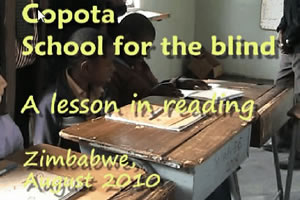
specialised in making furniture, chalk and fence for sale.
But lack of working capital to procure raw materials has forced the Reformed Church in Zimbabwe-run institution to downscale its operations to almost negligible levels.
School principal Mr Jeffrey Chiwera last week appealed for urgent financial support.
He said the institution’s workshops, which used to generate revenue for the upkeep of the visually-impaired students, had failed to perform to expectations in the past 12 months.
“We are going through a very difficult phase at the moment because all our income-generating projects that we used to run from our workshops like chalk-making, furniture-making and fence-making have virtually stopped because we do not have money to procure raw materials,” said Mr Chiwera.
“We are no longer sure about our future because without raw materials, there is nothing that we can do.”
Mr Chiwera said they required US$50 000 to buy raw materials, especially rattan cane which is imported from Singapore and used to manufacture furniture. He said there was no longer any market for the chalk made at the school since customers preferred dustless chalk imported from South Africa.
Copota has been blighted by a crippling water shortage, forcing visually impaired students to walk for several kilometres to fetch water.
FBC Bank recently donated US$5 000 for the rehabilitation of boreholes at the school to ease water woes. Copota enrolled its first visually-impaired pupils in 1956.



 Online Reporter