Online Reporter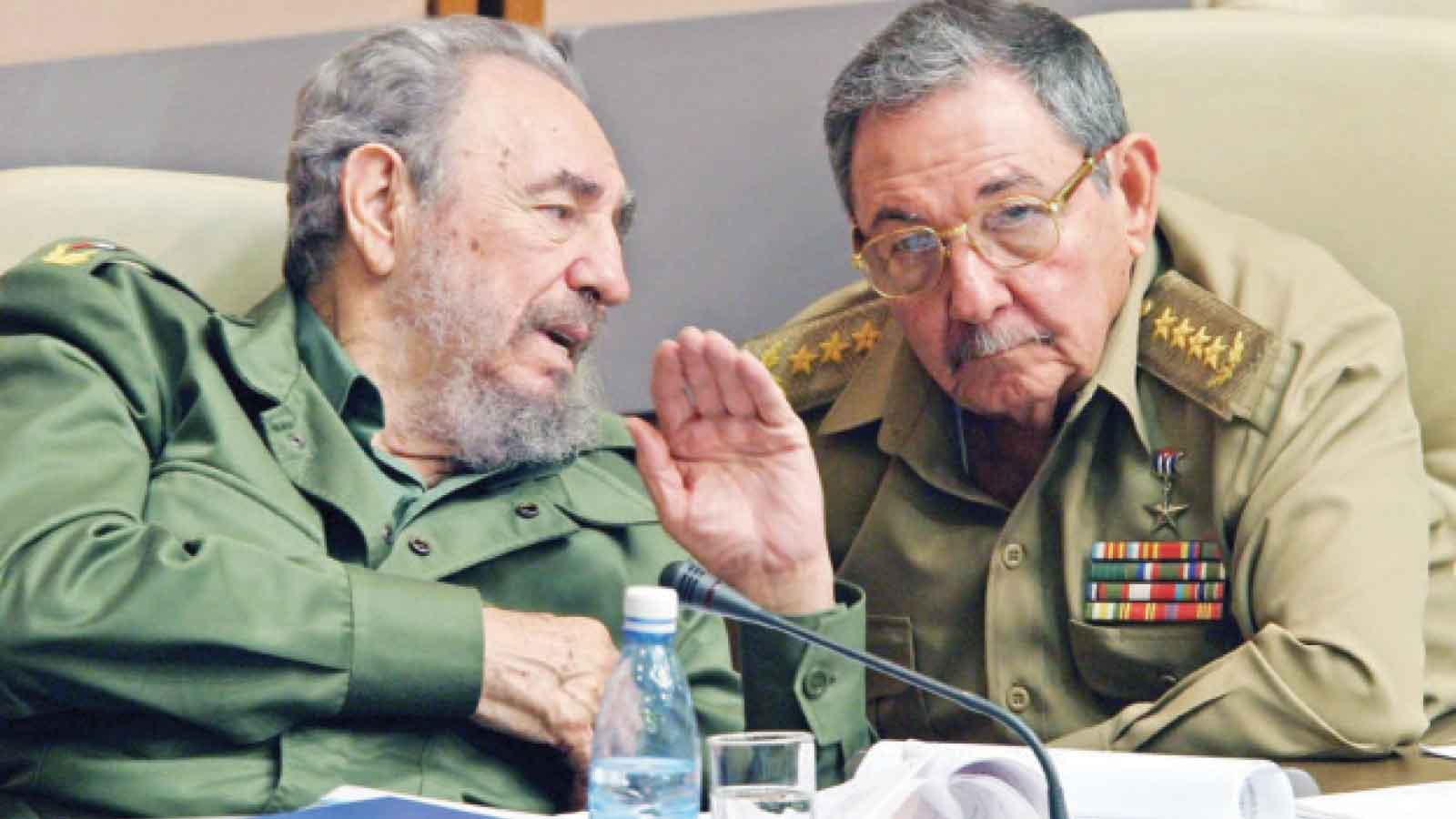
Gibson Nyikadzino-Zimpapers Politics Hub
The recent indictment of Cuba’s ex-President Raul Castro by the United States is telling. What is critical is for the Global South, in particular, to know that everything happening is interconnected and aspects of this nature cannot be interpreted in isolation.
The name Castro has dominated politics in Cuba since the July 26, 1953 attacks on the Moncada Barracks by Raul’s elder brother, the late Commandante Fidel Castro.
Raul is, therefore, is one of the last remaining key protagonists of the triumph of the 1959 revolution that his brother Fidel led. His indictment should be seen as having all the hallmarks of what the United States does when it wants to attack or overrun a country, that is, “target its key figure and the regime will collapse”.
On this indictment, the American media will continue the same story to besmirch Raul to establish a reason to either attack the island country or continue the asphyxiation of the revolution until it collapses. Already, the United States listed Cuba as a state sponsor of terrorism and the indictment of Raul on charges including “murder and conspiracy to kill United States nationals” feed into the narrative of terrorism. The basis is to first make a hero of Raul’s stature appear like a monster.
The charges are said to be emanating from Raul’s alleged role in the 1996 downing of two planes operated by the Miami-based exile group Brothers to the Rescue.
The United States wants to arm-twist Cuba, hence the manufacture a narrative that continues to isolate Cuba and send a hard power message to other small states that want to offer their solidarity to Cuba. It was Cuba to soften its views and stance against Yankee imperialism.
By targeting Raul, the United States is doing so after its failure to effect an illegal regime change in Iran after the assassination of the Supreme Leader Ayatollah Seyyed Ali Khamenei on February 28. By indicting Raul, this is part of the last card the United States is playing against a leading Cuban figure after having failed to assassinate his brother, Fidel, in a record 638 attempts.
Venezuela’s Nicolas Maduro experienced this. He was first labelled a narco-terrorist who was enabling the trafficking of cocaine into the US before he was abducted by US forces on January 3.
Today the current Venezuela administration appears to be giving in to some United States demands coming through political blackmail. Raul is one of the last surviving members of the people who led the Cuban Revolution and with an institutional memory of the journey the revolution traversed. He is a father figure in Cuba.
The problem of Cuba
There is a problem Cuba has to warrant these attacks from the United States. First, Cuba is targeted for being located in the continent or space that the United States claim should be in charge of and dictate terms of how a country in that region should behave. Secondly, the triumph of Cuba’s 1959 revolution led by Fidel, Raul and Argentinian anti-colonial pragmatist Ernesto Che Guevara placed it at the cross-roads with successive American administrations.
At its triumph, the revolution nationalised land and redistributed wealth to Cubans, the wealth that was owned by the United States’ United Fruit Company, a capitalist entity owning large tracts of Cuban land. Because of this, among other things, Cuba has been embargoed by the US as a punitive measure, despite the illegality of such an action. Such illegal punitive measures are always imposed when the land question is involved.
Lastly, the problem of Cuba has been how it has managed to survive for long unlike other left wing governments in Latin America and the Western Hemisphere. All left wing government in Latin America were either toppled or killed in US-orchestrated initiatives that mainly included military coups.
On June 27, 1954, the democratically elected left wing leader of Guatemala, President Jacobo Arbenz was deposed in a military coup orchestrated by the Central Intelligence Agency (CIA). Ten years later, Brazil’s democratically elected left-wing leader Joao Goulart was on April 1, 1964, deposed in a US led military coup. Goulart was deposed over fears of his “basic reforms” that were seen as sympathetic to communism.
On September 11, 1973, Chile’s democratically elected left wing leader Salvador Allende was violently deposed in a CIA initiated military coup that was led by General Augusto Pinochet. The same happened to General Omar Torrijos of Panama, who though was never deposed, but died in a plane crash in 1981, the CIA had led an unsuccessful coup on December 15, 1969.
The idea that the Cuban revolution from Fidel Castro (1959-2008), his brother Raul (2008-2018) and to the current leader Miguel Diaz-Canel has not been replaced or has not collapsed makes it a huge problem for the US.
In Havana, the US is looking for a pliant and obedient person who can execute its orders to reverse the gains of the revolution. That is a political impossibility. All Cubans are revolutionaries and have always been loyal to Cuba’s cause. This is not the time to entertain interventionists and counter revolutionaries!
Unrelenting imperialism
Imperialism is a relentless project. It is one that keeps metamorphosing. On Wednesday, the New York Times published an article that when the United States and Israel attacked Iran on February 28, it wanted to install Iran’s former President Mahmoud Ahmadinejad as a leader. This intention of this narrative is to cause division within the Iranian establishment.
The same that is going on in Cuba to try and whitewash Raul, is nothing but efforts to shake the foundations of the Cuban revolution. Having failed in Iran, imperialism finds Cuba as a low-hanging fruit. However, what Cuba requires is solidarity and support as the opponent or enemy it faces is one without shame, colour or face, but a nefarious and malevolent agenda.
The United States has always been afraid of the anti-colonial and anti-imperial nature of Cuba’s values, and since 1959, imperialism has found Cuba’s path to self-determination as unforgivable.