Online Reporter
Sam Matema-Correspondent
A CONSTITUTION is a living creature, which is not frozen in time, and its state and survival is intertwined to the changes prevailing in the social, economic, political, technological and ecological environments that inform it.
It evolves in sympathy to obtaining realities and demands of the day. Therefore, constitutional amendments are necessitated and occasioned by developments obtaining at a particular time. Any amendment is meant to reform, strengthen, clarify, align and/or harmonise pieces of legislation.
In doing so, it addresses fundamental questions with respect to where we are now, where we want to go, how we get there, which way is best, and how we ensure safe legislative arrival?
The path to a constitutional amendment is dual, either through public hearings or through a referendum when Bills are introduced in Parliament. However, there are conditions that must be met to trigger a referendum.
In its current state, the Constitution of Zimbabwe, the compromise document of 2013, provides for three scenarios, Chapter 4 (declaration of rights), Chapter 16 (land issue) and Section 328 (6) (a); as the only three scenarios that will necessitate a referendum.
From the foregoing, the Parliament of Zimbabwe was within the provisions of the law, according to Section 141 (a) and (b) when it facilitated the public involvement via the publicity blitz across all media channels to create awareness around CAB3.
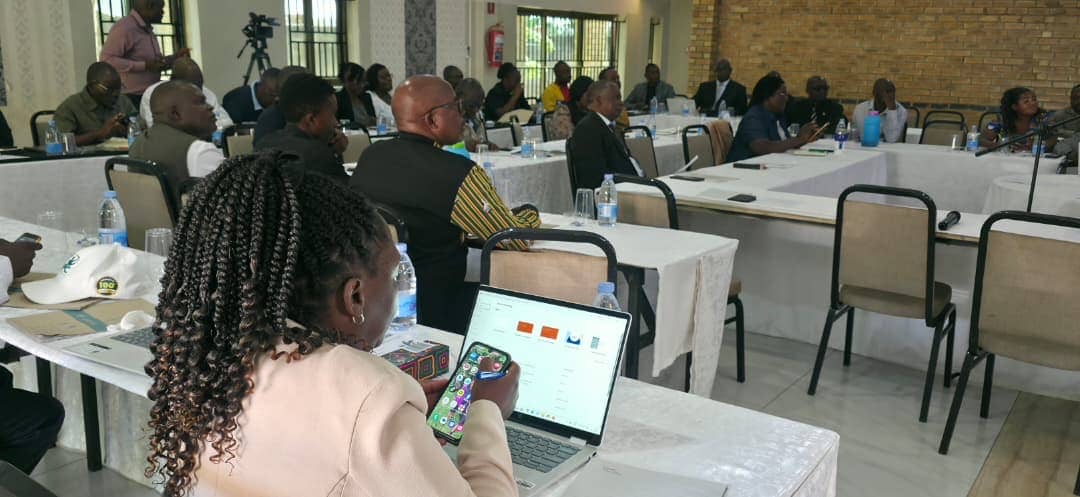
Parliament made sure that interested parties were consulted through public hearings as well as through written submissions. Everyone was given the space and platform to make their submissions without any limitation and, therefore, the prescriptions of Section 141 as well as Section 338 (4) of the Constitution were met.
The cross
There are 33 lessons on the CROSS, but I will, for the purpose of this discussion, dwell on the lesson on submission and surrender. Jesus Christ made a painful surrender as he submitted to the will of the Father. As legislators, we arrived at the Parliament Building in Mt Hampden with a constitutional mandate from the people.
When we went out to conduct public consultations with respect to CAB3, the people spoke clearly through oral evidence and written submissions. About 99 percent (537 102) of those who participated agreed with the Bill, while a mere one percent (2 935) was against it.
It is against the foregoing that at the material time, when MPs are called to vote, they do not have any other outlet, but to submit to the will of the people, the 99 percent, and vote in favour of CAB3 because that is the will of the majority of people who participated in the consultations.
Operation legislate
The most sticking point for the past three decades in the electoral history of our great nation has been contested presidential elections. CAB3 intends to take us to a legislative destination where the toxicity around the Presidency is neutralised and removed once and for all.
CAB3 proposes to introduce a legislative T-account predicated on Section 97 of the current Constitution, which empowers Parliament in a joint sitting to recall the President. CAB3 is aligning the Constitution by empowering Parliament to elect the President.
Suffrage as captured in Section 67 of the Constitution, is now exercised with an indirect election of the President. With just a few legislators voting as an electoral college, it will be impossible for anyone to claim any form of rigging or manipulation as has been the case in the past. That door, through CAB3, is shut, bolted and barricaded.
If the submissions that have been made so far across the political aisle in Parliament are anything to go by, the two thirds majority needed for CAB3 to pass is a foregone conclusion.
Besides, the people made their position clear during the 90 days that the Bill was open for interrogation and ventilation. They support the Bill, and, therefore, its passage is just a question of time. Inevitable!
Honourable Sam Matema is the Member of Parliament for Buhera Central constituency, ZANU PF Manicaland Province Secretary for Administration, Climate Parliament Zimbabwe Chapter chairman, and chairperson of the Parliamentary Portfolio Committee on Environment, Climate and Wildlife. He writes here in his personal capacity.