

 admin
admin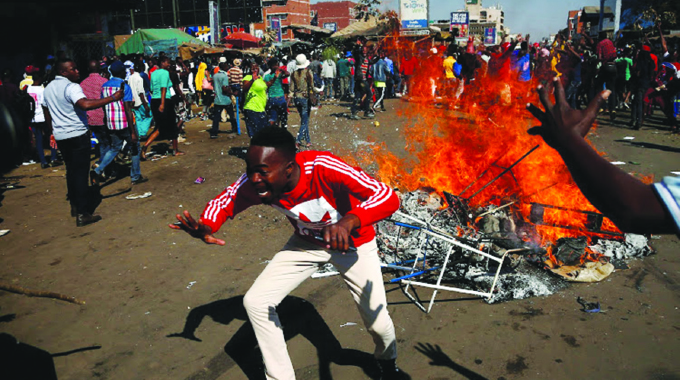
Samuel Bachi Correspondent
Since the birth of the opposition Movement for Democratic Change in 1999, its timeline has been punctuated by incidents of violence and terror on its membership and its perceived opponents.
The founding father of the MDC, the late Morgan Tsvangirai left a trail and legacy of violence.
The founding values of the MDC were never built on nationalism, but were anchored on confrontational politics, intolerance, disrespect of the rule of law and sponsored violence by the Western handlers.
MDC has since transformed into various factions and groupings, but the trails of violence are still exhibited in those break away parties.
The country has had opposition political parties before the MDC, but it has never witnessed the nature of violence that has been recorded after the formation of MDC.
In 2008, MDC connived with some local non-governmental organisations to sponsor terror operations targeted at overthrowing Government.
One of the organisations accused of such was the Zimbabwe Peace Project led by Jestina Mukoko.
The organisation was accused of recruiting youths and training them outside the country as part of efforts to topple the Government.
The MDC’s youth brigade was called the “Vanguard”. The quasi militia was meant to be a counter measure to the National Youth Service programme.
The MDC youth snubbed the national youth service alleging that it was a Zanu PF project.
The opposition party then started recruiting the youth for military training with the intention to fight the perceived Zanu PF supporters and instil fear among pro-Zanu PF members.
Equally important, fast forward to 2004, the then MDC-T deputy treasurer-general, Elton Mangoma and other officials who were accused of seeking the ouster of Tsvangirai, were heavily assaulted outside the party’s offices at Harvest House.
The legacy that Tsvangirai left of suppressing all internal opposition voices through intra-party violence and terror, has not skipped the minds of his successors, hence today we have other violence instigators in the mould of Nelson Chamisa, Tendai Biti and Job Sikhala.
The MDC has transformed into various factions and imitations. The party was first known as the MDC and transformed into several factions: MDC-T, MDC-1999, MDC-Renewal, MDCT-N, MDC Alliance and many others.
Now, there is the CCC, the latest faction to emerge out of the MDC.
All these formations have one thing in common – violence and thuggery.
The MDC Alliance plotted a coup and attempted to use their violent nature, which they exhibited in civil disobedience such as the one that rocked Harare post July 31 elections, in an effort to forcefully and unlawfully unseat President Mnangagwa.
The then MDC Alliance leader, Chamisa, wanted to use street uprisings to become the next leader of Zimbabwe.
The party mobilised people to hold the illegal demonstrations which resulted in loss of life and destruction of property.
The demonstrations were rehearsed and were not spontaneous.
Chamisa wanted to use the street demonstrations to remove the Government and bring himself into power with the help and funding of non-governmental organisations that sponsor his party’s activities.
In February 2018, youths aligned to Chamisa attacked their co-vice president, Thokozani Khupe and secretary-general, Douglas Mwonzora, during the burial of the late Tsvangirai in Buhera.
The two were clobbered and took refuge in a hut, with the marauding youths threatening to set the hut alight.
The two had been opposing MDC acting president Chamisa’s ascendancy. The angry and hungry mob besieged the hut in which Khupe and Mwonzora had sought refuge.
In June this year, more than 20 families were left homeless. Business was brought to a standstill and schools closed after CCC activists went on a rampage in the dormitory town of Chitungwiza.
Tuckshops and vehicles were also destroyed after CCC indiscriminately attacked residents of Nyatsime. The marauding mob also torched a gazebo at Chibanguza Shopping Centre.
The violence was allegedly incited by Zengeza East legislator, Job Sikhala, as revenge for the perceived politically motivated murder of Moreblessing Ali, when all pointed to the fact that her death had nothing to do with politics, but love affairs.
The latest violent escapade by the CCC was seen in the run-up to the Gokwe-Kubuyuni by-election recently.
This behaviour represents the kind of moral dementia we witnessed in the 2008 elections where thugs linked to the opposition went on rampage, attacking people and raping girls while others were left for dead.
However, all these atrocities were only blamed on Zanu PF because the opposition has sympathy from the western media.
The tragedy is that the opposition has a tendency of rushing to seek global sympathy while failing to account for its conduct and acts of violence back home.
We have seen Zanu PF supporters being beaten up in Gokwe, but the media turns a blind eye on that.



 Online Reporter