Chronicle Editor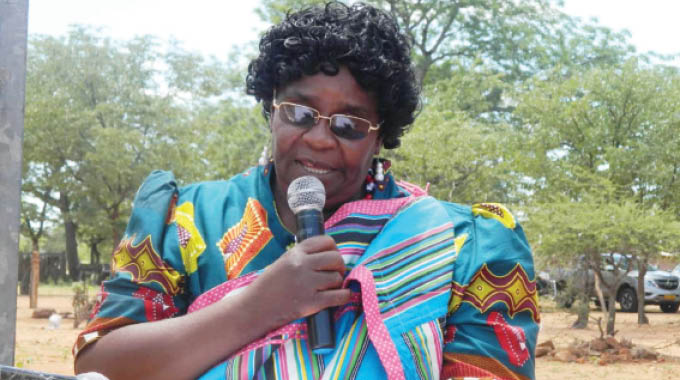
Thupeyo Mleya, Beitbridge Bureau Chief
This year, Zimbabwe celebrates 40 years since it attained its Independence in 1980. A number of progressive developments, in terms of the economy, infrastructure and politics have taken place in the past four decades.
Zimpapers Beitbridge Bureau Chief, Thupeyo Muleya (TM) speaks with ex-combatant, senior Zanu-PF member and legislator for Beitbridge West Constituency, Cde Ruth Maboyi (RM) on her wartime experiences and views on current affairs. Below are excerpts from the interview.
TM: What made you join the war of liberation?
RM: I was young by then, I can’t say much though, but there was a cocktail of reasons. During that era, there was an uneven ground in terms of resource allocation among the natives and the colonisers. In some instances, we would hear village elders and our parents bemoaning the state of affairs. This was motivation enough. In short, there was a scramble for space and resources and naturally, that would get to your nerves.
TM: How did you find yourself among the Zipra forces in Zambia?
RM: In 1977, we left Tongwe, my home area, as a group of 10 youngsters, that is seven males and three females (Isha and Marubini). We travelled on foot via Ndambe, Shashe and crossed the Shashe River into Botswana and arrived at the Marapong area where we were then taken to Pikwe in trucks. At Pikwe, there were a lot of people, especially young men who were staying in an enclosed fence, while female combatants stayed with prisoners from Botswana. We were later flown to Zambia by aeroplane along with other freedom fighters. It was quite an experience.
TM: What happened when you arrived in Zambia?
RM: We arrived at Victory Camp, a place reserved for female combatants only and there were over 4 000 people. We lived there until July before moving to Mkushi Camp. Here we set the camp ourselves to pave way for new recruits who were arriving at Victory Camp.

TM: What was on your mind soon after arrival at the camp?
RM: Everyone was excited and the main aim was to train as soldiers, get firearms and return to fight the colonial regime back at home. However, we were told there was a lot to learn before getting into combat.
TM: How long did you stay at Mkushi and what were your experiences there?
RM: This was where we discovered that the war was not a walk in the park. The training was intense. We were grouped according to ages and body frames. I was 20 years old by then and I am tall, so it was easy for me and I adopted the name Jacqueline Hondo. You will note that this was in a dense bush and we had to build the camp, roads, pitch tents as well as set up water sources from scratch. It took us one month to have fully-fledged resources. Even though the training was hard everyone had the zeal to complete the training and get back home to fight the enemy. We trained for six months and graduated in July 1978. On the day of pass out (parade), we were told we could not go to the front since our brothers were already down on the ground. This was disappointing because we were raring to go.
TM: How long did you stay at the new camp and what was happening there?
RM: We stayed for about four months waiting for further orders. This is the place where we had a horrific and devastating experience. I remember it vividly; it was on 19 October 1978. The training was now intense and we were being hardened for the battle, I was part of those who were supposed to collect food from the Kabwe area. So, on the 18th, we spent the whole day without food except a portion of skimmed milk. On 19 October in the morning at around 9am, there was a parade addressed by the commissars (people who had access to information that often came via Rhodesian or Zambian Radio Stations). One of the senior commissars was the late Makamba Mohadi (whom we called KK) and was the elder brother to Vice President (Kembo) Mohadi. During the parade, we were informed that Victory Camp had been attacked by the enemy and that we should vacate our camp, which was the next target. They told us to disperse and converge at another point 15km away from Mkushi Camp. Here we were to get more orders and possibly seek refuge at Kabwe Police Station (30km away). We left in sections of four people, armed. I had a semi-noff, a very small but effective gun. As we walked, we heard an unusual sound and before we could get a picture of what was happening, the enemy started bombarding us.
TM: Hundreds of people lost their lives there, how did you survive?
RM: During the contact, we took cover in vegetation. The bombing lasted from around 11am to around 5pm. We were still hiding. We had one elder soldier, Cde Marvelous “Joyce” Dungeni (late), who became our defacto leader since she was mature. She kept barking instructions.
The other two Cdes, Senzeni (from Plumtree) and Janet Magwala are still alive. It was painful to see others being killed as they tried to escape. That’s when KK (Makamba) was killed — while he was barking orders to combatants to escape. During that moment, you would go lights out due to shock. The enemy managed to overrun the camp and turned back around 7pm, when they were a few metres from us. Cde Joyce later advised us to get up and escape to the furthest point, which was Kabwe Police Station. We walked through the night. At Kabwe we found 200 other comrades who had escaped and we started sharing stories of our escape. I was devastated because the two, Isha and Marubini who I had travelled with from Beitbridge had been killed. We slept at Kabwe and were disarmed the following morning, but we resisted because we wanted to go and avenge the deaths of our colleagues.
TM: How did you give in and surrender your firearms?
RM: We were told that the Zipra High Command was aware of the attacks and was working on the issues, these included the late Cdes Lookout Masuku and Dumiso Dabengwa. A few Cdes were then selected to go back to Mkushi to salvage the remaining weapons and to help the wounded. However, people were gripped with fear and were not eager to return. Some Zambian soldiers, police officers and Zipra cadres including the logistics man (Nthatshana) and a communications man volunteered. They were ambushed and killed at Mkushi, but Nthatshana was captured along with some freedom fighters. When the news filtered about that incident, we went into panic mode and ran away for about 10km eastwards towards Tanzania. But we had clear instructions to avoid straying into Tanzania. Later, as we tried to escape, someone sobered up and ordered us to stop and re-organise. I can’t quite remember the man’s name, but we all took orders from him. This is the point we were later found by Cde Dabengwa who was in the company of other soldiers. He is the one who addressed us, calmed us down and informed us of the bombardments which cost the lives of more than 2 000 combatants. Afterwards, we took off our army garb and wore plain clothes in order to pretend to be refugees.
TM: What happened next?
RM: We were then taken to Kafue, (a farm belonging to one Milner) in trucks, but this was more of torture because the place was located along the commercial route of Zambian airlines. Each time a plane passed, we would take cover and it was traumatising for the two weeks we stayed there. We were then moved to Swolwezi, at the border of Zambia and DRC where we were given another set of military gear. The place had enough cover but the memories were haunting us. The enemy tried to attack us but this time they failed to overrun us and this is the time we were drifting towards the Lancaster House negotiations. As the Lancaster House talks started, I was chosen with a few others to train as VIP security personnel in Yugoslavia and later came back to Zimbabwe with Cde Nkomo. That’s how we came back to Zimbabwe. We were deployed to Harare for a week and later went to Bulawayo, where we were redeployed to assembly points. I went to Sierra in Gweru until I was attested into the army in 1982.
TM: What were your roles in the army and how long did you serve?
RM: I was deployed to the Zimbabwe Intelligence Corps and left the army after seven years. At some point, I was one of the people recruiting those getting into 6 Brigade.

TM: You spent much of your adulthood in the war, how did you meet your husband (Ambassador Aaron Maboyi)?
RM: That is a difficult question, but yeah we met in the thick of things around 1984. In fact, it’s a top ‘secret’.
TM: The war is over, we are 40 years in independent Zimbabwe, what do you think about the state of affairs in the country now?
RM: Remember when we went to war, one of the reasons was related to an uneven distribution of wealth. So yes, we now have many schools, primary and secondary, clinics, hospitals, access to natural resources, equal opportunities in wealth and the Government keeps working on that aspect. Things are improving gradually though we are now fighting an economic war with different forces.
TM: During wartime, you witnessed many people dying especially female freedom fighters. Do you think women are doing enough in politics and matters concerning them today in honor of the departed heroes and heroines?
RM: NO! Women still lag behind, they still have fear to participate in areas previously dominated by men. They need encouragement to get into politics. We need to educate and equip them on the roles they can play in development and politics.
TM: The Government is now implementing the devolution concept: What can women do to benefit as well?
RM: Women need support to own the means to produce. In fact, when we speak of devolution, it is critical that we involve everyone. There are a lot of people at grassroots who need education on this matter so that they don’t lose out on the piece of cake. We need ordinary people to participate, these include businesswomen and the youths.
TM: Where do you see the future of women in politics in the next five years?
RM: It’s limited because we still need to overhaul some policies to give women space and opportunities to realise their potential. Of course, we have proportional representation members in Parliament. That is not enough, we must encourage women to compete equally on a broad spectrum. We need to see more women in politics and national matters.
TM: Since being elected Member of Parliament, what can you say is your success story?
RM: You will note that this is my second year and most projects are at the infancy stage. I want to revive adult education as a basic empowering tool for those who did not have access to education. We need to build more schools, clinics, drill more boreholes and initiate community development and empowerment projects with a shelf life. Let’s have more Vocational Training Centres and Innovation Hubs that recognise the abundant talent among our people. It is important that we modernise education. Further, I want to work with all progressiveminds to ensure we implement projects that come from the people rather than impose our wishes on them. For those in small to medium enterprises, let’s capacitate them and create market synergies. — @tupeyo


 Online Reporter