


 Online Reporter
WE continue our interview with Cde Charles Makhuya, pseudonym Cde Njabulo Moyo, one of the survivors of the 26 February 1979 bombing of a ZPRA camp at Boma, Moxico Province in Angola.
In last week’s instalment with our Assistant Editor, Mkhululi Sibanda (MS), Cde Makhuya spoke about how he became interested in politics while growing up in Bulawayo’s Pumula suburb, before making the decision to leave the country.
Today, he resumes the interview with an account of his arrival in Francistown, Botswana, accompanied by two other young men from his rural home near Empandeni Mission in Mangwe District, Matabeleland South Province.
Below are excerpts from the interview. Read on…
MS: Tell us about your arrival in Botswana.
Cde Makhuya: From Tsetsebe, we were transported by a truck to Francistown. There, we were taken to the police for screening.
That was where we had to choose which liberation movement to join, Zapu or Zanu. We were made to queue and approach a Botswana security officer who would ask us where we were headed to.
When it was our turn, we said we were going to Geneva.
That seemed to confuse the Botswana officers a bit, and when they probed further, we explained we were going to Geneva where Joshua Nkomo was. That is when they realised we were joining ZPRA. I was taken aback when I saw Thando
Shambira, the elder brother of the now late Highlanders Football Club striker, Nhamo Shambira, receive a standing ovation after he declared his allegiance.
MS: What had Thando said?
Cde Makhuya: Thando stated clearly that he was going to join the Zanla forces, and there were quite a number of Zanu cadres who were receiving the new arrivals. They cheered upon hearing that. I knew Thando from Mzilikazi suburb. He now resides in the United Kingdom.
Later, representatives from Zapu arrived, Makepesi Tshuma and umdala uHananda, who then took us to join other Zapu recruits.
We were later moved to Selebi-Phikwe, and that is when we realised just how much things had escalated. There were thousands of recruits already there. We remained in Botswana until July, when we were flown to Zambia. Upon arrival, we were taken to Nampundwe Transit Camp, which housed thousands as well.
MS: Tell us about Nampundwe. We have heard many stories about that camp.
Cde Makhuya: I arrived as part of a group of between 60 and 70 people.
You have already written about how instructors at Nampundwe handled new arrivals. We arrived around 3pm, while most groups typically came in the evening.
We were told that the party leader and Commander-in-Chief of ZPRA, Joshua Mqabuko Nkomo, wanted to see us. Initially, we were informed that we would meet him the following morning.
Then they (instructors) changed their minds and said we needed to go immediately. We felt honoured that Nkomo himself wanted to welcome us to Zambia. The instructors told us to present ourselves well, as we were going to meet him.
MS: Please continue.
Cde Makhuya: The instructors, Teddy and Tonderai among them, led us to a hill where we were told Nkomo was there waiting for us.
The path looked well-trodden, like one used by large herds of cattle. When we arrived, we were informed that Nkomo was at the summit of the hill.
However, we had to ascend using frog jumps. Once we reached the top, we were ordered to roll down. The drills were repeated multiple times, leaving us shocked. Eventually, the instructors sarcastically said, “Now you have seen Nkomo.”
MS: That was the first day. What happened next?
Cde Makhuya: We were divided into units. My group, from home, was placed in the battalion yabo kijana, the battalion of the young ones deemed too immature for military training.
The age limit for that group was under 17. Within that battalion, there were companies made up of boys considered untrainable, the really young ones.
These were removed from assembling at the main parade square and allocated a separate area nearby.
MS: How many people were at Nampundwe when you arrived?
Cde Makhuya: There were over 5 000 people, with more arriving every day. Aside from the young ones, there were adults whose age was said to be beyond for military training.
They were commonly referred to as King Killers. That term was also used for those injured and unable to undergo military drills.
I remained at Nampundwe until November 1977, when a second group of more than 2 000 recruits was selected for training at Boma in Angola. Cuban trucks came to transport us.
A group of 400 formed the advance party. Initially, I was disqualified for being too young. However, while loitering around the loading trucks, a Cuban referred to us as machikitos (small boy). When we looked up, he signalled for us to board the truck.
That is how I managed to evade the screening by ZPRA officers. We then left for Freedom Camp (FC) where some of those who had sneaked in were detected and stopped from proceeding. I was lucky not to be among those caught and continued on to Angola.
MS: How long did it take to reach Boma?
Cde Makhuya: We were on the road for about five to six days, if memory serves me right. When we arrived, the first group was still there, which lifted our spirits. We were inspired by how fit and confident they looked, the soldiers they had become and the weapons they carried.
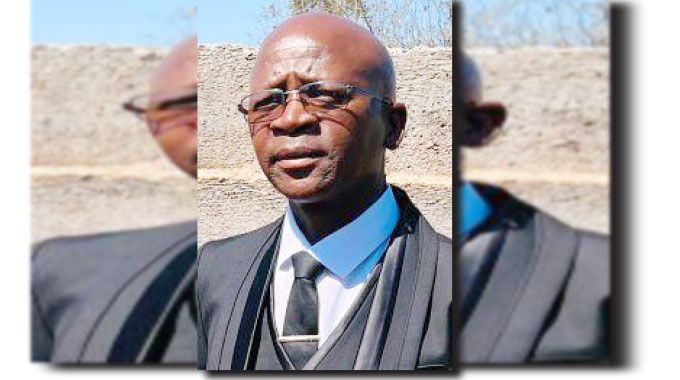
Cde Charles Makhuya
The presence of Cuban and Soviet personnel also boosted morale. We felt that, with support from powers like the Soviet union and Cuba, it was only a matter of time before the Smith regime fell. Before Christmas 1977, the first group began returning to Zambia, while the remainder of our second group started arriving after Christmas. In the meantime, roughly 400 recruits were being prepared through exercises.
MS: When did your training start?
Cde Makhuya: Training began just after New Year in 1978. Like the previous group, we were divided into 12 companies.
Companies 1 to 8 were infantry, while the remaining four specialised in anti-tank, mortar, engineering and communications. Each company had about 150 to 160 men.
I was in the anti-tank company. From the earlier group, some recruits remained to specialise in anti-tank weapons such as the Gun-75.
l To be continued next week, when Cde Makhuya shares details of training under Cuban and Soviet instructors and the Rhodesian bombing of Boma.



 Bongani Ndlovu