admin
admin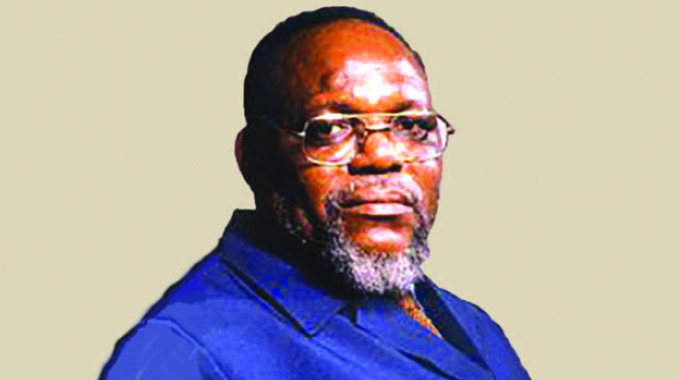
Compiled by Tendai H Manzvanzvike-Head, Zimpapers Knowledge Centre
VETERAN nationalist and Vice President of the Republic of Zimbabwe Cde Simon Vengai Muzenda, died on Saturday September 20, 2003 after a long illness.
He was 80.
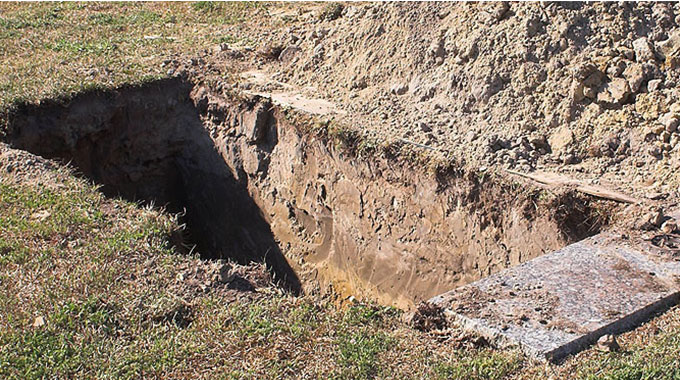
Cde Muzenda was buried at the National Heroes Acre on September 24, 2003.
When announcing the death of Vice President Muzenda, through a live broadcast, the late President Robert Mugabe, described Cde Muzenda as a veteran freedom fighter, a father figurehead, a cultural icon and the Soul of the Nation.
Following the death of this gallant fighter, people from all walks of life joined the Muzenda family and the nation as a whole to express their grief and to mourn the departure of the great nationalist leader who made immense sacrifices in order to liberate his country from foreign occupation.
Indeed, the history of nationalism and of the liberation struggle in Southern Africa would not be complete without mentioning the inestimable contributions that Cde Muzenda made towards the independence of Zimbabwe.
Cde Mzee, as the Vice President Muzenda was affectionately called, was born on October 28, 1922 in Gutu District in Fort Victoria (now Masvingo Province). Like most African children during his time, the Vice President started his primary education late.
He went to Nyamande Primary School at the age of 14 and then proceeded to Gokomere Mission, and afterwards to Domboshawa in 1944 where he trained as a teacher.
As early as 1945, Cde Muzenda demonstrated a high degree of political consciousness when he turned down a farming scholarship to train as an agricultural demonstrator, arguing that the career would require him to supervise the killing of cattle belonging to his fellow African people under the colonial government’s countrywide de-stocking programme.
Cde Mzee taught at Empandeni Mission where he met a young school teacher, Robert Mugabe, and started a friendship that though set to blossom years later, would at first be nothing more than a fleeting encounter.
His passion for education made him to enroll at Marianhill College in South Africa for a three-year diploma in carpentry.
After completing the course in 1948, he taught at Mazenod Catholic School, Mayville, Durban until 1950 when he returned home where he was soon to marry his childhood sweetheart, Moudy Matsikidze, before settling in Bulawayo.
In South Africa, Cde Muzenda was inspired politically by the activities of one Reverend Michael Scott, who was fighting the Group Areas Act in then apartheid republic.
Then, he was in the congenial company of several fellow Zimbabweans, notably George Silundika, James Dambaza Chikerema and Mutero, all of whom were later to play vital roles in the fight and subsequent overthrow of the unjust, racial and colonial white rule.
About this time, controversy raged over the proposal to create the Federation of Northern Rhodesia, Southern Rhodesia and Nyasaland. Alongside the efforts of other nationalists, the notion and reality of a Federation was to be the target of young Simon’s political struggles.
Armed with political experience earned from his sojourn in South Africa, Cde Muzenda got involved in burgeoning trade unionism in Bulawayo. His first employment was as a clerk in a plywood factory before moving on to furniture factories, Modern Furniture and later Wilfred Mart.
It was not very long before he opened his own workshop in Barbourfields, an African township that was a citadel of trade unionism.
During that period, Cde Muzenda became enmeshed in the activities of the Barbourfields Tenants Association, which was one of earliest bodies established in the country to articulate and champion the concerns of the black African urban dwellers.
In 1953, Cde Muzenda came to national prominence when he was elected Secretary-General of the British African National Voice Association, better known as “African Voice”.
The legendary Benjamin Burombo was the President of the African Voice. From those early days of the struggle until his accession to one of the highest offices in the land at Independence, Cde Muzenda has been an integral part of the liberation movement.
As succinctly put by President Mugabe, Cde Muzenda was “the man” and the “legend” of our liberation.
Cde Muzenda later moved to the Midlands town of Umvuma (Mvuma) in 1955, where he stated a carpentry business. In 1957, the late Vice President was involved in the Southern Rhodesia African National Council (SRANC) as it opened its branches in the then Southern Province (Fort Victoria).
Whilst in Umvuma, Dr Muzenda was one of the guiding personalities who were instrumental in the formation of National Democratic Party (NDP) in 1960. He became chairman of the Umvuma Branch of the National Democratic Party (NDP) in 1961 and was subsequently elected as the Organising Secretary of the Victoria Province at its Congress held in Bulawayo the same year.
When the NDP was banned on December 9, 1961 by the Edgar Whitehead settler regime, it was succeeded by the Zimbabwe African People’s Union. Again, Cde Muzenda, unrelenting as ever in his revolutionary drive, soon took his place in the structures of the new party as administrative secretary of Fort Victoria.
In 1962 Cde Muzenda was banned from entering the African Tribal Trust Lands after he had recited the African prayer “Nehanda Nyakasikana”.
In true fighting spirit that was to be the hallmark of his political life, Cde Muzenda challenged the ban in the High Court in Fort Victoria where he was defended by another great son of Zimbabwe, the late Cde Herbert Chitepo.
Thus history had been made, an African nationalist had deployed art in the service of the struggle, in the process showing that colonialism feared creative words.
That same year in 1962, Cde Muzenda was arrested at Shabani (Zvishavane), for what the colonial authorities alleged had been a seditious speech, blamed for igniting riots in the small mining town.
He was sentenced to 12 years in prison but served only two years at Salisbury Prison, a time he used productively. He was to reflect later, “It became a place of study. We started GCE and after 20 years, I had to start from scratch. Then, even though we were in prison, we started ZANU”.
During the same period, Cde Muzenda also experienced the horrendous side of the white regime when his chest was pierced through by a needle at the behest of the Rhodesian police. However, such life-threatening experiences did not stop Cde Muzenda from pursuing his quest for freedom.
After his release, he attended ZANU’s first Congress in Gwelo in 1964, where he was elected Deputy Organising Secretary. He was arrested soon after his election, when the colonial regime’s law and order minions detained him for possessing a small starter pistol. He was convicted of the alleged offence and served his term at Wha Wha Prison in 1964 and later at Sikombela where he reunited with Cde Mugabe.
Around that time – the mid-60’s, Cde Muzenda had started recruiting young Zimbabweans for military training in Ghana, China and other friendly countries.
The nationalist movement had decided to tackle the obstinate and obdurate white regime through the barrel of the gun. The white regime had become too repressive and conservative when in 1962 the Rhodesian Front won the racial elections.
With ultra-white supremacist, Ian Douglas Smith, replacing Winston Field at the helm of the Rhodesian Front, it was clear that the only language the settler Rhodesians would understand was that of the gun.
A proper onslaught against the massive Rhodesian military might would call for men like Cde Muzenda to prepare people for the armed struggle.
When ZANU was outlawed, Cde Muzenda was placed under detention and restricted to within a 10-mile (16 km) radius from Umvuma Post Office. But Cde Mzee got the better of the regime by arguing that as a carpenter, he needed free movement to secure timber. He was allowed a radius of 62 miles (99,7 km) and used this concession to mobilise the people in Fort Victoria, Que Que (Kwekwe) and Gwelo.
More spells of detention came and he was taken to Wha Wha in Gwelo, Sikombela and Salisbury, together with other great liberation fighters like Cdes Robert Mugabe, Leopold Takawira and Morton Malianga.
Eager to further his education, Cde Muzenda, while in detention pursued private studies and passed 8 O-Levels and two A-Levels. He also took the London Chamber of Commerce Examinations and passed the Intermediate Certificate level in English and the Higher Certificate level in economics.
Cde Muzenda was released in 1971 during the Anglo-Rhodesian negotiations which culminated in the infamous Pearce Commission.
Once out of detention, he again engaged in the struggle, mobilising the nation against accepting the Pearce Commission proposals. The British-sponsored constitution was resoundingly rejected by the people.
Cde Muzenda was to comment that the proposals were “tantamount to asking our nation to commit political suicide”.
That same year, he was elected Secretary for Law and Order for the African National Council. He was posted to Zambia in 1972 as Deputy Administrative Secretary of the ANC on a mission to unify the liberation forces under the Zimbabwe Liberation Council.
In 1974, he organised young recruits in the camps in Zambia and Tanzania, and then visited other camps to co-ordinate guerrilla fighters’ activities. But the same years of the ANC were to show him the ugly spectre of infiltration by the enemy. He emerged unscathed.
Indeed, militant and revolutionary Cde Mzee was personally involved in the recruitment of the first group of cadres that were sent to Ghana and later to China for military training.
In 1975, he moved to Zambia and maintained contact with Cde Mugabe. He later moved to Mozambique where the two reunited to continue with a formidable force that prosecuted the armed struggle with utmost rigour.
At the same time, he also played a crucial role in resolving the untenable situation that emerged following the assassination of Cde Herbert Chitepo by enemies of the struggle and subsequent arrest of leading comrades by Zambian authorities.
These events occurred during the so-called détente period and threatened to derail the armed struggle.
Cde Muzenda and his colleagues were able to read the machinations of colonial forces, eventually rescuing the armed struggle and re-launching it to new level of intensity.
In 1977, Cde Muzenda was elected Vice President of ZANU (PF) at its Congress-in-Exile held in Chimoio, Mozambique. His election to that powerful position came as no surprise to many cadres because he had distinguished himself as a national leader of outstanding organisational abilities.
On the diplomatic front, Cde Muzenda attended the Geneva Conference in 1976. The talks were preceded by the formation of a political pact between the two main liberation forces confronting the white minority government, ZANU and ZAPU.
The pact which was called the Patriotic Front became the force that consolidated the struggle, effectively bringing the white colonial regime to its knees. Cde Muzenda also attended the Anglo-American proposal talks in Malta and Dar es Salaam.
During the same period, Cde Muzenda suffered a personal tragedy when he lost one his children during the Chimoio attack, where innocent and defenceless Zimbabweans were attacked by the murderous Rhodesian soldiers.
With the struggle intensifying and the Patriotic Front on the verge of overrunning the regime, the Lancaster House talks were convened in 1979 and once again Cde Muzenda played his part.
In an exasperating pendulum of the Lancaster House negotiations, Cde Muzenda hit out at the British kith and kin bias saying: “The British are again trying to assist the UDI rebels by robbing the freedom fighters of their gains at the conference table. They want to appear as if the current negotiations have not been brought about by the people’s war”.
Relentless pressure from the Patriotic Front resulted in the Lancaster House Agreement which ushered in political independence in 1980.
In recognition of his selfless and unparalleled contribution to the liberation struggle, Cde Muzenda was appointed Zimbabwe’s first Deputy Prime Minister and Minister of Foreign Affairs in 1980.
Following the signing of the Unity Accord between PF-ZAPU and ZANU (PF) on December 22, 1987, Cde Muzenda and Dr Joshua Mqabuko Nyongolo Nkomo were in 1988 appointed Vice Presidents of the Republic of Zimbabwe.
Cde Muzenda continued to serve the country in various capacities. He wore many hats that covered a wide spectrum of national activities, including the search for the indigenisation of the economy and stabilisation of loss-making parastatals.
He was instrumental in preparations for Zimbabwe’s hosting of international conferences, including the Non-Aligned Movement Summitt in 1986.
The late Vice President was central to the national effort against drought and other natural disasters.
Cde Muzenda was an avid and capable traditional dancer. He was the driving force for the establishment of the Great Zimbabwe University in Masvingo.
A man of the arts, Cde Muzenda was also the patron of the Zimbabwe Football Association.
The Great Zimbabwe University honoured him with the establishment of the Simon Muzenda School of Arts, Culture and Heritage Studies for his values of “Unhu/Ubuntu”.
Like many of his political colleagues in the struggle, Dr Muzenda understood the need to free the land in order to deliver economic independence to the masses. After all, land was the raison d’etre for the execution of the armed struggle.
The life of Cde Muzenda, that simple and down-to-earth veteran politician, the Soul of the Nation, will forever remain etched on the political landscape of Zimbabwe.
The rich legacy he left behind will continue to be cherished. Indeed, with committed and gallant nationalists of the calibre of Cde Mzee, Zimbabwe will be defended against all forms of exploitation, whether direct or indirect, and will never be a colony again.
• Source: A Guide to the Heroes Acre: Some basic facts about Zimbabwe’s heroes and the Heroes Acre. (2019) Harare: Ministry of Information, Publicity and Broadcasting Services.


 Online Reporter