Online Reporter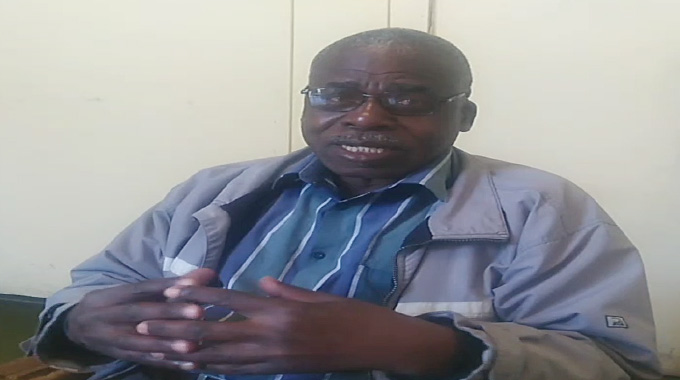
WE continue our interview with former freedom fighter and ex-detainee, Cde Vivian Viyo Siziba, pseudonym Cde Mangenzi Siziba. Before joining the armed struggle, Cde Siziba was first arrested and detained at various prisons following his arrest while still a pupil at Gwanda Secondary School in Matabeleland South Province. In our last edition, he told our Assistant Editor, Mkhululi Sibanda (MS), how he was re-arrested, an incident that led to his detention at WhaWha Prison. Today, he reflects on prison life at WhaWha. Below are excerpts from the interview. Read on . . .
MS: You spoke about being led by a policeman to board a train at the Bulawayo Main Railway Station on your way to WhaWha Prison. Take us through that episode.
Cde Siziba: We boarded a second-class coach and were soon joined by white soldiers in uniform. They were in possession of a lot of beer, which they even offered me. I was not used to drinking, but I took one. Seeing me drink, they warmed up to me and asked Constable Maodza who had been escorting me all the way from Gwanda to remove the handcuffs. Maodza refused, saying he had orders to keep me cuffed. That’s when they asked why I had been arrested. When told them I had been arrested for political activities, they started lecturing me about what they termed the dangers of being associated with terrorists. All they said was part of the regime’s propaganda. They were telling me that terrorists as they called freedom fighters were blood thirst people who could even harm my own relatives. When we arrived in Gweru, I was taken to Gweru Central Police Station where I was locked up for the night. There, I found another man named Tongogara, who had also been arrested for nationalist politics. The following morning, we were served isitshwala with matemba, which were very salty. From there, I was taken to WhaWha Prison on the outskirts of Gweru.
MS: How did you find WhaWha Prison?
Cde Siziba: The prison was teeming with political detainees arrested from different parts of the country. Some of the people I found there had been captured alongside Zapu intelligence operative Ethan Dube, who was abducted by Rhodesian security forces in Botswana. His fate remains unknown to this day. Those detainees had been incarcerated since 1974. I arrived at WhaWha in November 1975. Remember, I had been arrested while I was in Grade 10 (Form 3), so I thought it was strategic to continue with my education while behind prison walls.
MS: Take us through your arrival at WhaWha Prison.
Cde Siziba: Firstly, the detention formalities were processed at the Prison Charge Office. These included the issuance of prison attire, a khaki shirt and long trousers and finally the allocation of prison accommodation. I was initially sent to Section 3, which was supposed to be my permanent section, but I left after a short while. Political allegiances did not spare us even behind bars. Section 3 was a curious mix of detainees loyal to Reverend Ndabaningi Sithole, Bishop Abel Muzorewa, and James Chikerema. Section 4, however, was dominated by Zapu members. With assistance from a Zapu spokesperson, I requested to be transferred to Section 4, and my request was granted.
MS: You must have been relieved after that?
Cde Siziba: I felt at home. I was introduced to the rest of the political detainees, some of whom I had left at Grey Street Prison in Bulawayo. The camp had a diverse mixture of people from all five provinces at the time — Manicaland, Mashonaland, Matabeleland, Midlands, and Victoria (now Masvingo). Among the detainees were card-carrying members as well as those in the national leadership of the party. Notable leaders included George Marange, Jean Ntuta, Rev Elia Masiane, Makhathini Guduza, Arikandwa, Tamaramwa, Esau Nyandoro, and Roderick Nyandoro. There were also business people like Makomborenga, Student Sithole, Imote Khumalo, Tafi Moyo, and Lawrence Ndlela, among others. Traditional leaders were also present.
MS: Do you remember any of those traditional leaders by name?
Cde Siziba: Yes, we had Chiefs Vezi Maduna (Insiza), Muzite from Chipinge, and Zimunya. There were also Headmen Joseph Ranthansi (late) and Mdinwa Ncube (late). Chief Vezi Maduna deserves special mention. He was a principled traditional leader who never buckled under political pressure and always performed his duties within the parameters of the law. I believe it is not too late to accord him hero status. The detention camp also hosted those who had completed their prison terms, most of whom were guerrillas. These included Caluza, Lizwilama Ndebele Jiyane, Lucas Msimanga, Taison Makheto, Walter Mbambo, James Chatagwe, Fred Vincent Dube, and Lazarus Dlakama all of whom are now deceased. Their presence was highly motivational for us young detainees. My peers, that is the young ones from the ranks of Zapu, included Francis Chirimuta, who retired as a full Colonel from the Zimbabwe National Army and is now a lawyer in Harare, Milton Ramachela, Christopher Senda, and Robert Ndlovu. Interacting with these guerrillas stimulated our desire to join the armed struggle. They provided us with revolutionary theory and political lessons relevant to the liberation effort.
MS: What were the general conditions like at WhaWha?
Cde Siziba: We were subjected to a strict regime of prison regulations. However, conditions were slightly more relaxed for detainees than for convicted prisoners. Detainees could receive visitors at any time, and were allowed to receive food items and money from outside. The money was kept at the charge office and could be used under escort to buy personal hygiene items from the prison supermarket.
MS: As a schoolboy, how did you cope with prison life?
Cde Siziba: Strangely enough, I heaved a sigh of relief when I was given an indefinite detention order. Being hunted by the Special Branch was a nerve-wracking ordeal. Prison, on the other hand, offered some form of safety from physical harm and an opportunity to continue with education.
MS: Tell us about the prison education system you went through.
Cde Siziba: One of the privileges of being a detainee was access to education, from Grade One right up to tertiary level. The main sponsor was Christian Care, which not only covered tuition but also provided monthly stipends for detainees’ families, including school fees for their children. Detainees came from diverse educational backgrounds. Some had not gone beyond primary school, yet all were accommodated. Since I was arrested while in secondary school, I registered for GCE O-level and passed the following subjects:
ν History (British Empire and Commonwealth): Grade A
ν British Constitution (now Government and Political Studies): Grade B
ν Religious Studies: Grade B
ν English Language: Grade C
ν Geography: Grade C
I was released on 13 April 1978 while doing A-level.
MS: Who provided your study materials?
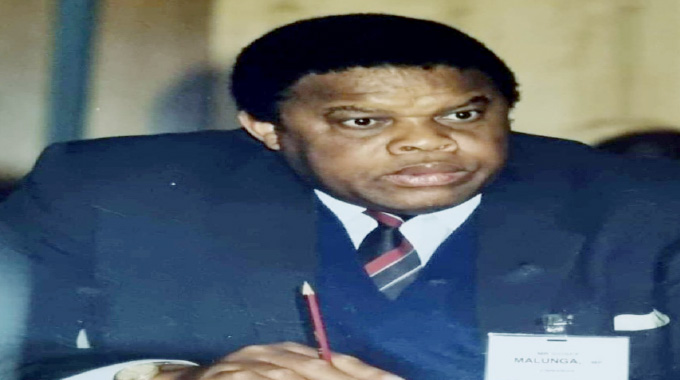
Cde Siziba: Study materials came from the Central African Correspondence College and the Rapid Results College. I studied with the former. Examinations were administered by the University of London, which held sessions in January and June each year. Those with higher qualifications helped those at lower levels. In my O-level class, great assistance came from Sydney Malunga (a senior Zapu leader) and Johnson Mkandla (later a magistrate), who taught English. Cde George Marange took us for History and British Constitution, while Albert Malala, Ramahapula, and Reverend Masiane handled Religious Studies. Sadly, all of them are now late.
Others pursued professional studies through institutes such as the Royal Society of Arts (offering Civics, Central and Local Government, and Public Administration), the Institute of Certified Bookkeepers (ICB), and the Institute of Administration and Commerce (IAC). Zapu prepared its cadres for leadership roles in both public and private sectors. For instance, Samuel Sipepa Nkomo later became the Chief Executive Officer of the Mining Industry Pension Fund; Walter Mbambo rose from parliamentary security officer to become the Sergeant-at-Arms in the Parliament of Zimbabwe; Lazarus Dhlakama served as a legal officer in the Harare City Council. We also had captured guerrilla Moffat Ndlovu, who later became Bulawayo City Council’s Town Clerk. All these individuals studied while in detention. In essence, wherever a Zapu cadres found themselves, and whenever opportunity presented itself, they seized it to prepare for future assignments.
ν To be continued next week with Cde Siziba talking about how as detainees they organized themselves and kept up the spirit of fighting for Independence high despite being incarcerated. He will also talk about his release and eventually crossing the border to join the armed struggle.