Online Reporter
Peter Tanyanyiwa
Herald Correspondent
MARCH is a month dedicated to celebrating women and their remarkable contributions, two stories shine brightly amidst the celebrations in Zimbabwe.
The recent International Women’s Day on March 8 resonated deeply with the theme of empowerment and inclusion, showcasing the transformative power of women in overcoming systemic barriers.
Among the inspiring narratives, Ms Michelle Madau and Ms Maria Nkomo stand out as symbols of resilience, empowerment and hope.
Ms Madau is a make-up artist and beautician who has not only embraced her own journey but has become a beacon of hope for countless women with disabilities in Zimbabwe.
Living with osteogenesis imperfecta, a condition that affects bone strength and mobility, Michelle faced significant challenges growing up. Yet, she has refused to let societal perceptions define her.
“Growing up, I felt misunderstood because of my disability but would tell myself, ‘You can do this. Don’t listen to what they say,’” she recalls with determination.
Through her artistry, Ms Madau has not only carved out a successful career but has also taken on the role of mentor to other women with disabilities, empowering them to rise above their fears and achieve financial independence.
“Hearing other women gain confidence and independence, whether by overcoming fears or starting their own business, has been incredibly rewarding. It’s been a breath of fresh air. It’s been so amazing,” she said, her passion evident in her words.
Her journey stresses the importance of creating inclusive opportunities for women with disabilities.
Organisations like Sightsavers have played a pivotal role in this, providing skills training and confidence-building programmes that enable women like her to thrive.
Her story is a testament to the untapped potential that lies within Zimbabwe’s women, particularly those facing discrimination.
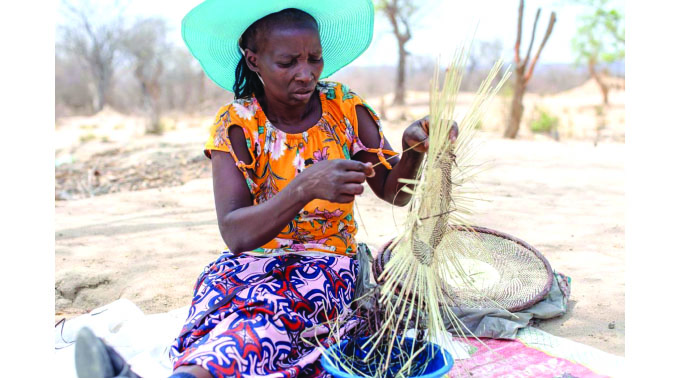
In the rural district of Binga, another remarkable journey unfolds with Ms Nkomo, a skilled basket weaver whose life took a turn due to trachoma, a neglected tropical disease that severely impaired her vision. For Ms Nkomo, losing her sight meant losing her livelihood and independence.
“I couldn’t weave baskets anymore, and it felt like my life was slipping away,” she recalls, her voice filled with emotion.
Thanks to the dedicated efforts of Sightsavers and local health workers, she received free eye surgery that restored her vision.
The transformation was nothing short of miraculous.
With her sight regained, she returned to her craft, supporting her family and reclaiming her independence.
Ms Nkomo’s story not only highlights personal triumph but also reflects the broader fight against neglected tropical diseases (NTDs) in Zimbabwe, which disproportionately impact vulnerable communities.
Sightsavers country director Mr Peter Bare, emphasised the urgency of addressing NTDs.
“Fighting NTDs in Zimbabwe is a fight for equality. These diseases hit the vulnerable people hardest.”
Ms Nkomo’s journey serves as a powerful reminder of what can be achieved when healthcare and support reach those who need it most.
The stories of Ms Madau and Ms Nkomo extend beyond their personal victories; they reflect broader societal challenges and opportunities.
The inclusion of women in economic activities and the workforce emerges as a crucial factor.
A recent World Bank report indicates that closing the gender employment gap could boost Zimbabwe’s GDP per capita by nearly 6 percent, highlighting the necessity for gender-inclusive policies that unlock the economic potential of women, particularly those with disabilities.
The informal economy, which constitutes 64.1 percent of Zimbabwe’s total economy, is another sector where women’s participation can drive growth.
While women already play a significant role in this space, systemic barriers, including lack of access to resources and workplace discrimination, persist.
For women with disabilities, these challenges may multiply, pushing many into poverty.