Chronicle Editor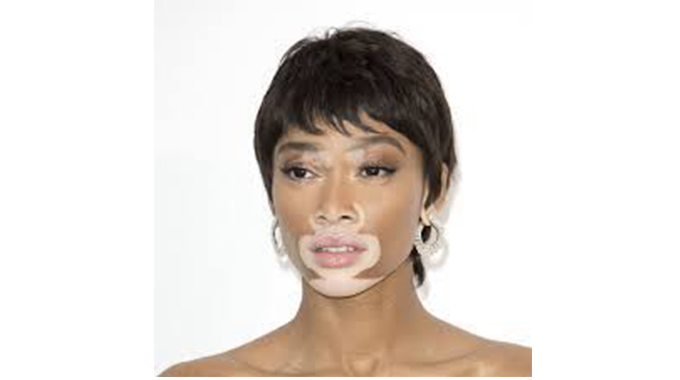
Health, Dr Tatenda Simango
Vitiligo research foundation
THE first World Vitiligo Day was held in 2011 and has since become an annual event. Vitiligo is a disease that causes loss of skin colour in patches. The campaign was born from the determination of non-profit organisations Vitiligo Research Foundation (VRF) (USA) and Vitiligo Support and Awareness Foundation (VITSAF) (Nigeria) and their supporters across the world, to bring this “forgotten” disease into the public eye and to shine a light on challenges faced by those suffering from vitiligo.
Over the years, its purpose has broadened from raising awareness of vitiligo to include recognition of the bullying, social neglect, psychological trauma and disability of millions of people affected by vitiligo. An estimated 100 million people across the world suffer from vitiligo.
Ogo Maduewesi, founder and president of VITSAF in Lagos, Nigeria, picked up the idea for vitiligo awareness day back in 2011. Ogo and a handful of activists held the Vitiligo Purple Fun Day at the shopping mall in Lagos on 25 June 2011, in memory of late King of Pop Michael Jackson and his struggle with vitiligo.
Yan Valle, CEO of Vitiligo Research Foundation (VRF) based in New York, USA, saw the potential of Ogo’s idea for an international day of action to bring the disorganised vitiligo community together in a common purpose and to shine a light on challenges faced by those suffering from vitiligo.
The global WVD campaign was then launched and designing, marketing and distribution of promotional materials started in early 2012.
On 25 June 2012 the second World Vitiligo Day was celebrated. This was a truly global affair. The first Press conference of the campaign was organised by VRF and Professor Torello Lotti at the University of Guglielmo Marconi in Rome. At the same time, street events took place in Australia, Botswana, Brazil, Chad, China, the Czech Republic, France, India, Macedonia, Nigeria, Russia, the UK and USA. The event surpassed all expectations
To this day, WVD Presidential Committee and VRF co-ordinate the global effort while national and local vitiligo support groups organise conferences, walks, picnics, parades, and other events. Also, clinics and volunteer doctors offer free skin screening programmes, education and consultations to the public.
TV channels, radio stations, newspapers and internet influencers now cover WVD.
The eleventh annual World Vitiligo Day took place on 25 and 26 June this year. Each year WVD is officially hosted by a different city and this year it was Jakarta, Indonesia.
Vitiligo discoloured areas usually get bigger with time. The condition can affect the skin on any part of the body. It can also affect hair and the inside of the mouth.
Normally, the colour of hair and skin is determined by melanin. Vitiligo occurs when cells that produce melanin die or stop functioning. Vitiligo affects people of all skin types but it maybe more noticeable in people with darker skin.
The condition is not life-threatening or contagious. It can be stressful or make you feel bad about yourself.
Treatment for vitiligo may restore colour to the affected skin but it doesn’t prevent continued loss of skin colour or a recurrence.
Vitiligo signs include:
- Patchy loss of skin colour, which usually first appears on the hands, face and areas around body openings and the genitals
- Premature whitening or graying of the hair on your scalp, eyelashes, eyebrows or beard
- Loss of colour in the tissues that line the inside of your mouth and nose (mucous membranes)
Vitiligo can start at any age but usually appears before the age of 30 years.
Depending on the type of vitiligo you have, it may affect:
- Nearly all skin surfaces. With this type, called universal vitiligo, the discolouration affects nearly all skin surfaces.
- Many parts of your body. With this most common type, called generalised vitiligo, the discoloured patches often progress similarly on corresponding body parts (symmetrically).
- Only one side or part of your body. This type, called segmental vitiligo, tends to occur at a younger age, progress for a year or two, then stop.
- One or only a few areas of your body. This type is called localised (focal) vitiligo.
- The face and hands. With this type, called acrofacial vitiligo, the affected skin is on the face and hands and around body openings such as the eyes, nose and ears.
It’s difficult to predict how your disease will progress. Sometimes the patches stop forming without treatment. In most cases, pigment loss spreads and eventually involves most of your skin. Occasionally, the skin gets its colour back.
It’s unclear exactly what causes these pigment cells to fail or die. It may be related to:
- A disorder of the immune system (autoimmune condition)
- Family history (heredity)
- A trigger event such as stress, severe sunburn or skin trauma such as contact with a chemical.
People with vitiligo may be at increased risk of:
- Social or psychological distress
- Sunburn
- Eye problems
- Hearing loss
Medications and light-based therapies are available to help restore skin colour though results vary and are unpredictable. And some treatments have serious side effects.
No drug can stop the process of vitiligo — the loss of pigment cells (melanocytes). But some drugs, used alone, in combination or with light therapy, can help restore some skin tone.
Use a broad-spectrum, water-resistant sunscreen with an SPF of at least 30. Apply sunscreen generously and reapply every two hours.
Makeup and self-tanning products can help minimise the differences in skin colour. You may need to try several brands of makeup or self-tanners to find one that blends well with your normal skin tone. Damage to your skin such as that caused by a tattoo, may cause a new patch of vitiligo to appear within two weeks.



 Online Reporter