Chronicle Editor
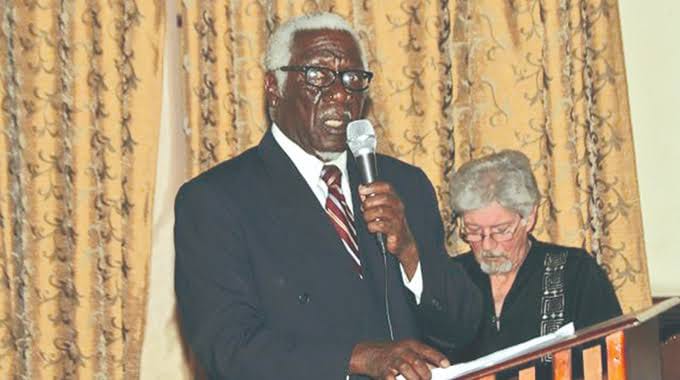
AS part of the Ministry of Information, Publicity and Broadcasting Services’ month-long Heroes and Defence Forces commemorations under the auspices of Zimbabwe’s Heroic Friends and Defence Allies, Richard Runyararo Mahomva (RM) sat down with Ambassador Christopher Mutsvangwa (CM) to discuss how Zimbabwe’s journey to Independence was supported by African liberation movements. Cde Mutsvangwa is a seasoned pioneer Zimbabwean Diplomat, Zanu-PF Secretary for Information and Publicity and chairman of the Zimbabwe National Liberation War Veterans Association (ZLWVA).

RM: Who is Christopher Mutsvangwa and what are his connections to the evolution of our independence?
CM: I am the spokesperson of the revolutionary Party, Zanu-PF and I am the chairperson of the Zimbabwe National Liberation War Veterans Association which is an affiliate to the party and it represents the former liberation fighters of both liberation movements which spawned from Zanu and Zapu, in which Zanla was affiliated to the then Zanu while ZPRA was affiliated to Zapu. That’s my generation and that’s where I come from.
We are happy that this association has given birth to an organ of the party in the form of the War Veterans League which is confined to the liberation fighters who fought for the liberation of Zimbabwe. Beyond that I am a businessman, and I am the father of the digital economy in Zimbabwe. After my participation in the armed struggle, I read for a degree in Information Systems. Before the war I studied law at the University of Rhodesia, and I left to go and join the war. When I survived the war, I then became a diplomat and I served in America, that’s where I completed my university education and several other degrees including in telecommunications and management. When the internet came, I was one of the early pioneers of digitalisation. So, my other trade is in consultancy and a Zimbabwean diplomat. As you are aware, before our Independence in 1980 there was no diplomacy. Southern Rhodesia was not recognised as a state and as such, it could not have diplomats. After delivering our national Independence, I was trained and deployed in Brussels, then New York, and later in Namibia. I was one of the principal diplomats during the independence of Namibia in 1989, thereafter I came back and joined ZBC.
I became the CEO of ZBC courtesy of the broadcasting training I received in America. After leaving ZBC, I became a telecommunications consultant, NetOne was involved in this as the first digital switch of Zimbabwe came from a company called Siemens from Germany. Then, afterwards I helped bring in internet into Zimbabwe with a company called Sisko from America. This was the first broadband ever to Zimbabwe. I was involved in broadband network which is now Utande with a company from Canada. Later its ownership shifted to a French company called Alcatel UBridge Networks.
So I have a diverse background and to cap it all I became an ambassador to China. The main reason was that after the land reform, the Western countries wanted Zimbabwe to fail as a State and they attacked the economy and we had to look for alternative sources of capital. Luckily China was taking off, so I was deployed to spearhead the Look East Policy as an alternative investment source for Zimbabwe because the Western business community had shut down in Zimbabwe. Meanwhile, Zimbabwe was being denied financial capital from the Western institutions. So, I saw and was instrumental in the dramatic rise of Chinese investment in Africa. When I took up this assignment, Chinese investment in Africa was 10 billion dollars, so I organised African ambassadors especially from southern Africa and convinced the Chinese government to invest in Africa and one of the largest outward investment to come out of China was the 60-billion-dollar purchase of the Standard Bank. I am happy to say from the time I left Beijing trade between Africa and China had jumped from 10 billion to 80 billion and today it is 240 billion. And it is growing! After my diplomatic mission, I came back home to mainstream politics. In summary, I am a war veteran, diplomat, businessman, telecoms expert and a broadcaster.
RM: As a diplomat and given your engagement in our struggle how do you attribute the path of our Independence to international solidarities?
CM: First of all, we have a very rich history, you can’t fail to be impressed by Great Zimbabwe, you can’t fail to be impressed by Khami in Bulawayo, you can’t fail to be impressed by Danamombe in Gweru, you can’t fail to be impressed by Mapungubwe on the confluence of the Shashi and the Limpopo river.
So this is the tradition of Zimbabwe and of all African civilisation, South of the Sahara we are probably the leading one. And these edifices I have talked about are living testaments to a country that had its glory at one time or another so, you can’t doubt the historical achievements of the people of Zimbabwe. Then we had the colonial experience by the British which was the second colonial experience. The first one was Portugal which tried in the 17th century and we defeated Portugal. That’s why Changamire Dombo is famous! He drove back the Portuguese to the Coast of Mozambique to keep Zimbabwe independent. This is the rich tradition we mine upon, and we had the British experience with Cecil John Rhodes taking advantage of the industrial revolution and technological age which Europe had over Africa and the Maxim gun became very important dynamite which had been invented in Sweden. So we were defeated in the 1890s but the heroic resistance of Chief Mashayamombe who was the Chief General of the First Chimurenga, sometimes people confuse him with Mbuya Nehanda who was the spiritual leader but Chief Mashayamombe was the Chief General and many others.

So I come from Mhondoro where Chief Mashayamombe fought against Cecil John Rhodes’ army and my grandfather used to tell me about these tales and my great-grandfather used to tell me about the heroic resistance of the people of Mhondoro in particular. So I was lucky that we had a principal at Kutama who taught us history and we had the political events of nationalistic movements during that time affecting the psyche of students, the social consciousness of students, like the PS Commission which was big incubation of political consciousness in the 1960s and 70s. Therefore, in our case when Mozambique got independent in 1975, in 1974 FRELIMO had shown Zimbabwe that “varungu vanoroveka” by defeating the Portuguese imperial army.
RM: Tell me more about Mozambique’s role in our liberation struggle.
CM: Mozambique gave confidence to everybody in the sub-region. Due to our proximity to Mozambique, here in Zimbabwe we decided to do something different because South African students and young people demonstrated in Soweto and were mauled down, that is the Sharpeville Massacre in 1976. We took the prudent step, we crossed into Mozambique which became the recruitment centre for young people, and thousands from all walks of life crossed into Mozambique where our army under the tutelage of Cde Herbert Chitepo who was our national Chairman and Cde Tongogara who is the military genius from Zanla, the Cde Ziyaphapha Moyo, Mangena and others from the ZPRA side, suddenly had a flood of young people. There were now more recruits than there were guns. We took advantage of the fact that the two liberation movements over the years had built a corps of military and political trainers. Now within, with this influx of recruits we didn’t need to go to the Chinese anymore or to go to the Soviet, or the Cubans anymore, we had our corps of trainers who had acquired military skills especially the Northwest offensive led by Tongogara in 1969 and 1973. That made it possible to have a rapid turnover of recruits to be brought back on a broader political and military front from the Zambezi to the Limpopo.
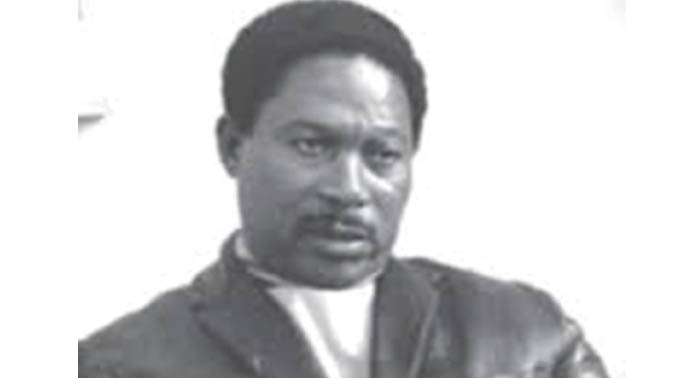
I’m going to remind you that the independence of Mozambique removed the natural impediment, that is, the Zambezi River which served as the natural defensive site of the Rhodesian army where they only needed to patrol the river and shoot the deployed fighters. Thanks to the genius of Tongogara and Chitepo. They removed the Zambezi as a barrier together with Frelimo making the North-East offensive effective. At that point, Zanla became the biggest guerrilla movement which marshalled Zimbabwe into independence. The additional reward was the independence of Mozambique and the decision by President Machel to open the Zimbabwean eastern borders to the liberation fighters and the deployment of the army and that was the Zimbabwe People’s Army (Zipa). By so doing we had a 1 000km front, with mountains it became the most hospitable guerilla territory. This meant that we were now being trained at a faster pace by the trainers and then deployed back into Zimbabwe to fight.
RM: Ambassador does this mean you are a product of this turning point in our pursuit for independence?
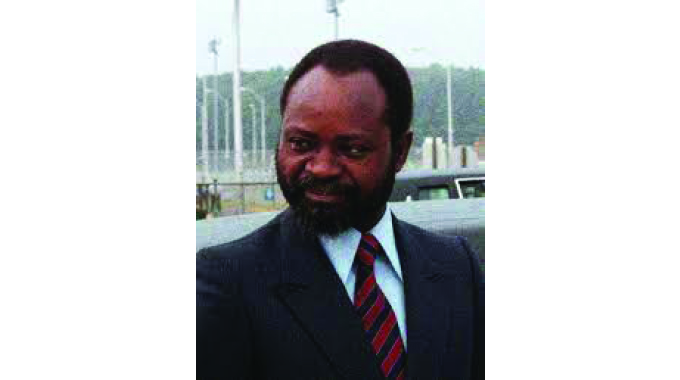
CM: Indeed, Comrade, when the war was restarted, I was one of the first to be trained at our camp in Tembwe. During this period, we had a very rapid guerilla deployment into Zimbabwe, we forced the Rhodesian army to seek the British government for talks which is the Geneva talks. This was the impact of the Samora Machel-Soweto generation which I belong to. We have got to thank President Nyerere and Kaunda, and later President Machel, President Neto, President Santos and of course Amilcar Cabral — that towering African revolutionary intellectual.
RM: In other words, you are saying Zimbabwe’s independence is continentally tied?
CM: We were hosted in Tanzania, and we acquired a brotherhood and sisterhood with various liberation movements from the region and bonds were forged in the trenches of the struggle. We have several regional groups that came together under the banner of globalisation. But in southern Africa and the Sadc in particular, we are unique because beyond being neighbours we have shared acquired political soul. I feel at home in Luanda as I feel at home in Maputo, Dar es Salaam, Pretoria, Walvis Bay and they must also in turn feel at home in Harare. This stems from bonds we created against imperialism, colonial subjugation and racism. We forged a common identity. Southern Africa is unique and today have stood against post-colonial pundits’ efforts to subvert, divide and rule the region. They have failed because of the strengths of the bonds which we were talking about in the Victoria Falls conference in 2019. I am happy to say these bonds continue to strengthen and this time taking an economic dimension.
RM: As liberation movements how have you ensured that you deal with ideological fragmentations and delivering economic freedom?
CM: We are going to deliver to Africans and the diaspora the resurgence which Africa has never known. That’s happening in southern Africa and Zimbabwe is at the pivot of such. We are happy that 2017 came and we managed to shutter the G40 depredations. We were on the verge of being fully subverted by the West through the installation of a monarchy. Imagine a country that has a republican revolution history was on the verge of being overtaken by a dynasty through the G40. Anyway that was arrested courtesy of the war veterans and the people of Zimbabwe. We now have a leader in President ED Mnangagwa.
RM: What do you make of President E D Mnangagwa in the reorganisation of the post-colonial Zimbabwe?
CM: Our leader has walked his fair share of the armed struggle since the 1960s. He was one of the first volunteers to our cause of liberation. This is a man who goes through the trig mill of suffering, imprisonment, death sentence, escape, and when he gets the chance to freedom he goes back to school and prepares to come back again. So it is extraordinary that a person goes to war twice but in this instance he did it and he became part of the reorganisation of the Zanla forces in Mozambique. His genius saw him becoming the special advisor to the former President Cde Robert Mugabe.

President E D Mnangagwa also set up a very solid professional intelligence organisation, mining on the experience of both Rhodesian side and taking advantage of the Zipra cadres that had trained under KGB and that’s when we had our intelligence organisation. He held several ministerial posts, technically, he has never known any other employer besides the people of Zimbabwe’s cause for freedom.
Now fast-forward, in the last four years there has been dramatic game-changing decisions not only in the economic management of our country, but across other aspects of Zimbabwean national interest. The turnaround has been breathtaking and dramatic and that has put Zimbabwe very much on a good stead to become Africa’s emerging success. In Zimbabwe we are seeing the future of Africa akin to that of Singapore and this is to the pride of Zimbabweans and Africa and its diaspora and to the joy of all the progressive humanities in the global community who have stood with Zimbabweans over the years.
To be continued next week


 Online Reporter