Moffat Mungazi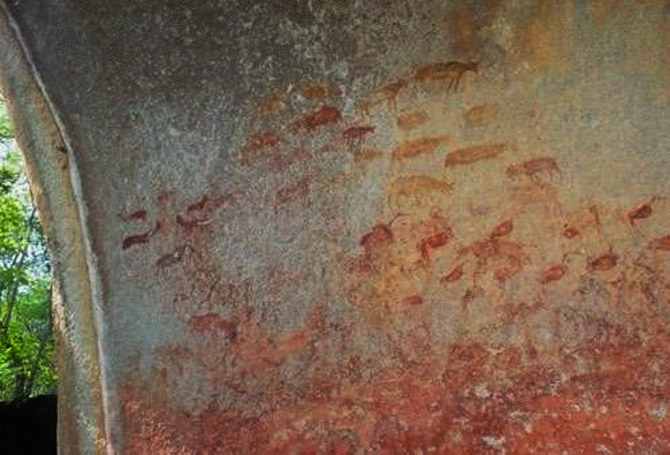
Lloyd Makonya
Correspondent
AS Manicaland Province converges at Chief Zimunya’s homestead today (Friday) to mark the Provincial Culture Month under the theme: “Celebrating Indigenous Voices,” it is timely, and important to reflect on the rich cultural heritage that defines the identity of this area.
Among the treasures under Chief Zimunya’s jurisdiction are two significant rock art sites, Muromo and Manjowe which serve, not only as historical landmarks, but as enduring testaments to the artistic, spiritual, and social lives of Zimbabwe’s earliest communities.
Muromo Rock Art Site
Muromo Rock Art Site, proclaimed a national monument on January 9, 1942, is one of the area’s most prominent archaeological sites.
Located approximately 42 kilometres southeast of Mutare along Mutare-Chimanimani Highway, this site features rock art panels estimated to be between 1 000 and 2 000 years old.
Executed on an overhanging granite boulder, the main panel at Muromo showcases a sophisticated interplay of artistic motifs.
There are human figures, animal figures and two distinct abstract designs. Notably, one of the abstract motifs resembles concentric rings, referred to as a “labyrinth”, while the other takes a dendritic pattern and is superimposed on an elephant.
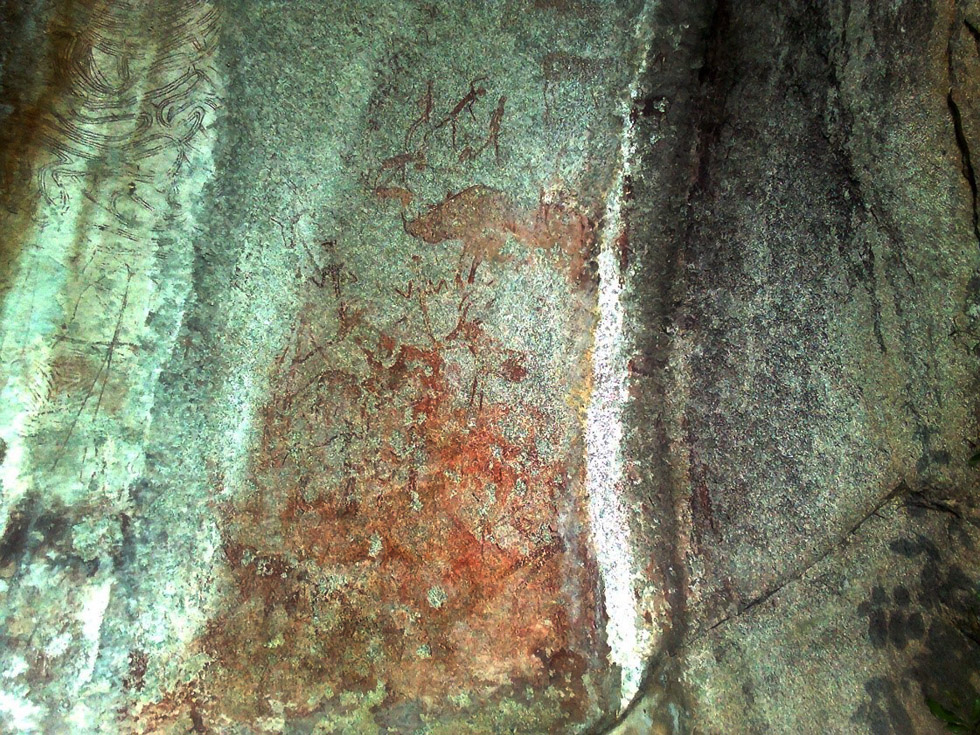
Archaeological interpretations suggest that the original artists were hunter-gatherer communities, most likely the Khoisan.
However, the inclusion of domesticated animals in some drawings hint at a cultural overlap or transition to early farming societies.
This blend of motifs provides rare insights into a community navigating between subsistence strategies and evolving spiritual and social rituals.
Manjowe Rock Art Site
A mere eight kilometres from Muromo lies the lesser-known, but equally compelling Manjowe Rock Art Site.
Like Muromo, the art at Manjowe is painted on a granite overhang, demonstrating an ancient awareness of conservation which protects the artwork from weathering and human interference.
Basing on the analysis of artefacts which were excavated at Manjowe in 2007, the site was first utilised by Later Stone Age (LSA) hunter-gatherers and afterwards by Later Farming Communities (LFC).
There is a general reverence by the community of the mountains housing the paintings as they are considered abodes of ancestral spirits.
The imagery at Manjowe reveals a narrative of societal evolution.
The left side of the panel portrays human figures in a hunting scene, emblematic of a hunter-gatherer existence.
As the viewer’s eye moves rightward, the panel reveals a remarkable transition with images of domesticated animals such as cattle, goats, dogs, and even ostriches dominate the composition.
This progression reflects a shift from nomadic life to more permanent, agrarian settlements, aligning the site with the farming community period.
The rock art of Muromo and Manjowe is, not merely decorative or illustrative, but embodies a fundamental form of early human communication.
It reflects how ancient communities interpreted their world, conveyed knowledge, and practiced their beliefs.
These artworks are also thought to be tied to spiritual rituals and as such, they provide a lens into the mental, spiritual, and socio-economic frameworks of early societies.
The theme of this year’s Culture Month: “Celebrating Indigenous Voices” resonates powerfully through these rock art sites.
Muromo and Manjowe are silent, but eloquent voices of Zimbabwe’s ancestral past.
They remind us that the cultural expressions of our forebears are not static relics but dynamic narratives deserving preservation and recognition.
The sites offer educational, cultural, and tourism potential, while also instilling pride and fostering intergenerational transmission of knowledge.
It is essential that all stakeholders work together to safeguard and promote these cultural landmarks.
As we celebrate Culture Month, let us honour the memory and wisdom of those who painted their truths onto stone.
Let Muromo and Manjowe be symbols of a living heritage resonating with the voices of the past, while guiding the cultural consciousness of present and future generations.



 Online Reporter