

 Online Reporter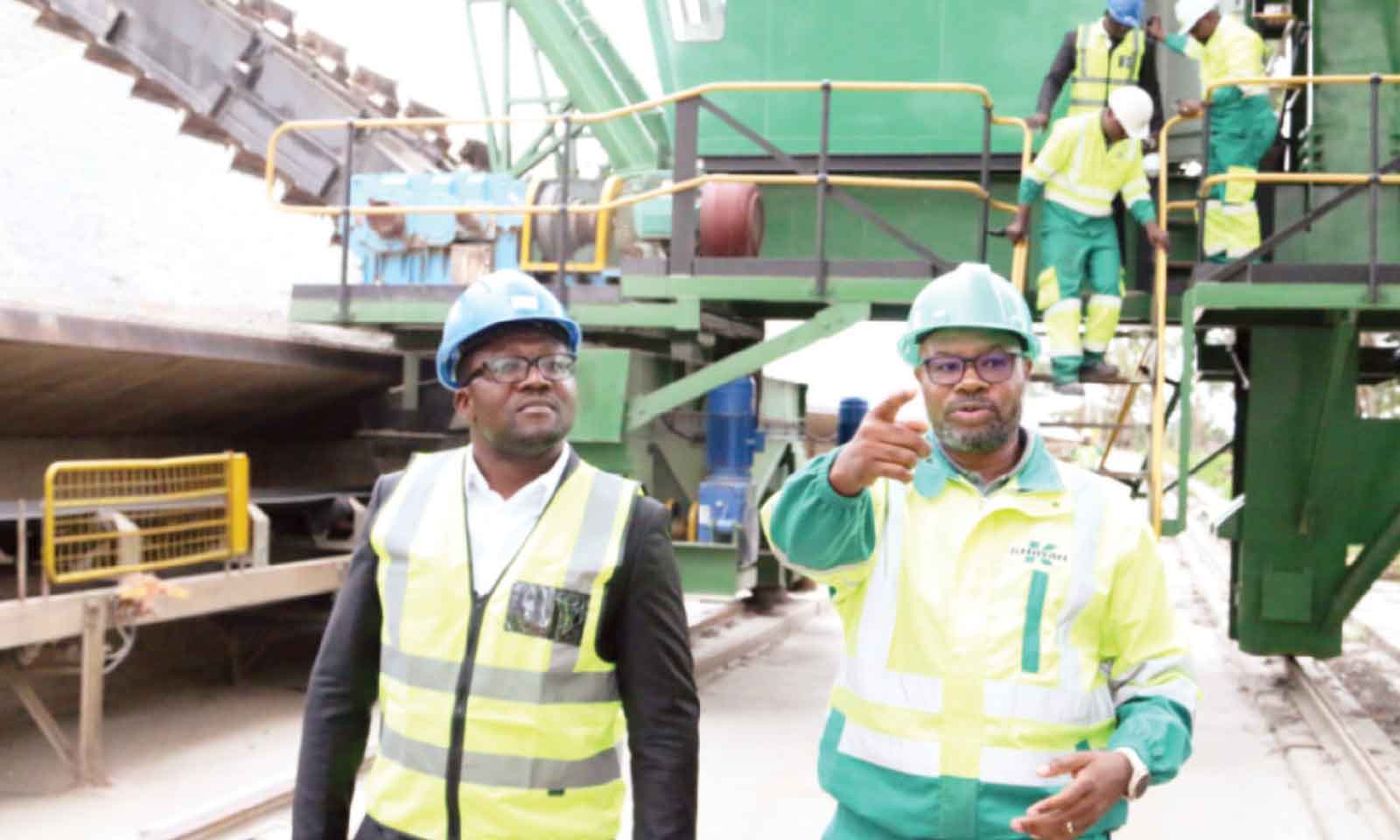
Remember Deketeke
Herald Correspondent
CEMENT supply is poised to improve following a US$20 million rehabilitation of the Khayah clinker kiln, which resumed operations earlier this month after being idle for 26 months, Industry and Commerce Minister Mangaliso Ndlovu said yesterday.
Minister Ndlovu explained that a clinker kiln, or cement kiln, is crucial in cement manufacturing, using intense heat of around 1 600 degrees Celsius in a large rotating furnace to transform raw materials like limestone and clay into clinker, the hard nodules that serve as the foundation for cement.
“This kiln behind me had not been working for the last 26 months, and they have invested no less than US$20 million to repair it,” he said.
“They switched it on last Saturday after a combination of breakdowns, maintenance shutdowns and border delays created a severe supply bottleneck in recent weeks.”
Minister Ndlovu said the kiln was still warming up, but its restoration was a significant step towards meeting national cement demand.
The supply strain had been triggered by several concurrent factors, including a breakdown at PPC’s Harare plant, scheduled maintenance at Sino Cement in Kwekwe, and a two-week disruption in clinker imports from Zambia. In addition, an audit process at the border further slowed inflows.
“All these issues converged, leading to the huge supply bottleneck we experienced,” he said.
Minister Ndlovu highlighted that the situation resulted in price increases for available products, prompting the decision to open imports, despite the higher transport costs involved.
However, he said this was not a permanent solution. “A permanent solution is when we develop our own capabilities,” he stated.
A bag of cement now costs between US$16 and US$22, depending on location. Cement generally should be produced very close to users and customers to keep costs down. While PPC has resumed full production, Minister Ndlovu expressed concern over retailers inflating prices downstream. He warned that action would be taken against importers abusing price-stabilisation permits.
“If you have an import permit designed to stabilise prices and inflate cement prices, you will not be able to obtain a permit in the future,” he said.
Minister Ndlovu acknowledged that, although the revived kiln will supply Khayah’s own clinker needs, national demand exceeds current domestic clinker production capacity.
“Most companies are millers; they buy clinker and mill it into cement,” he explained.
Discussions are underway for a new clinker manufacturing plant as a national strategic investment, requiring an investment of between US$150 million and US$200 million.
Minister Ndlovu noted that two newly opened milling plants in Hwange and one in Mashonaland West have already closed due to a lack of clinker, highlighting the urgency for additional kilns.
“Cement consists of 60 to 80 percent clinker,” he stated.
“If we get a third or fourth kiln, we will be well positioned as a country.”
PPC sales manager Mr Nkosana Mapuma said the firm has maintained consistent production and doesn’t intend to create shortages.
“We are currently producing cement, and there is plenty in our warehouse,” he noted.
“We are committed to ensuring that there is ample supply in the market.”
Khayah Cement’s corporate rescue practitioner, Mr Bulisa Mbano, expressed optimism, stating that the rescue mission would be a turning point for the company, which has struggled with debt and operational inefficiencies.
“The positive is that all creditors will be paid down, providing immediate relief and enabling us to focus on growth,” said Mr Mbano.
The US$20 million investment in the clinker kiln is expected to be a game changer for the cement industry.



