

 admin
admin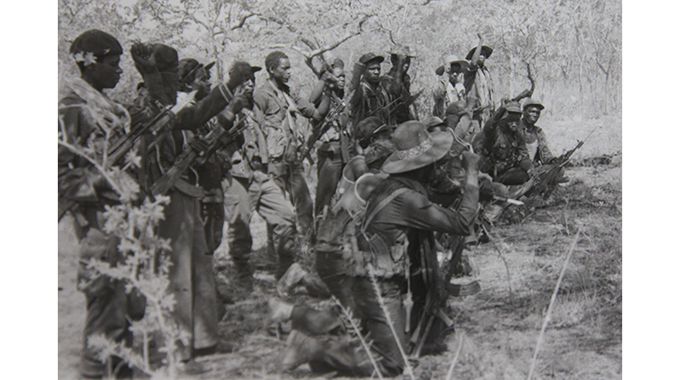
Clinton Chinogurei-Correspondent
In the twilight years of Zimbabwe’s colonial times, the concept of the Patriotic Front emerged as a mobilising call around the mid-70s in response to strategic mass grievances.
This central organising principle has never changed ever since.
My intention here is to briefly highlight the full contours of the cross-sectoral impact left behind by this wave of nationalism, tracing it back to its roots and drawing a few eye-opening parallels between overarching transformational imperatives of the liberation war period and those of our present post-colonial times.
Ordinarily, no other subject is capable of moving passions in such a visceral way as do all matters of national interest.
There must be something way beyond the pull of generational imperatives to draw the masses to leave familiar comforts to go and expose themselves to the inevitable and endless perils of war, especially when these start to take a toll, decimating their colleagues in front of their eyes. In 1979 alone, an estimated 45 000 trained combatants were still active within the Patriotic Front’s war effort in various transnational deployments.
In a way, they had all assumed sacerdotal roles of a vicarious vanguard, turning the tide of protracted conflict and so embracing and embodying the secrets of the persuasive ode, as it were. But movements never arise out of thin air, and the initiative for critical mass actions can always be traced back to a few stern individuals.
Thus, we had the likes of President Mnangagwa and his colleagues spearheading an extraordinary mass deployment within the region premised on the need to address identified mass grievances, with the land question at the forefront.
Society is self-organising, and so organic mass mobility spin-offs naturally evolved from this central organising principle, assuming several mass-driven cultural, political, and socioeconomic expressions throughout the decades.
It has evolved into (i) mass empowerment policy thrusts and (ii) grassroots civic expressions, as the people’s response, spanning across all conceivable industrial sectors and sections of society, with livelihood issues taking centre stage.
Whereas before the imperative was political emancipation, now it’s targeted wealth consolidation from household to national level.
This view closely concurs with Dr Tafataona Mahoso’s relational philosophy, which encapsulates the ideals and spirit of Ubuntu, as it identifies prescriptive strains of democracy and the Roman law (with its dark Etruscan roots) as vestigial expressions of an unwholesome surrogacy.
He speaks of kushaura, where the central government sets the pace for identified transformational priorities, and then kudavira, or rudaviro, as the people’s participation and feedback on the basis of that mobilising call.
We shall write our own laws and multiply alternative financial ecosystems.
“Let [ . . . ] the kings of old re-crown themselves.” (Heron et al, 1975). So, we streamline and re-focus all connective roles to multiply our fluid responses and to heighten our effective outreach, emulating those and so turning their subversive system (or an image thereof) on itself. And as the people who delivered political emancipation back then are now our heroes, young people alive now who shall deliver socioeconomic transformation shall be the household names of our future days.
◆ Engineer Clinton Chinogurei, is based in Salerno, Italy.



 Online Reporter