

 admin
admin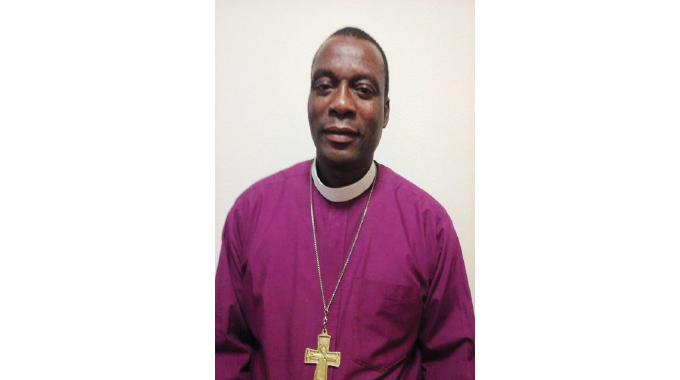
Rejoyce Sibanda, Chronicle Reporter
INFOHUT, a Lutheran Communion in Southern Africa- (LUCSA) initiated programme, which engages and equips adolescents and young people with life skills through the use of computers is helping over 550 youths at Njube Youth Centre in Bulawayo.
The concept of an Infohut came from an African hut (Iqhugwane in Zulu) where the young and the old, especially the disillusioned, would seek wisdom and information to address challenges faced in their lives.
Infohut is an HIV and Aids project that empowers young people with computers and life skills. The programme runs for six months with students being given three certificates in digital skills license (DSL), computer systems support (CSS) and life skills upon completing the course.
The computer training is certified by the National University of Science and Technology (Nust) while the life skills training programme is certified by LUCSA.
No academic qualifications are required for the students to enrol for the courses. They are, however, required to pay US$50 for the whole course.
Infohut has four intakes which are in January, April, June and October.
Infohut was launched in 2010 at the Evangelical Lutheran Church in Zimbabwe (ELCZ) at Njube youth centre.
Presently, there are 13 centres around the country and these include Njube Youth Centre, Manama Bible School, Shashe Mission, Beitbridge Mission Primary School, West-Nicholson Mission Primary School, Zezani High School, Mnene Mission Primary, Masase Mission, Chegato Mission, Vashandiri Study Centre, Burure Mission Primary School, Martin Luther Burure Secondary and the United Theological College (UTC).
Infohut coordinator, Mrs Chengetai Mano-Chifamba said the project is operating in Zimbabwe, Namibia, Malawi, and Mozambique.
She said Infohut is all about the empowerment of young people.
“If we are to take a closer look, a lot of young people go to school and they excel and do a lot of wonderful things, but without behavior change and being moulded in the right direction, the chances of finding them in the streets are very high,” said Mrs Mano-Chifamba
“So, this is why Infohut which started as an HIV programme looks at the aspect of behaviour change of the youths.”
Mrs Chifamba said they get most of the students through word of mouth and referrals.
“Our main partner is the National Aids Council and we also have other partners who focus on human rights issues, life skills, entrepreneurship, projects, love, and sexual reproductive health. One of our major partners is the police who come and teach our students on issues to do with the law, drug and substance abuse,” she said.
Mrs Chifamba said despite the students being attached at the Lutheran church schools, she hopes that in the future they also get attached in hospitals and in other government departments to broaden their knowledge base.
ELCZ leader for the Western Diocese, Bishop Michael Dube said the Infohut project helps promote the youth with most of them changing their behaviours after having the training.
“It is also a very good programme for the church as students are also taught to be creative and cope with life,” he said.
A student, Miss Thandeka Khumalo (19) said the Infohut project has taught her life skills and helped interact with people.
“A friend of mine who is a former Infohut student told me about the project and I got interested and decided to enrol. Life skills are going to help me acquire knowledge, particularly given that I intend to pursue a career path in social work,” she said.
Miss Khumalo said they also get an opportunity to travel to other schools where they share with other children the skills and lessons.
Mr Mbonge Mpofu (19) said he joined Infohut while he was waiting for his O-level results as a way of trying to keep himself busy.
“I didn’t have computer skills and this is why I decided to come to this centre. The Infohut has changed me because I also got a chance to interact with different people from different backgrounds,” he said.
The first Infohut pilot project was set up in a rural school in KwaZulu-Natal in South Africa between 2007 and 2008 and was subsequently handed over to the local community.
From 2009 to 2016, LUCSA expanded the Infohut project to the ELCZ in Namibia and Malawi. LUCSA continues to motivate other member churches to establish info huts in marginalised communities. — @ReeSibanda



 Bongani Ndlovu
 Online Reporter