admin
admin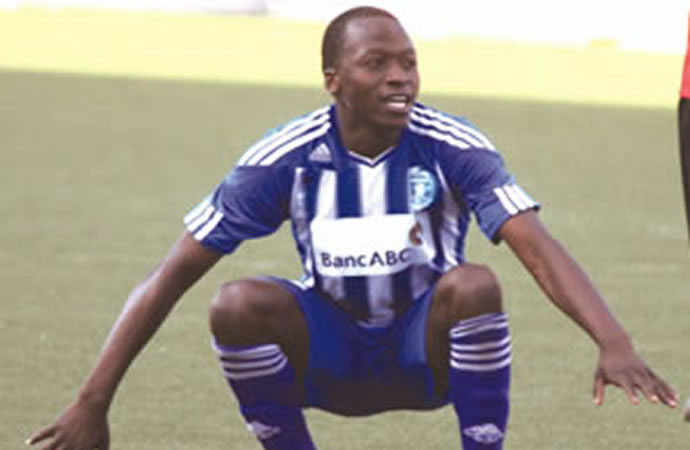
Augustine Hwata Senior Sports Reporter
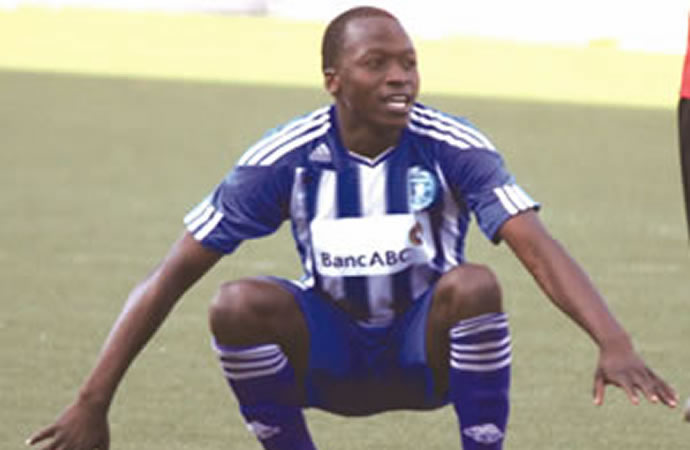
ZIMBABWE international footballer, Devon Chafa, is the eye of a doping storm after tests on his urine samples, after a 2014 World Cup qualifier against Egypt in Harare in July, showed traces of a prohibited substance.The 22-year-old Dynamos midfielder, who claims that he could have taken the prohibited substance from drugs prescribed by a family doctor for a routine treatment of cure, has been helping Fifa with their enquiries and hasn’t been cited, yet, for a hearing or suspended from playing football.
Senior sports medicine experts in this country have been handling Chafa’s case, since notification was received that tests on his urine sample had shown traces of a prohibited substance, helping the midfielder outline his case to help the Fifa enquiries.
Fifa will not reveal the identity of the player, as per procedure, or the prohibited substance that was found in his urine samples, until the world football governing body has made a determination that, indeed, there was a violation of its anti-doping regulations and Article 63 of the Fifa Disciplinary Code.
A number of processes have to be fulfilled, by Fifa, the player, representatives of the sports medical fraternity in this country and Zifa, before a determination could be made as to whether Chafa, indeed, violated the world football governing body’s anti-doping regulations and Article 63 of the Fifa Disciplinary Code.
Given this background, that Chafa’s case hasn’t been determined, it defies logic then why leakages of the case yesterday suddenly sent the social media sites buzzing with wild speculation, some of it coming from self-proclaimed experts, whose love for Facebook has now turned into an addiction, that the Warriors would be punished for fielding him in their CHAN qualifying win against Zambia on Saturday in Ndola.
Fifa are empowered, depending on the circumstances, to impose a 30-day suspension on a player suspected of violating their anti-doping regulations and Article 63 of their Disciplinary Code, before a determination has been made, but the world football governing body clearly advises both the player and his association about that position.
During the Confederations Cup in Brazil, a Tahiti player who tested positive for a prohibited substance, after their 0-8 mauling at the hands of Uruguay, was provisionally suspended for 30 days and invited to request a full hearing.
A Peruvian player was also suspended for 30 days, initially, earlier this year before being banned until 2015 for using a prohibited substance.
The world football governing body can, also, pardon an athlete, depending on the circumstances, and Zambian striker Rotson Kilambe was a beneficiary of such a pardon, in 2002, after having slapped with an indefinite suspension for testing positive for a banned substance after a World Cup qualifier against Cameroon the previous year.
The speculation on the social media sites yesterday was driven by claims that Fifa allegedly advised Zifa last week that Chafa should not be fielding in any matches, including the CHAN qualifier against Zambia, and that the correspondence was ignored.
However, Zifa officials denied yesterday that was a true version of the events surrounding this case.
Zifa communications manager, Xolisani Gwesela, confirmed that a report dated July 17 of a random anti-doping test conducted on Chafa revealed that the midfielder was found to have traces of a prohibited substance.
“After Fifa found the traces of the prohibited substance in Chafa, they requested our team doctor Nick Munyonga to further look into the issue on how the substance was found in the players’ system,” Gwesela told The Herald.
“Munyonga then enquired from the player and their family doctor and was told that the substance came from the medication that Chafa was taking.
“Munyonga wrote to Fifa chief medical officer, Prof Jiri Dvorakrak, and advised him that he had verified about the substance and found that Chafa had taken in for medication.
“Our doctor has made it clear to Fifa that the player and family doctor used the substance for medical purposes and have even provided Fifa with the doctor’s contacts as we await to hear from them.”
Gwesela said Zifa had not received any communication from Fifa that Chafa was either suspended or banned from playing either for his club or the national team and they were within their rights to field him in Zambia on Saturday.
“We are still waiting from Fifa to communicate regarding the issue and therefore it’s outrageous for people to believe that we used a banned player in CHAN,” said Gwesela.
“To us that’s hallucination because we have not in any way breached the rules.”
Gwesela said it was wishful thinking from people who do not have confidence in the Warriors that that they will be booted out of CHAN by either Caf or Fifa.
“I have heard people claiming that we are unlikely to go for the CHAN finals but, those are outrageous falsehoods.
“They are just claims with any substance and we condemn the unpatriotic behavior from people who are bent on tarnishing the image of Zifa and the Warriors.
“As as we know, the Warriors are proceeding to South Africa and they have done the nation proud.”
According to the Fifa anti-doping regulations the following substances are prohibited:
- Anabolic agents
- Hormones and related substances
- Agents with antiestrogenic activity
- Diuretics and other masking agents
- Stimulants
- Narcotics
- Cannabinoids
- Glucocorticosteroids
Fifa also require those players, whose health would be impaired in the event that they don’t take a prohibited substance, as part of their medication, to submit a formal application to the Fifa Doping Control Sub-Committee.
According to the anti-doping regulations only Fifa has the “exclusive right to publish the test results and the consequences thereof” and, crucially, “only after it has been determined in a hearing that an anti-doping violation has occurred may Fifa publicly report the anti-doping rule violated, the name of the player or other person who committed the violation, the prohibited substance and the consequences imposed”.
Last month Fifa provisionally suspended a Jamaican footballer, Jermaine Hue, and national team doctor, Carlton Fraser, after the athlete failed a drugs test after a World Cup qualifier.
Fifa, who did not name them, officially advised the Jamaicans that disciplinary proceedings had been opened against the duo.
“The chairman of the Fifa Disciplinary Committee has provisionally suspended a Jamaican international footballer and a Jamaican team official for an initial period of 30 days and opened disciplinary proceedings, following an adverse analytical finding in relation to a doping control conducted after the 2014 Fifa World Cup qualifier played in Tegucigalpa, Honduras, on June 11, 2013,” Fifa said in a statement.
“Following the provision of the ‘A’ sample result, which tested positive for a prohibited substance mentioned on WADA’s 2013 prohibited list, the player waived his right to have the ‘B’ sample analysed.”
The player and the official had until August 12 to inform Fifa whether they wished to request a hearing.
Irrespective of whether or not the player and the official requested a hearing, the player, the official and/or the Jamaican FA had until August 19 to submit a statement to Fifa, together with all related and supporting documentary evidence.
“By testing positive for a prohibited substance, the player has contravened Article 63 of the Fifa Disciplinary Code.
“The decision to provisionally suspend the player was taken in accordance with Articles 38ff of the Fifa Anti-Doping Regulations, and articles 129ff of the Fifa Disciplinary Code.”


 Online Reporter