

 admin
admin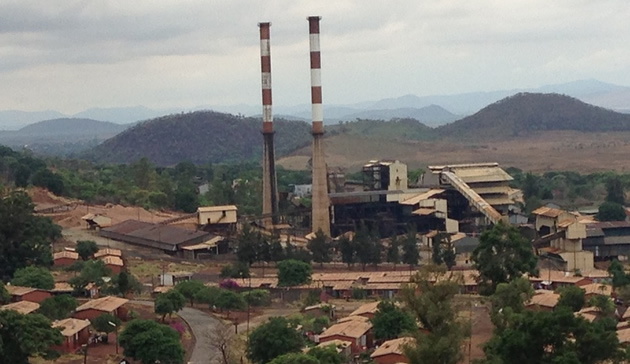
Business Reporter—
Africa’s only integrated nickel mining and smelting company Bindura Nickel Corporation is said to have stopped two of its major projects due to funding constraints. BNC is alleged to have stopped the Trojan Mine restart programme and re-deep project as the mining company has run into funding problems after cash flows from nickel declined due to the fall in prices.
Asked to comment on events unfolding at the nickel miner, acting chairman Mr David Murangari referred all enquiries to managing director Mr Batirai Manhando whose phone went unanswered. The developments come amid reports that there has been a drastic change in focus since the China International Mining Group Corporation took control after an extraordinary meeting that ousted five directors.
BNC was banking on the funding committed by local financial institutions to its $20 million bond issued to finance the restart of the smelter, which had been mothballed in 2008. The $20 million bond register includes Ecobank Zimbabwe, Ecobank Asset Management, Construction Industry Pension Fund, Motor Industry Pension Fund, Mining Industry Pension Fund, ZB Bank Limited, ZESA Pension Fund, NSSA, First Mutual Limited, Zimnat Wealth Management, Zimbabwe Mining Development Corporation, Eaglesvale Senior School and AfrAsia Capital Management.
BNC offered security features to investors in the bond; guaranteed by ASA Resources, based on a break even nickel price of $15 000 per tonne, but the prices have fallen to around $12 000/t.
This will affect the financial performance of the group, whose major cash cows are BNC and gold producer Freda Rebecca with profit falling to just $7 million from $50,6 million the prior year. Zimbabwe’s financial institutions have since called on the bond, withdrawn financial commitment, as they feared BNC was now using revenue ring fenced to repay the funds for the $20 million bond.
The bond issue programme was largely driven by founding chief executive Mr Kalaa Mpinga, Zimbabwean director Mr Herbert Mashanyare and fellow countryman Mr Ngoni Kudenga. The executives had even managed to obtain national project status, prescribed and liquid asset status for the Trojan restart bond.
Failure by its parent company, ASA Resources, to raise $3,67 million for development of a South African diamond mine was seen as an indictment by investors on the new management’s aptitude, as the stock offering failure means inadequate funding for the project. “Nor will it be sufficient to make up for withdrawal of Zimbabwe financial institutions in July from a funding round to modernise the Bindura Nickel Corporation (smelter) which is 75,4 percent owned by ASA,” said a company executive who requested anonymity.
Further, BNC has not progressed since the new board took over on the plans to secure an agreement for third part feed into the Trojan smelter and modifying the plant to process platinum.
However, the immediate objective had been to restart the smelter in order to reduce costs, especially associated with transporting concentrate. ASA chairman Nick Yat Hoi said that although the company experienced challenges in the quarter to June 2015, mainly as a result of falling nickel prices, the prospects were bright as they would counter-challenge through a re-deepening project to increase the volume of production and the grade of the resource.
He however, did admit that underground development, the re-deep programme, of the mine at BNC had been slower than had been anticipated. While the decline in nickel prices has tipped scales dangerously for the group, new directors seem to have contributed to steering the firm against headwinds that have rocked stability of the mining firm.
This has reflected in the seeming waning confidence in the parent firm, ASA Resources’ stock which has plunged from an average 1,51 pence in June this year to the current average of below 0,83p. An attempt to raise three million pounds to finance development of the Klipspringer diamond mine in South Africa received lukewarm support, after only 2,92 million pounds was realised, reflecting falling investor confidence in the group and its new leadership.
Besides financial problems BNC, and its sister company Freda, have not fulfilled indigenisation pledges as required under Government’s equity laws to empower previously marginalised black majority.



 Online Reporter