admin
admin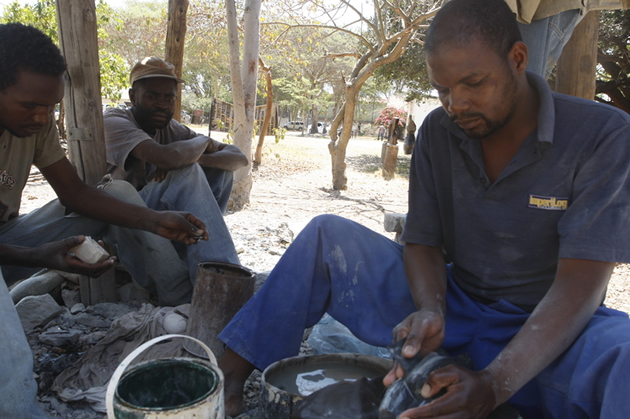
Godwin Muzari Entertainment Editor
They were at Chapungu Sculpture Park for decades and watched as fortunes declined until the final blow split the umbilical cord that tied them to the park in 2012.
Chapungu was put under liquidation and the fountain from which the sculptors drank since launching their careers ran dry.
It meant they had to immediately go it alone without the support and services from Chapungu in the face of extremely challenging conditions in the general sculpture industry.
For Chapungu sculptors, the situation looked hopeless but they had to pray for survival. Sculpture is the only trade that brings food to their tables.
With the meagre income they got from the slow sales at the park, the sculptors assisted each other to find their footing without Chapungu.
They are still working from the premises because liquidation is still in progress and they spend each day hoping that a buyer will pass by.
The buyers rarely come but the sculptors still have hope. A few have quit for other income-generating projects. Almost 20 sculptors still hang on. Daily, they hammer their chisels carving the stones. They seem bound by a spirit that kept first generation sculptors at this park many years ago.
First generation sculptors like Sylvester Mubayi, Joram Mariga, John Takawira and Nicholas Mukomberanwa were pioneers at the park when Roy Guthrie established it in 1970.
Second generation sculptors that include Dominic Benhura, Tapfuma Gutsa, the late Colleen Madamombe, Eddy Masaya and Agness Nyanhongo have been there.
Most of the pieces by these sculptors have been put under liquidation and a few have been saved by the National Gallery of Zimbabwe when they were acquired for the permanent collection section.
Some pieces still stand at Chapungu just adjacent to current sculptors’ workstations.
The old sculptures sharply contrast with the new shiny pieces done by the current crop of stone -carvers. But the old pieces symbolise an enduring spirit at the park.
It is the spirit that bonds these comparatively young sculptors and keeps them going despite facing many challenges.
An official of the liquidated Chapungu Sculpture Park said Guthrie had encouraged the sculptors to soldier on.
“Despite the hardships of liquidation, Roy Guthrie’s spirit remains that of promoting local artists. He has encouraged all artists to continue enriching our cultural heritage. That must be the spirit,” she said.
The sculptors at the park concur with her.
Nicholas Kadzungura who has been at Chapungu since 1995 said his passion for keeping the country’s heritage through art inspires him to soldier on.
“Art is now part of our lives and this is our home. Things are no longer the same but we have managed to remain afloat this wave,” Kadzungura said.
“I stay in Chitungwiza and sometimes I do not get bus fare to come here. When I do not come, I feel like I have lost a lot and being here gives me peace of mind.
“Things are tough but we keep coming. We are now a family here and we assist each other in many ways. I no longer get benefits I used to enjoy when I was a resident artist for Chapungu and the going is tough. Buyers are hard to come by. However, I remain hopeful that things will be better one day and I continue hammering the stones with passion.”
For 34-year-old Lloyd Mwarowa, working at Chapungu was an eye-opening experience and he keeps faith in his art.
“I came here in 2002 as an assistant to my brother Sungai. Chapungu helped me to shape my behaviour and learn more about sculpture. I am determined to keep focused regardless of the challenges we are facing,” said Mwarowa.
“Sculpture is my life and I do not enjoy any other profession. I enjoy being creative. I wish we had more local art collectors so that we have an alternative market. At the moment life is hard for us yet we have to keep this art alive. We will continue working until we get there.”
Luke Saidi came to Chapungu 14 years ago. He has created thousands of pieces and believes hard times will not deter him.
“Business is low generally in the industry. It is not only hard for sculptors at Chapungu. I have been in the industry for many years and I enjoyed the fruits of my work at some point,” said Saidi.
“The situation has deteriorated but I believe in making more and more pieces to express my feelings even when there are no buyers. Everyone wants income yet we also have to keep our artistic heritage alive in all seasons.
“First generation sculptors worked here and their works still inspire us. My uncle, Saidi Sabiti, taught me how to sculpt and every time things get hard, I remember his words of encouragement and I continue creating more pieces.” Jairos Clement, who has worked at Chapungu for 10 years, said the major challenge at the moment is to acquire and transport stones from areas like Mvurwi and Concession.
“It is a hard time for us. We join hands for the spirit of Chapungu to live on.”


 Online Reporter