Online Reporter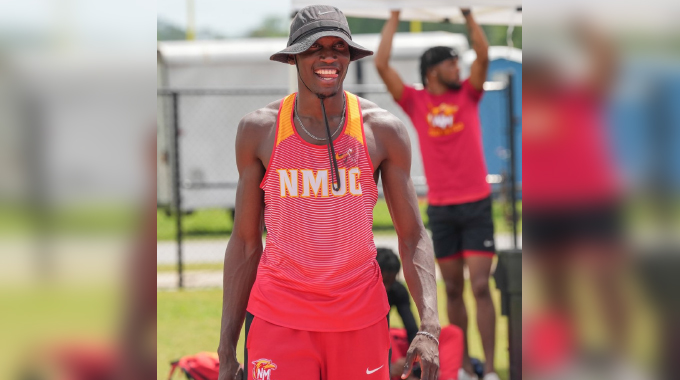
Lovemore Dube
THE sheer dominance displayed by Makanakaishe Charamba and Tapiwanashe Makarawu at the recent NCAA Division One Athletics Championships, has been hailed as a truly exceptional achievement. Last Friday, the two Zimbabwean athletes delivered a blistering performance in the 200m final, with Makarawu claiming victory in an astounding 19.84 seconds, closely followed by Charamba, the “big boy”, at 19.92 seconds.
This remarkable 1-2 finish saw Makarawu not only take gold, but also set a new national record of 19.84 seconds, a time that ranks as the second-fastest 200m in the world this year. This comes just weeks after Charamba himself had set a national record of 19.92 seconds last month, intensifying their friendly rivalry for the top spot in Zimbabwean sprinting.
Khumbulani Dube, a Kenya-trained athletics coach working with the National University of Science and Technology team, firmly believes that this is just the beginning for the duo.
“It is rare to see non-Americans come first and second in NCAA sprints. It’s probably the first time for athletes of non-West African origin to achieve such a feat,” Dube remarked.
Dube sees the athletes’ successes as a powerful call for a shift in national perspective.
“Maybe there really is a case for us to change our attitudes towards sport and explore why we are not keeping up with the rest of the world. We cannot blame genetics or anything; these boys have proved we have it in our genes to match the best in the world,” he said.
He added that the triumphs of Botswana and South Africa in sprints and relays should serve as an inspiration for Zimbabwe to emulate their success and firmly establish itself, among the sport’s great nations.
Charamba and Makarawu have consistently astonished the athletics world with their incredible performances, both on the American college circuit and in senior international competitions. Dube is convinced that more history is in the making.
“If they keep getting better, there’s more history to be made,” said Dube, who began his own athletics journey three decades ago in rural Gwanda, inspired by former 800m junior record holder, Zibusiso Nyoni.
Indeed, last year saw the duo break new ground by both running the 200m inside 20 seconds, with Makarawu setting the then-national record at 19.94 seconds and Charamba closely behind at 19.95.
In the same year, Makarawu secured a top-three finish in the indoor season with a time of 20.29 seconds and went on to claim a medal at the African Championships held in Douala, Cameroon, in June 2024.
While their times in the Paris Olympics final weren’t their personal bests, these two Zimbabwean sprint greats made history for the country by becoming the first time Zimbabwe has ever fielded two athletes in an Olympic final. If their 2024 achievements were dismissed as a fluke, then the world must now acknowledge and celebrate the undeniable emergence of a sprints powerhouse in Zimbabwe. Both athletes boast the fastest indoor time for this year of 20.13 seconds. Run on a challenging banked track, where athletes are on a constant lean through the curves, this time translates to a potential sub-20 second 200m on a conventional track.
Last month, Charamba initially set a new Zimbabwe 200m record of 19.92 seconds, only for Makarawu to better it with an incredible 19.84 seconds gold medal feat from the ninth lane at the NCAA finals in the US. Both athletes have now secured their qualification for the World Championships, set to be hosted in Tokyo, Japan.
Dube reiterated the rarity of their achievement, stating it’s uncommon for two African athletes from the same country to secure a 1-2 finish at such a high level of competition.
Athletics enthusiasts are now buzzing with the belief that Zimbabwe has the potential to field a formidable 4x100m relay team. The suggested line-up includes Denzel Siamusialela, with a personal best of 10.11 seconds, and David Nyamufarira, at 10.01, who could run the first and second legs, respectively, with Charamba taking the third and Makarawu anchoring the final leg.
The NCAA Division One finals are renowned as one of the world’s most competitive championships, attracting even established Olympic champions, who are still pursuing their university studies.