admin
admin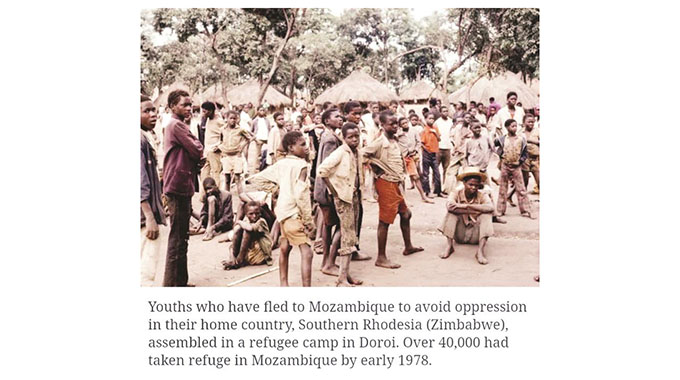
Ambassador
Christopher Mutsvangwa
Correspondent
There is a poignant story to the late Charles Kawadza’s recruitment as a youthful ZANLA freedom fighter in 1975.
His father was the Manicaland provincial schools inspector serving in colonial Rhodesia.
He had influence extending well into the bordering Manica Province of Mozambique.
By the mid 1970s, the national political mood changed in Zimbabwe.
This was in the aftermath of the 1974 Samora Machel’s Frelimo victory in Mozambique against the imperial and fascist army of Portugal.
In Soweto, Hector Pietersen, other pupils and youths defiantly marched into the volleys of Apartheid army and police bullets.
The 1976 Soweto Massacre signalled a new chapter in the sub-regional fight against white minority and racist oppression of Rhodesia, now Zimbabwe, South West Africa now Namibia and apartheid South Africa.
Zimbabwe youths, being contiguous to the Mozambique border, opted for a more calculated and strategic option. In their thousands, they absconded from class and work to skip across the border into Mozambique, Botswana and Zambia.
They were fully aware they already had the nucleus of their armed Chimurenga/Impi Yomvukelo fighting in the northern borders.
Herbert Chitepo, John Ziyapapa Moyo, Josiah Magama Tongogara, Nikita Mangena and other revolutionary luminaries had seen to the implanting of a homegrown guerilla army on Rhodesian soil.
Now they were being rewarded with a 1 000km long border with sympathetic and supportive Mozambique.
Charles Kawadza was among that flood of intrepid youths ready to seek the AK47, train and return home to fight as young guerrillas of ZANLA-ZIPRA national liberation freedom fighters.
He crossed into Mozambique soon after 25 June 1975, the independence day of Mozambique.
We met at Zhunda Military Base outside of Chimoio. The defeated and repatriating Portuguese army had abandoned the cantonment. The green, gold and black flag of free Mozambique was flying high on the parade ground.
Daily lorries were pouring into Zhunda Military Base bearing eager youthful recruits from the collection points of the long frontier.
I met CharIes Kawadza through Willard Duri, the national hero buried at the National Heroes Acre. They had known each other from Old Mutare Hartzell.
I immediately struck a bond with Charles Kawadza. It lasted lifelong more so when I worked with him at ZBC Pockets Hill as his Director General in the 1990s.
Back to Zhunda Base in 1975.
One day, a car bearing Rhodesian number plates drove and parked at the military sentry gate.
The owner had done his homework to get access.
He was seeking a beloved teen son. The latter had run away from school. He had tracked him to within the cantonment that was daily swelling with recruits.
The anxious, if not mortified visitor father, was accompanied by high level Mozambican education and military leadership from the provincial capital of Chimoio.
Charles Kawadza was asked to go meet the visitors.
He was told it is his father.
He knew he wanted him back at school in colonial Rhodesia.
Alas, Charles Kawadza was having none of that.
He had chosen his new life with all the uncharted risks and vagaries it entailed.
The promise of freedom ranked higher in his mind than academic success in the stunted African prospects of a life in the colonial and racist desert of Rhodesia.
On the other side was the persistent father in all his threatening, cajoling and persuasive adamance.
He was determined to rescue his son from an uncertain future of danger and death in a cause beyond the nuclear family he so cherished and worked hard for. It was with the intervention of the host country officials that Charles Kawadza was obliged to go meet his father at the sentry gates.
In the event, the meeting only served to solidly and seal a painful family rapture. Charles Kawadza came back to us after a steadfast refusal to join his father on the much wished return journey to Rhodesia.
He told us his only way back home was to first go through training as a guerilla and then be infiltrated back in combat gear and shoot the way to Salisbury, now Harare.
Charles Kawadza exposed the then lies by Rhodesian propaganda machinery. It was claiming that the youthful recruits were being press ganged by gun toting “African terrorists’’.
In reality, no battlefield deaths by bullet, bomb, landmine or napalm, no starvation of hunger or thirst, no menace of disease: be it natural causes or the enemy’s biological and chemical warfare, indeed no type of hardship whatsoever could daunt or break the new resolve of body and spirit.
The quest for freedom was simply there to overcome all the challenges and vicissitudes influencing loss of life.
The ZANLA-ZIPRA military diaspora of the 1970s relied on military handouts organized by the OAU Liberation Committee and the host nations of guerilla armies.
For the record, Mozambique and Tanzania were and are still among the poorest nations of the world.
So neither guns and ammunition, nor training capacity, nor food and medicine was available in quantity and quality that could match the demand of the tens of thousands thronging to join the war effort.
Yet, no one of those fleeing Zimbabweans ever contemplated abandoning the waiting camps of Nyadzonia, Doeroi, Chibavava, Freedom Camp and elsewhere for all the miseries attendant.
They had thrust their back on Rhodesia. Their eyes were firmly gazing and fixated on the military highway to New Zimbabwe.
It was clearly a difficult and painful father and son encounter of Kawadza Senior and Kawadza Junior by the military sentry gates of Zhunda Base Camp.
The encounter, replete with searing emotions and poignant divergences aptly and succinctly captures the pregnant politico-military mood of the 1970s Soweto-Samora Machel generation.
So much to pass on to posterity in terms of pride and honour and self respect.
All summed up, a people who cannot militarily defend oneself cannot blame anyone else should they go on to meet the fate of genocide as that which were meted out to Australasian Aborigines and Native American Indians.
Charles Kawadza, as a freedom fighter guerilla combatant, you played your part in the birth of our nation whose core is the Zimbabwe Defence Forces with their insignia of professional military credentials.
You went on to survive the bitter and painful war.
Thereafter, as of 1980, you helped in the transformation of the New Zimbabwe.
You were a leading pioneer of the post independent breed of information cadres. Your patriotic reporting moulded a new national and collective consciousness.
You served your motherland well.
You were a victor in war and subsequently a winner of the ensuing peace.
You are truly the stuff of folklore and legend.


 Online Reporter