Chronicle Editor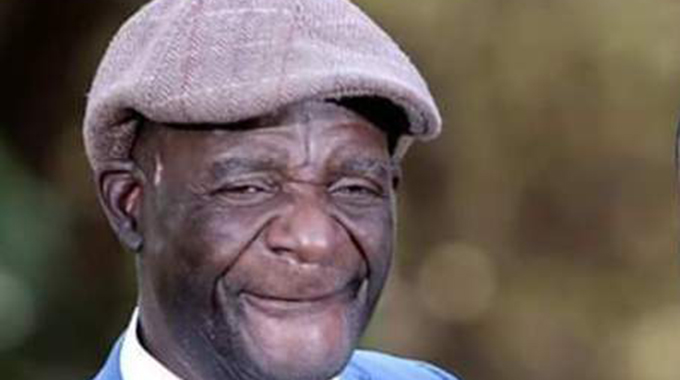
Richard R. Mahomva
Pens-down.
Wake the boys up
Kick them hard out of slumber,
get them ready to receive Mukoma.
Dambudzo and Chenjerai must go with you, No hangover excuses
Leave Cde Kanengoni and Nyambuya to unclutter the mess of all your inks and dirty drinks. All your thinks just stinks.
Hush Vera and wash away the joys of your tears. You are the sober one, the most calm, collected and deep enough though “Without A Name”
Gukwe (Zvavanhu) write to the living-dead who
refused your wisdom with Tafataona.
This time they will listen. They are all desperate,
“Waiting for the Rains”. Tell them:
He is in a better place. The Doc is not DEAD.
This seventy-something toddler takes his merry seat.
Brother Charles is alive. Cry all you want, but Shava is not DEAD.
I refuse to concede, Dr Charles Mungoshi is not dead. He is neither dead in the world nor will he retire to an indefinite and eternal mile away from us his scions.
His name is not for oblivion, neither is it for obscurity. His acres of seasoned intellect is a bedrock for the posterity of the “Hondo Yepfungwa”. He is life in history, in the present and beyond. No ritual will chastise his ghost to repose.
Burn the wisdom in the pages of our Waiting for the Rains and see if you will expel the consciousness he gave to our humanity in our quest to purge the retention of the imperial. He was decolonial, he was guns-blazing to the wrathful demon that made us Rhodesia.
And he was the embodiment of the philosophy which was affirmed another doyen’s sacrosanct truth
“Zimbabwe will never be a colony again”. The sharp tongue of his pen smite the ego to Smith’s UDI to the grave.
Never in a thousand years will we forget this grandfather of literature, Dr Charles Mungoshi. The Doctor whose letters still topple the determined arrogance of how “Rhodesians Never Die”.
Blow by blow of words, one letter after the other, the comma to the full-stop was a conversation with the mute womb of this land.
The land which buried its own gallant warriors who stood the ugly face of the many battles stirred by the colonial comprador — not to mention those who perished in Chimoio — but still he taught us to weep in silence, Kunyarara Hakusi Kutaura?, he retorted and coloniality fell.
Through the pen, he expressed the firmly rooted need to exorcise the toxic psyche of the colonial paradigm and its dismembering penetration to the being and the power of colonised. His prominence in the literary ballroom dance can be traced to his writings in Shona.
That automatically positioned him as the voice of the oppressed. His commitment to speaking to his native-kind in their language served as a firm refusal to bow to the supremacy of the colonial lingua.
This was a deliberate proposition he assumed, at the same time declaring some hard epistemic disobedience to the regime in power.
His deliberate tilting to Shona writing can be intertwined to Ngugi wa Thiongo’s clarion call to pen-soldiers to scoff the gnarl of the imposed beauty of the Anglo and Franco-phone nauseating legacy footprints.
His armoury of words wrecked the nerves of the colonial government. In response, sanctions were imposed on the readership of his novels, poetry and short stories. Like the many liberation war heroes who had to endure years of being in exile, Mungoshi’s writing was exiled from the library and bookshop shelves.
His mother-tongue collection includes, Makunun’unu Maodzamwoyo, Ndiko Kupindana Kwamazuva, and Kunyarara Hakusi Kutaura?
He also had award winning texts written in English namely, Coming of the Dry Season, Some kinds of wounds, Walking Still and One day Long Ago; a poetry anthology, The Milk Man Does Not Only Deliver Milk and a novel entitled Waiting for the Rain.
Mungoshi and the Shona Novel
Kahari (1971; 1990), Zimunya (1982) observe that the pre-colonial and early post-colonial Shona literature constructs characters detached from the societal and communal values.
There is a clear cross-cutting and clear antagonism between the individual and his space in the Shona novel.
The characters in the novels, plays, short stories and poems are struggling to consolidate their space in society in the fight against structural alienation. In the face of the fight for the reinstatement of the self, there is societal denial of the right to belong. Those in this entrapment include the intellectuals who are mainly engrossed in mimicking cultures of the colonial oppressor.
Therefore, Mungoshi is seized with the mechanics of the individual’s alienation from the society. His work recommends the key terms of aligning the individual to society by bringing closer the ontological disconnect from societal values.
Mungoshi’s work is a modicum of binding a tone society with a people lost to servitude to capital and subjection to repression. Zinyemba (1986) reads the patterns of Shona writing as a lens of expressing a society’s way of life. Public attitudes, the interface between the self and the society is meticulously observed through Mungoshi’s Inongova Njakenjake. Through the play Mungoshi paints a picture of a polemic state.
Zimunya (1982) in Those years of drought and hunger — a critique of Mungoshi’ s English novel, Waiting for the rain explores the thematic presence of acculturation in the late writer’s work. Zimunya notes the deplorable “culture drought and hunger.” There is a clear fade of self-consciousness punctuated by dismantling the very symbols of spirituality.
In a way, the import of Zimunya’s observation is that of disenchanted souls wrecked onto the pedestal of colonial hegemony. Therefore, the set-up, society and the space is not liberating to recovering the lost essence of being. There is fracture between the morals of human consciousness with the pivot of time and space. Mungoshi’s highlight of this crisis serves as a call for society to be mended and habitable for regaining the lost cultural morals.
Mungoshi: A Liberation War Hero
Mungoshi will be remembered as a vigilant cultural defender of the souls intoxicated to death by the colonial stench. He will be remembered as an intellectual, a gallant son of the soil and a fighter. His inspiration to “Decolonising the Mind” destabilised the hegemony of Rhodesia. Even after Independence he remained consistent in his interrogation of liberating the function of the state. His writing posits significant inputs in speaking truth to power.
He is one of the view minds whose output has stirred us towards finding the celebrated values of our national identity. Mungoshi’s writings will forever illuminate the consciousness of delinking our sovereign and territorial inclines from the predatory mechanisations of the neo-colonial.
A life lived in letters
Born in 1947 in the Manyene Communal areas of Chivhu District, Dr Mungoshi remains one of the most illustrious heroes of the pen. He is a pathfinder to Zimbabwe’s literary orbit of power.
He is a perennial master and doyen of letters — one in his kind, but not distant from the category of Dambudzo Marechera, Tsitsi Dangarembgwa, Stanley Nyamfukudza, John Marangwanda, Tafataona Mahoso and many other great minds. He is a hero in his own distinct right. He has won many awards for his publications. In 1984 and in 1992 he won the Noma Award for Publishing in Africa.
He also jointly won the Commonwealth award in 1988 with the Nigerian writer Festus Iyayi which he won again in 1998. Mungoshi has a writing history that runs closer to a jubilee. He saw and wrote it all.
He is not DEAD. He is writing the oracles we will all read when we join him somewhere beyond the blue.
Go well Shava, I am sure you are all blissful to meet your soul-mate and maverick buddy Dambudzo Marechera. Tell him we are still fighting our way out of the “House of Hunger”. Tell Freedom Nyambuya that we will definitely join her even if it means riding on the “Over-booked Train”.
I sob as I write this piece, but I am way better than your buddies. Memory Chirere, Chirikure Chirikure, Shimmer Chinodya will brave it up. You are gone, but present in our hearts.
We will miss you big boy.
Write on,
Write on,
Write on,
And feed us the manna of your
intellect when we get there!
Write in Power,
Write in Peace Doc.
Write!



 derick.khumalo