


 Online Reporter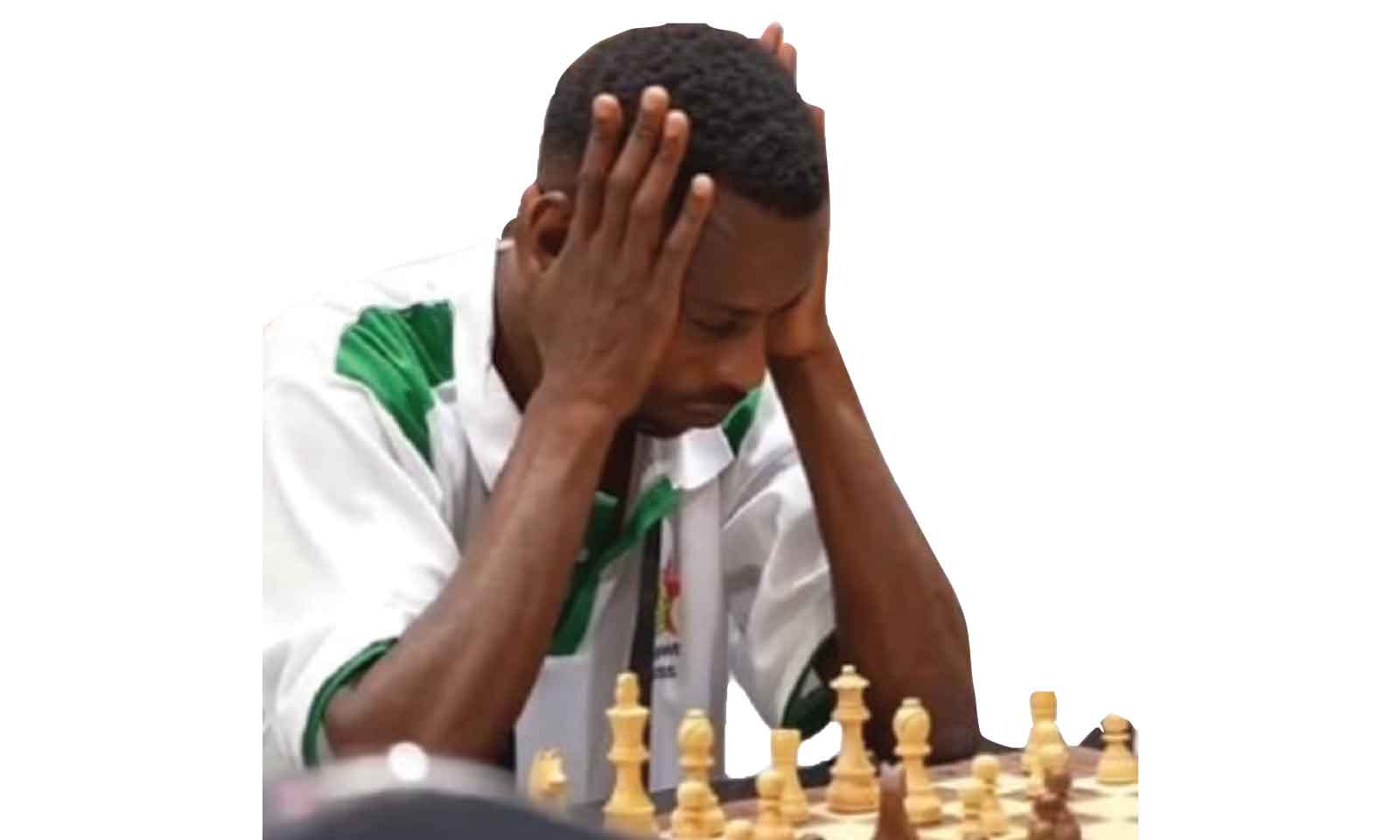
Eddie Chikamhi
Zimpapers Sports Hub
“CHECKMATE! You can’t hide anymore,” shouts Prince Musokeri, his voice bursting with triumph as his opponent slumps forward across the chessboard.
For the small crowd packed around a makeshift table at Candy Shopping Centre in Southlea Park, it is just another afternoon of street chess.
For Musokeri, it is something far bigger.
Each move and each victory is a quiet defiance of a life that once slipped almost entirely out of his control.
Cheers ripple through the gathering, spilling into the surrounding shops.
The board sits low, the pieces worn, the setting unremarkable.
Yet for the man leaning over it, these moments carry the weight of survival.
Chess, once his gift, has become his anchor.
For years, Musokeri lived dangerously.
Drug and substance abuse stripped away his health, stalled a promising career and hollowed out his future.
Now 37, he has found his way back to the game that once defined him, not chasing applause or titles, but holding onto something steadier and something that keeps him alive.
“I started playing chess at a very young age,” he says.
“I won my first gold medal at a tournament at Prince Edward in 2002 when I was still at Seke 6 High School. I shared the award with Rodwell Makoto and Farai Mandizha. These are the top guns in Zimbabwe.
“I played the Under-16 tournament the following year at St George’s College and won gold again.”
Back then, the path looked clear.
Talent opened doors.
Success followed him early. But the board was abandoned, and what replaced it nearly destroyed him.
“Unfortunately, a promising career was almost cut short, with near-fatal consequences,” he says quietly.
“My problems began when I left chess and started working at Mupedzanhamo. I met a lot of friends who introduced me to marijuana and later on I tried BronCleer (cough syrup) and then crystal meth. These drugs had adverse effects on my health, but I did not realise it at the time.
“I could see visions and hear voices that no one else could. I think it was psychosis setting in.
“It went on for a while and then my brother took me to South Africa in an effort to wean me off the bad habits. I stayed there for a year, but the addictions got worse because the drugs are easily available in South Africa.
“When I returned in 2015, I worked at an upmarket bar in the Harare CBD (central business district) and got hooked to wrong friends again. Chrystal meth was bad for me. The feeling you get when you take it, you will not get it anywhere else. It’s like you are on moon and everyone else is on earth.”
By the time he returned home to Chitungwiza, the family house had become a gathering point for addicts, drifting in and out at all hours.
“It was terrible. Some of the guys were engaging in criminal activities, stealing to buy the drugs. When you decide I want to quit, that’s when some of these guys would just pop up. The link is so Satanic,” he said.
Chess faded into the background, almost erased.
His body bore the cost, his mind even more so.
Rescue came not through institutions or headlines, but family.
In 2023, his sister pulled him out of that environment, moving him from Chitungwiza into a single rented room in a crowded area locals call KumaCongo, on the edge of Southlea Park.
“I am forever grateful for the change of environment.
“The first time I withdrew from the drugs, I couldn’t sleep. It was gradual and I got support from my coach Blessing Jemani, and my sister, who takes me to church for prayers and counselling. My coach told me that once I got back to the drugs, then I would lose everything that I had worked for.
“So, I remained focused and I took part in the Masvingo Easter Open in 2024.”
Slowly, the pieces returned to the board.
Structure followed discipline.
Purpose replaced chaos.
Today, Musokeri walks with an awkward limp from a permanent leg injury, a reminder that recovery does not erase damage.
Still, he can dream again.
In October this year, he carried Zimbabwe’s only medal, a bronze, from the second FIDE Olympiad for People with Disabilities in Kazakhstan.
“I am really excited to have won the bronze medal.
“My dream now is to become an international master,” he says.
His story is not isolated.
Across local sport, drug and substance abuse has quietly tightened its grip.
Recently, Zimbabwe Cricket terminated former captain Sean Williams’ contract after he admitted to drug addiction.
Football has seen players drift into substance abuse and, in some cases, drug peddling.
Chairperson of Africa Zone VI Regional Anti-Doping Organisation Nicholas Munyonga says the danger is often misunderstood.
“Some of the substances abused by athletes are not necessarily performance enhancing,” Munyonga explains.
“Athletes may be taking some of these from a social point of view much more than from a sporting point of view and they will then get caught up in issues of anti-doping rule violations,” he said.
“There are a number of health consequences of drug and substance abuse. Cannabis, for example, binds irreversibly to brain receptors, causing dependency and increasing lung cancer risk fourfold compared to tobacco.
“Steroids cause hormonal imbalance and infertility. Stimulants can trigger heart attacks, psychosis, kidney and liver failure; all those things.”
The authorities are trying to respond.
The Government has set up an inter-ministerial taskforce led by Defence Minister Oppah Muchinguri-Kashiri.
The Zimbabwe Olympic Committee has intensified education and testing.
“We actually have a board member who speaks as a gatekeeper, as the safeguarding,” says ZOC president Thabani Gonye.
“Safeguarding is where we have housed issues to do with the wellness and drugs and substance abuse. Also, under the medical commission, we have housed the anti-doping aspect, under the board member responsible.
“So, we have two structures where the board members are responsible in terms of the activities and then the interventions and countermeasures that we have to adopt. We obviously do regular testing in terms of in competition and out of competition. Before we even get there, there are awareness campaigns that we do reach out to the communities,” says Gonye.
Back at Candy Shopping Centre, Musokeri resets the board.
Another opponent steps forward.
The crowd leans in again.
The fight is quieter now.
No cheers for recovery. No medals for restraint. Just 64 squares, a steady hand and the refusal to disappear.



