Online Reporter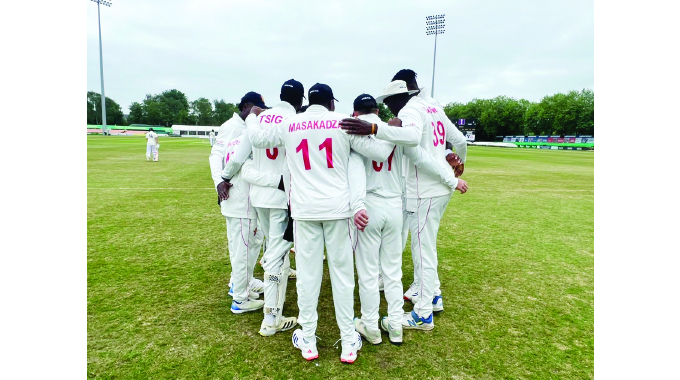
LONDON.—Twenty-two years is a long time, even in a sport that measures its games in days and its history in centuries.
The last time England played a Test match against Zimbabwe, in 2003, Rob Key was in the middle order instead of the managing director’s job.
Jimmy Anderson was a 20-year-old tearaway playing in his very first series and the England and Wales Cricket Board was just about to launch the world’s very first professional Twenty20 tournament.
Zimbabwean cricket has changed, too. Back then the team was in the earliest stages of a transformation that was meant to turn cricket from a minority game, played by the small white population, into a sport that better represented the whole country.
They have been hard years, riven by player strikes, maladministration, and a miserable drop-off in results.
The team temporarily withdrew from Test cricket, suspended their domestic competition, and were repeatedly censured by the International Cricket Council.
And yet, at the end of it all, the process was, by one important measure, a success.
The squad that came on tour in 2003 was majority white, the team that has come this year is majority black.
As a biting wind swept across Grace Road on Thursday and, even though the crowd was thin, there was just enough stardust to keep the autograph hunters happy.
Andrew Flintoff was perched on the pavilion balcony, while Mark Wood, trying his hand at coaching during his latest injury layoff, patrolled the boundary’s edge with a smile.
Out in the middle there were also runs for Josh de Caires, son of Mike Atherton, who compiled a fluent 79 from 93 balls on a green-tinged pitch.
But more noteworthy than the Professional County Club Select XI was the identity of their opponents.
Zimbabwe are here for a one-off, four-day Test match against England that gets under way at Trent Bridge on Thursday— their first appearance on these shores for 22 years.After the Test (a warm-up for England before the five-Test visit of India) Zimbabwe will stick around to play South Africa in a four-day game at Arundel.
That third and final game on tour is preparation for the Proteas ahead of their World Test Championship final against Australia at Lord’s next month.
Still, truncated though it is – a far cry from 2003, when they played two Tests and took part in an ODI tri-series along with South Africa – this tour is a welcome development.
And in something of a first, the England and Wales Cricket Board are also paying the visitors a tour fee in lieu of a reciprocal trip not sitting in the future tours programme.
This apparent benevolence is in part driven by the England and Wales Cricket Board’s broadcast deal with Sky, which is predicated on delivering six Test matches every season.
In the years that bring India or Australia for their usual five-match series, an early summer opponent is still needed.
Ireland fulfilled this role before the 2023 Ashes, now it is Zimbabwe’s turn.
But while a schedule-filler, it would not have come about had relations between the ECB and Zimbabwe Cricket not improved considerably in recent times, nor had the green light not come from the British government.
How Zimbabwe will fare in Nottingham this week is tricky to call, with their diet of Test cricket so skinny in recent years.
There are just 108 caps spread among their 15-man squad (Joe Root, by comparison, has racked up 152 on his own).