

 mbulelo smpofu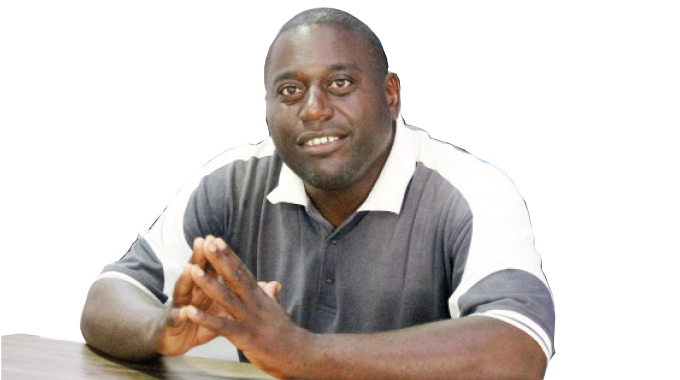
Trust Freddy, Features Correspondent
THE words, “Hear, hear, hear! May the court keep quiet while the death penalty judgment is being handed,” are the words that keep echoing in Godden Matanga’s head, from the moment he was sentenced to death in 2001.
These words were immediately followed by two elderly women clad in all black robes, who suddenly appeared in court, wailing as if they were at a funeral.
“Look, son, your disobedience has landed you in trouble,” they said in unison.
This marked the beginning of Matanga’s 11 haunting years, living in the shadow of death, confined to the stokes with notorious criminals like Edgar Masendeke and Stephen Chidhumo.
A D-Class prisoner at Harare Remand Prison for over a decade, he would only get one hour per day out of his cell.
The other 23 hours were spent in solitary confinement.
In an interview recently, Matanga revealed that he probably could be the only person who saw Chidhumo praying before his execution.
On death row for 3 960 days, every creak and sound at night was a harbinger of potential execution.
When these stories are being narrated, they seem to grow horns and tails, but the truth remains: this is a story based on real events.
Matanga, then 20, was found guilty of murdering his employer, Mrs Heather Desmond (33) in Chisipite, Harare, where he was a gardener and burning her body on July 1, 2000.
His two accomplices — 26-year-old Guideson Kanyemba, a cousin and Charles Farai Mabika, a friend, were found guilty of accessory to the murder of the white woman.
The 44-year-old man maintained that he and his co-accused had no intention of killing Mrs Desmond, stressing that she died accidentally.
Matanga said earlier that day, he was working at the victim’s garden when she verbally attacked him for burning some rubbish near her favourite flowers.
According to him, she died accidentally after he hit her against a rock, during a heated argument. Her death unnerved him, he added, hence to destroy evidence, he had to burn her body.
He then alerted his cousin, Guideson and friend, Farai, handing them the victim’s car with instructions to dispose of it, making it seem like Mrs Desmond had disappeared.
“Our plan worked briefly. Subsequently, my mother and I were arrested and held at Rhodesville Police Station.
“My mother was a housemaid and I was a gardener for the deceased. We were released after it was determined that we were not the suspects, since the incident occurred when my mother was out of town,” Matanga said.
He added that Mrs Desmond’s relatives would often visit the house, but he would feign ignorance.
To cope with the stress of the act, he increased his drug use.
“I would drink heavily and smoke marijuana, usually falling fast asleep. My mother, unaware of my activities, continued her duties without any suspicions,” he narrated.
However, the plan hit a snag.
He was unaware that his co-accused had not disposed of the car, instead, they changed the licence plates and embarked on joyrides.
“One of their friends, whom they had fallen out with, decided to tip-off the CID (Criminal Investigations Department), motivated by the reward offered by the Desmond family. My team had overlooked removing the third plate, sealing their fate,” Matanga recounted.
Eventually, they were arrested, barely two weeks after the incident.
“The Police recovered the car, but the question remained: ‘Where is Mrs Desmond? You’ve shown us the vehicle, but we want to see her,’” he said.
Upon arrest, Matanga’s accomplices implicated him.
“I was shocked to see a huge convoy arrive. Realising I was caught, I rushed to the kitchen and ingested rat poison, but I was swiftly apprehended,” he narrated.
The detectives took him aside, promising leniency if he told the truth.
“I led them to a pile of ashes and told them that was what had become of her,” he revealed, adding, “The detectives were visibly shocked, left speechless and hesitant to break the news to Mrs Desmond’s relatives.”
He vaguely recalled what followed —everything went dark after he led the detectives to the ashes.
“As the poison took hold, I blacked out, but I remember hearing an ambulance siren. I was rushed to Harare Central Hospital (Sally Mugabe Central Hospital). The next thing I knew, I was handcuffed to the hospital bed, with leg irons and under heavy guard,” Matanga said.
Confused, he wondered where he was. The Police briefed him and had him sign a warned and cautioned statement before taking him to Harare Remand Prison.
He appeared in court the following day where he was denied bail. The trial dragged on for months.
His D-day would come the following year on Friday, June 20, 2001, when he was convicted of murder.
Indeed, it was a black day for him, as symbolised by the black robes worn by the two wailing women.
He could immediately smell death. The hangman’s noose was waiting for him!
“Domestic worker to hang over gruesome murder,” The Herald informed in a front-page headline on June 21, 2001.
It was a big Saturday read.
Mabika and Kanyemba, who are late, would each earn 20-year jail terms for both offences, while Matanga got an additional eight years for theft.
“At that moment, I couldn’t comprehend anything. In fact, I started feeling dizzy and the whole court was going in circles,” Matanga recalled.
The only thing he remembered was that his brother, who was 18 at the time, had buried his face in his palms and cried uncontrollably.
He could hardly remember the judge’s words, temporarily deafened by fear. What he could only remember was the pronouncement of the death sentence.
The next thing he knew, he was surrounded by Zimbabwe Prisons and Correctional Services (ZPCS) officers, in leg irons and handcuffed.
“I was a bit confused, because I was heavily guarded and being bundled into a van. I was no longer with other inmates. I was now alone with the guards,” Matanga said.
It didn’t occur to him that he would join notorious armed robbers and murderers, such as Edgar Masendeke and Stephen Chidhumo, who had been sentenced to death.
“You are now bringing little kids here. What crime have they committed?” Chidhumo reportedly said upon seeing Matanga.
“A prison officer simply said, ‘That’s Chidhumo’, and the reality of the situation began to sink in, as I had read and heard about such criminals,” Matanga said.
Around lunchtime, he arrived at Harare Remand Prison and was asked to exchange his clothes for prison garb.
From that day on, the death row inmate would wear red overalls when going for hourly daily exercises.
The cell was small, with a mat, blanket, toilet seat, bible, and bottle of water. The walls were so slippery that one could not even climb up to the light bulb without falling.
“Locked inside, I felt lonely, couldn’t sleep, and was overwhelmed with regret. I asked myself, ‘So, I am going to die, at what time, what’s next?’”, Matanga wondered.
When asked to appeal, he simply repeated what he said in court.
His first day in prison felt like an eternity.
“That was the longest night ever,” he recalled. “I remember praying to Satan, saying, ‘If you’re the one who brought me here, devil, please let me out’.”
Abandoned by the devil, he had to face the music alone.
“Almost every day, I would cry, but exercise periods were a brief respite. That is how I started socialising with Chidhumo and Masendeke,” he added.
As required by the law for all individuals condemned to death, he appealed to the Supreme Court.
“I apologised to the victim’s family and maintained that the killing was accidental, saying I had acted in self-defence after she attacked me verbally and physically,” Matanga said.
However, the appeal did not yield any positive results as the superior court agreed with the High Court judgment.
For Matanga, reading the Bible became his sole activity. He would read from Genesis to Revelations.
“It was the only thing to do inside. I finished reading the entire Bible and repeated the process frequently. All Bible verses are now on my fingertips,” he said.
He pointed out that the first time he saw Chidhumo praying, was when he was taken away at midnight to be hanged.
“I was awoken by the commotion and I watched through a cell opening as he asked for a moment to pray before getting dressed,” narrated Matanga.
To him, Chidhumo seemed to sense his fate, as evidenced by an earlier incident where he moulded a morsel of sadza and tossed it away uneaten, during a meal.


 Online Reporter