

 Online Reporter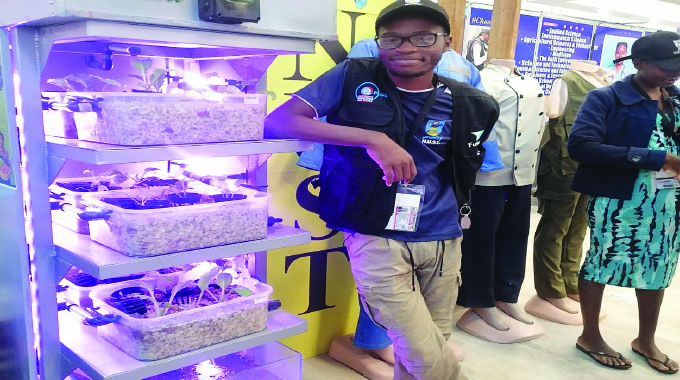
Michelle Musandinyoze, Sunday News Reporter
STUDENTS from various tertiary institutions showcased their entrepreneurial spirit and creativity at the recently held Zimbabwe International Trade Fair (ZITF), exhibiting innovations that ranged from local food products and clothing to technological advancements.
The displays reflected the students’ commitment to contributing towards entrepreneurship, innovation and industrialisation in line with Vision 2030.
One standout innovation was the AgriLoop Plant Growing and Irrigation System, developed by Tanatswa Mapfumo from the National University of Science and Technology (Nust). The system integrates aquaponics, allowing plants and fish to grow together symbiotically, producing nutrients essential for germination and plant growth.
“I was inspired to create this AgriLoop system as a way to minimise the problems faced by local farmers. Climate change has made it difficult for the agricultural sector to flourish, which is why technological integration is so important,” said Mapfumo.
He explained that the system only requires three buckets of water to sustain 30 plants, with fish waste providing nutrients for the plants. In turn, the plants purify and recycle the water back into the fish container.
“Water crisis has been a constant problem and we need to come up with ways to improve productivity and efficiency. My system only requires three buckets of water for 30 plants to grow, the fish produces waste which serves as nutrients for the plants,” said Mapfumo.
“The plants on the other end are responsible for purifying and recycling the water back to the fish container. The system requires electricity to operate, but it can also run on alternative power sources like solar energy.”
Mapfumo said he hopes to partner with stakeholders in agriculture and technology to further refine the system, making it even more efficient and visually appealing.
“I am willing to create more AgriLoop systems for interested buyers, with prices starting from US$300 for the smallest model. I believe this system is eco-friendly because it saves water, space, and money,” he said.
Also making an impact was Hwange Teachers’ College, which exhibited creative works in clothing and food production. Their offerings included beadwork, cakes made from indigenous fruits and stylish track bottoms that can be worn either as shorts or trousers.
“We source our ingredients from indigenous fruits such as tamarind, locally known as busika. We encourage people to eat traditional foods because they carry health benefits and promote our culture,” said Mrs Simiso Gumpo, a representative from the college.
Mrs Gumpo also noted challenges faced by students in producing beadwork, mainly due to limited resources.
“As a college, we wish to mass-produce beadwork so we can open local shops and commercialise. We make beaded handbags, necklaces, and bracelets from bamboo plants. However, our production capacity is limited by a lack of resources, and we are hoping for support from various ministries we have engaged,” she said.
Mrs Gumpo said Hwange Teachers’ College plans to diversify its range of products as part of efforts to promote the spirit of entrepreneurship among students and complement the Government’s drive towards innovation and economic development.
Tinotenda Chimedza, a student from Belvedere Teacher’s College, impressed visitors at the ZITF by showcasing her innovation skills through the creation of stylish tables and drawers made from old car tyres.
The creatively designed tables were covered in green cloth, with the colour derived from a unique natural dye process using blended spinach.
According to Chimedza, the process involves mixing spinach with everyday household ingredients such as soda, baking powder, vinegar and salt to produce vibrant, eco-friendly colours.
“We used vegetables to create natural dyes as an alternative to conventional materials like paint, which is very costly. Our aim is to encourage young people to protect the environment by utilising waste materials for creation,” said Chimedza.
Her innovation is in line with the Government’s broader push towards promoting environmental sustainability and a circular economy. Through the National Development Strategy 1 (NDS1) and Vision 2030, Zimbabwe has placed strong emphasis on fostering green innovations, waste recycling and sustainable entrepreneurship, particularly among the youth.
The Ministry of Environment, Climate and Wildlife has also been actively encouraging initiatives that support recycling and up cycling as part of efforts to combat environmental degradation and promote a culture of responsible waste management.
The Government, through the Ministry of Higher and Tertiary Education, Innovation, Science and Technology Development, has been actively encouraging innovation hubs and industrial parks across universities and colleges to translate academic knowledge into tangible goods and services that boost the country’s economy. Initiatives such as the Innovation Fund (IF) and Education 5.0 are meant to accelerate this transformation, ensuring that students are active contributors to national development.


