

 admin
admin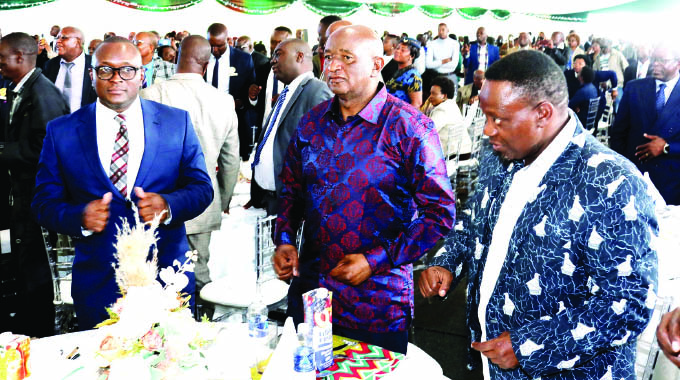
Bulawayo Bureau
TRADITIONAL leaders have voiced their strong support for the Gukurahundi Community Engagement Outreach programme launched by President Mnangagwa in Bulawayo yesterday.
They have also expressed optimism that the home-grown initiative will be a resounding success.
The programme, aimed at addressing the emotive Gukurahundi issue, is designed to prioritise the needs and voices of the victims.
Running under the theme: “Promotion of healing, peace, and unity through community engagement: Sikhuthaza ukwelatshwa kwamanxeba, ukuze kube lokuthula lokubambana lokuxoxisana,” it seeks to address the emotional scars left by the post-independence conflict.
Chiefs, who will lead the 14-member panel, are set to conduct community hearings.
National Council of Chiefs deputy president Chief Fortune Charumbira, who also serves in the Pan African Parliament, praised the traditional leaders-led initiative during the historic launch.
“We should remember that this is not the first initiative since independence to endeavour to resolve or put closure to the Gukurahundi issue. Remember there was a Chihambakwe Commission, and there was a Gukurahundi Commission led by former magistrate Johnson Mkandla,” he said.
“There has been an organ of National Unity and Reconciliation and we have seen a lot of initiatives by civil society organisations and religious organisations. When we conducted interviews with stakeholders from this region, more than 30 different groups asked what guarantee is there that this initiative will be taken to the last end.”
Chief Charumbira emphasised that previous commissions failed because they sought external solutions to local problems.
He praised President Mnangagwa’s home-grown approach, saying it has led to success.
“People said they have seen several initiatives in this region, but none complete the process as they collapse before they even start. I want to say we have already succeeded because the wisdom of His Excellency has led to this success,” he said.
“He sought a home-grown solution, Zimbabwean problems are solved by Zimbabweans.”
Chief Charumbira said conflict resolutions can only be sustainable through being context-sensitive and respecting the knowledge and values of local communities.
He said having traditional leaders leading the conflict resolution puts locals at the centre of addressing their issues.
“This one is led by our traditional leaders, and no country was developed by abandoning its own culture. When you are talking of human issues, appeasement, and healing, you are talking about healing. So that is why I’m saying to His Excellency, thank you very much for taking a route that works,” said Chief Charumbira.
“A lot of people want to go for what is known as best international practice, but this will be some Western idea. We have never heard of local ideas being called best international practice. We are best international practice on this one and that is why we are succeeding.”
Chief Charumbira said it is time for Africa to adopt home-grown solutions to address conflicts given that the continent is failing in terms of resolving conflicts.
“Zimbabwe is a member state of the African Union and we are spending at African Union 76 percent of the US$ 600 million budget towards peace and security. But the contradiction is that over the past four to five years Africa is facing the most conflict situation,” he said.
“We now have five countries suspended from the African Union and without following local solutions the continent will spend billions of dollars in trying to achieve peace. So they have to emulate what Zimbabwe has done.”
Chief Charumbira said it is pleasing that Zimbabweans have started to appreciate the role that traditional leaders are playing in conflict resolution since they experienced a lot of challenges in the build-up to the programme.
He said chiefs will be working with a panel of locals which reaffirmed President Mnangagwa’s philosophy that only locals can develop Zimbabwe.
Chief Charumbira also outlined the structure and process of the community hearings to President Mnangagwa.
“Your Excellency, this team is what we call the panel to which victims will submit their presentations regarding what they experienced during Gukurahundi. It’s a panel of 14 presided over by a chief,” he said.
“The panel includes at least three women, youths, a community pastor, elders, and in some cases, additional traditional leaders, reflecting a commitment to cultural norms and gender issues.”


 leeroy
 Online Reporter