Online Reporter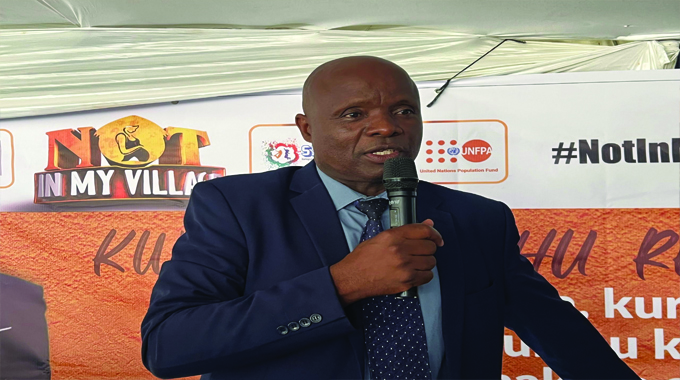
Sukulwenkosi Dube-Matutu, [email protected]
CHIEFS have been identified as key drivers in the enforcement, preservation and promotion of children’s rights, which continue to be violated as evidenced by growing harmful practices against children.
Violation of children’s rights has seen alarming cases of teenage pregnancies and child marriages, which expose youngsters to HIV infection.

The country last year recorded 10 846 child sexual abuse cases compared to 9 916 cases in 2023.
The offences include rape, attempted rape, aggravated indecent assault, indecent assault, online child sexual abuse and sexual intercourse or performing indecent acts with children between 12 and 18 years.
Speaking on behalf of the Judiciary Services Commission (JSC) during a “Not in My Village” chiefs’ orientation meeting in Gweru, Mashonaland West regional magistrate, Mr Tandaridze Ignatius Mugova, said chiefs have authority to stop cases of child labour, children who are not in school and abuse of children among others.

He said chiefs should collaborate with law enforcement agents in fighting the scourge.
Mr Mugova gave an overview of national laws on child protection and the jurisdiction of chiefs in terms of handling such cases in line with the provisions of the constitution and various legislation.
The rights of children are enshrined in the Constitution and other legislation such as the Children’s Act, Education Act and other relevant laws. Section 81 of the Constitution addresses the rights of children, defining a child as anyone under 18.
It emphasises their protection from all forms of abuse, sexual exploitation and the paramountcy of the child’s best interests.

Section 19 of the Constitution mandates the State to adopt policies and measures to ensure that in matters relating to children, the best interests of the children concerned are paramount.
Mr Mugova said the State must adopt reasonable policies and measures to ensure that children enjoy family or parental care, have shelter, are protected from maltreatment and have access to appropriate education and training.
“The State must also take other appropriate legislative and other measures to protect children from exploitative labour practices. The Constitution provides for the rights of the youths and education, respectively,” he said.
“Legislation has been put in place and chiefs have a role to play to ensure that communities uphold the rights of children. Chiefs have to be on the lookout for children who are not at school, children who are in forced labour and children who are violated sexually or physically,” he said.

Mr Mugova said by overlooking cases of child abuse, community leaders become aiders in these social ills.
In a presentation made on her behalf by Midlands provincial police spokesperson, Inspector Emmanuel Mahoko, ZRP national coordinator of the Victim Friendly Unit, Assistant Commissioner Dr Matildah Singende said collaboration and engagements between the police and chiefs will go a long a way in enhancing the fight against child sexual abuse and child marriages.
She said chiefs need to instil the spirit of ubuntu/hunhu within communities as a strategy to curb crime.
“We need chiefs to instil empathy and compassion as well as encourage individuals to take responsibility over their actions and work on amending if harm is caused. There is also a need for community-based programmes that address causes of crime such as poverty, lack of education and social isolation,” she said.

Asst Comm Singende said there is a need for rehabilitation and reintegration of offenders into society rather than solely punishment to curb recidivism.
She said chiefs should hold dialogue meetings with men and boys on the prevention of sexual violence. Asst Comm Singende said this will promote responsible behaviours and positive masculinity.
Chiefs were also urged to organise community workshops, seminars and awareness campaigns on the consequences of crime and respecting human rights.
Asst Comm Singende said chiefs should also champion community-based initiatives such as neighbourhood watch committees.
“In rural areas traditional leaders serve as reporting centres for crimes including sexual offences which are then referred to the police. We also need their input for gathering information, identifying offenders and facilitating investigations,” she said.
The Government, in collaboration with the United Nations Population Fund (UNFPA), is spearheading the “Not in My Village” campaign. –@DubeMatutu