Vusumuzi Dube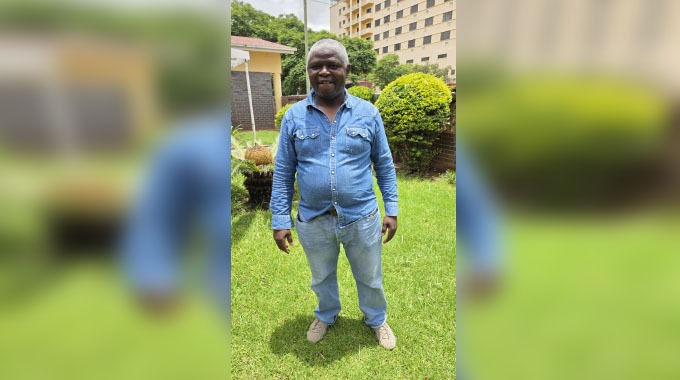
THERE are clubs that win trophies, and there are clubs that become a city’s heartbeat. Zimbabwe Saints were both.
Before the name “Chikwata” became a familiar badge of pride and pain, before the modern noise of social media and the quick churn of football news, there was a time when Saints didn’t just belong to Bulawayo, they ruled it.
They were the club young boys argued about in the streets, the team men measured other teams against, the side that could pull a crowd even when the silverware took its time.
In those years, Saints were still finding themselves. They began as Mashonaland FC, then Mashonaland United when professional football arrived in 1963, and they carried a kind of early swagger that made them the city’s biggest club long before they became the city’s most loved.
They competed for status with Rangers and Eastlands, while Highlanders, still known then as Matabeleland Highlanders, were building their own path in the Bulawayo Amateur Football Association and Division Two, waiting for their turn. Bosso’s promotion at the end of 1970 brought them into the elite division, but Saints already had a hold on the imagination.
It took until 1974 for Saints to win a major trophy, but the delay didn’t weaken them. If anything, it sharpened their story. They commanded a big following and carried some of the finest footballers in the land, the kind of players whose names didn’t need explanation.
In the 1970s, local football grew in stature and confidence and Saints were at the centre of it, helped by coverage that gave the game a national pulse, newspaper reports, radio commentary, television highlights that turned Saturday afternoons into ritual.
For Lovejoy Mugadza, it didn’t begin in a stadium. It began in a home.
He was raised in rural Rusape, far from the terraces of Barbourfields and the football fever of the City of Kings, but Saints still found him. The club was in his life from birth because it was the team his father supported. That kind of inheritance is powerful.
A child grows up hearing the same stories, the same praise, the same anger after a loss, and without realising it, he starts living inside the club’s colours.
Mugadza would sit around a small radio, listening closely whenever Saints played. In those days, the radio didn’t just describe football, it created pictures in the mind. A good commentary could turn a simple pass into a moment of beauty.
Mugadza says he was “blown” by the kind of football Saints were said to be playing, the kind of language that tells you the game felt like something more than sport. It was art. It was pride. It was belonging.
It was also a time when Saints had names that travelled faster than the team bus. Gibson Homela, Eddie Frano, Alick Mwanza and William Sibanda. Those were not just players, they were the faces of a club that made youngsters dream bigger than their surroundings.
By 1977, Mugadza was 11 and Bulawayo felt like a promise. He arrived in the City of Kings and it was, in his words, like a dream come true. Not because he was moving to a bigger place, but because he was moving closer to the club he had already been living with in his imagination.
“My live knowledge of the club begun in 1977 when I relocated to the City of Kings,” Mugadza says. “In that year I joined the club Under-12s under the leadership of Jani Gwede and Zebron Magorimbo and watched every home game.”
That sentence carries two lives at once. The boy who wanted to play. The boy who wanted to watch. Saints gave him both.
He played for Zimbabwe Saints Under-14s, a small but meaningful piece of personal history inside the larger story of the club. Later, he shifted to Highlanders, where he played left-back for the Under-16s, Under-18s and the reserve team. He was good enough to be in the system, close enough to taste the possibility of the first team. But football is cruel in its small details.
One player can end another’s dream without meaning to.
Leftback Dumisani Nyoni put to rest Mugadza’s hopes of taking the Highlanders number three shirt. It wasn’t personal, it was just football’s hard truth. Someone is always better, sharper, fitter, favoured or simply there at the right time.
Mugadza later moved to Harare to train as an apprentice, still chasing a break into the Highlanders first team. Life pulled him forward, as it does and Saints remained behind him like an old song you never stop humming. But Saints were not only about the players on the pitch. Their story lived in the people around them, the supporters who followed them, the families who kept their memory alive and the small objects that carry history without needing a museum label.
Mugadza’s father was a benefactor of the club, his association with Chikwata stretching back to the late 1950s when his vehicles were used to transport the team. That kind of support is rarely celebrated, yet it is the quiet backbone of clubs that survive.
The people who drive, fund, organise and give without expecting applause.
True to that history, an old Commer minibus once used by Saints still lies at the Mugadza family home in Nguboyenja. It was driven by the legendary Gibson Homela. Imagine that for a moment, a bus sitting quietly in a yard, rust and age on its body, but still holding the echoes of laughter, arguments, boots clattering on metal steps and the low hum of men travelling to represent a city.
The family has entertained the idea of donating it to the Natural History Museum of Zimbabwe in Bulawayo. It belongs there, not as a vehicle, but as a witness. A reminder that football history is not only held in trophies and newspaper clippings, but also in the things that carried the dream from one place to another.
“My association with Zimbabwe Saints begun in the early 1970s when the club was known as Mashonaland United,” Mugadza says. He lists the names like a man calling out old friends. Eddie Frano, Adam Maseko, Shiridzinomwa, Phineas Chideme, Alick Mwanza, Tendai Chieza, George Chieza, Moses “Madala Boy” Moyo and Nelson Mapare.
“I didn’t watch some of these great legends of the club in action because I lived kumusha,” he says, “but was a staunch follower of the club and would sit around a small radio listening to the commentary whenever the team played.”
This week, Sunday Life caught up with Mugadza while he was on holiday and asked him to name his Zimbabwe Saints Best XI, the players he believes wore the shirt best. Lists like these are never just lists.
They are memory arranged into order. They are love shaped into a team.
He refuses to start without naming the man he calls the driver of the train.
“It would be injustice to put down names of my best 11 without mentioning the driver of the train, the greatest coach of the club, the man behind the winning of two titles, Tendai ‘Mr T’ Chieza,” Mugadza says.
Then he rolls through the names of players he watched and admired, a long sweep of Saints history told in one breath. Zebron Magorimbo, Musa Muzanenhamo, Philemon Dangarembwa, Tonny Machado, Van Bismark, Isaac Banda, Peter Zimuto, Ben Makadzange, Emmanuel Sibanda, Gibson Homela, Lucky Rufani, Steven Chuma, William “Wiriri” Sibanda, Ian “Malombo” Mpofu, Max “Shaluza” Tshuma, Steven Kwashi, Itai “Dlodlo” Chieza, Chita Antonio, Onias Musana, Gibson Sigauke, Douglas Maneto, Ebson “Sugar” Muguyo, Andrew “Mai Maria” Kadengu.
When he finally settles on his XI, Mugadza does it the way football people always do, with certainty in some positions and pain in others.
In goal, he goes for the agile Musa Muzanenhamo, and he remembers him through one moment, frozen like a photograph.
“At one time he was captured level with the crossbar picking a George Shaya shot directed to the lefthand corner at Rufaro Stadium,” Mugadza says.
“As he lay down on the ground with the ball safely in his hands, he was pelted with oranges by Dynamos fans.”
It’s a beautiful detail because it holds everything about that era. The quality of the save. The drama of Rufaro. The hostility of rival supporters. The absurdity of oranges raining down after brilliance.
At rightback, he picks Philemon Dangarembwa, “tall and skilful.” At leftback, Isaac Banda, “bulky and skilful.” In central defence, he struggles because Saints were blessed there, but he leans toward the combination of Gibson Homela and Emmanuel Sibanda, describing them as an incredible partnership during the title-winning season of 1977.
He also remembers the Homela and Steven Chuma pairing in 1978 after Emmanuel lost his spot due to injury. It’s the kind of dilemma only strong teams create, too much quality, too many memories.
In midfield, he keeps it simple. William “Wiriri” Sibanda alongside Max “Shaluza” Tshuma. On the right wing, he chooses Steven Kwashi in a tight toss-up with Itai Chieza. On the left, Andrew Kadengu. Up front, he edges Onias Musana ahead of the great Chita Antonio, and he gives the last linkman role to Ebson “Sugar” Muguyo.
Even after naming his best, Mugadza still sounds like a man carrying the weight of what couldn’t fit.
Such was the talent at Saints that stars like Douglas Maneto, Ephraim Chawanda, Simon Supiya, Joseph
Machingura and Alick Mwanza miss out on his XI. That’s the thing about great clubs, even the legends can be left standing outside the list.
And then the story turns, quietly, the way old football stories always do. Not with noise, but with a long exhale.
Zimbabwe Saints are no more. The club that once commanded Bulawayo’s heart has faded into memory, kept alive by those who lived through its time, those who can still hear the radio commentary in their head, those who still remember the feel of a packed terrace, and those who can point to an old Commer minibus in a yard and say, that is not scrap metal, that is history.
The saddest part is not that Saints disappeared. Clubs fold, names change, eras end. The saddest part is that a club this big can become a story you have to explain to people who were born too late to feel it.
But in homes like Mugadza’s, Saints still exist. In the names. In the arguments. In the pride. In the memory of a goalkeeper flying across the goalmouth and the oranges that followed. In the quiet truth that some teams don’t die when they stop playing, they die when people stop telling their stories.


 Online Reporter