Online Reporter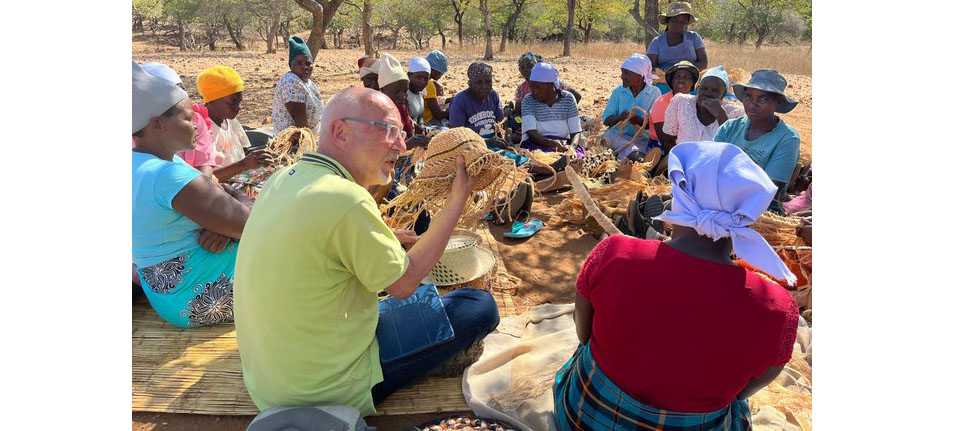
Lovemore Kadzura
Business Reporter
CHIMANIMANI’S renowned baobab bark weavers have received a significant boost from ZimTrade, which is assisting them in directly accessing the export market and reaping greater rewards for their artistic prowess.
The Gudza artists, primarily based in the Nyanyadzi area, are a familiar sight along Mutare-Masvingo Highway, selling their unique products to tourists and locals. For decades, their craft has sustained families and communities.
However, ZimTrade has identified an opportunity for these artisans to benefit more substantially from their skills.
Currently, middlemen ship their products, including carpets, mats, hats, baskets, and bags, to foreign markets, reaping a larger share of the profits than the artists.
By facilitating direct export, ZimTrade aims to ensure that the Gudza artists receive fair compensation for their craftsmanship, which is in high demand internationally.
This initiative is in line with ZimTrade’s mandate to promote and facilitate international trade, investment, and economic growth for Zimbabwe, with key objectives including identifying export opportunities, enhancing competitiveness, and providing trade facilitation services to local businesses.
ZimTrade, in collaboration with Germany’s Senior Experten Service (SES), is providing vital support to artisans and crafters in Manicaland.
A recent visit to Nyanyadzi yielded positive results, with ZimTrade offering technical expertise to empower local crafters, predominantly women, to refine their products and enhance their skills.
ZimTrade Eastern Region manager, Mr Admire Jongwe said the Germany expert, Mr Oliver Majer-Trendel trained the crafters on quality control, marketing, digital presence and forming clusters so that they are able to meet the volumes that are required in foreign markets.
“Crafters in Manicaland, particularly Nyanyadzi are renowned for their unique and quality products, which are on demand across the region. They sustainably use the baobab barks to make their products, and this practice has been passed on from generation to generation. It is part of their proud tradition.
“Communities survive from the work of their hands. As ZimTrade, we realised that they are not fully benefiting from their work. All the products that are being exported mainly to South Africa are going through middlemen. This leaves the crafters with less earnings against their potential.
“We brought in an expert to train them so that they form large groups and trade as clusters, which enables them to have bargaining power as opposed to individual activities. The associations will be formed with assistance of the Ministry of Women Affairs, Community, Small and Medium Enterprise Development.
“Once the associations are there, there will be a quality control manager to monitor and maintain the high standards of production. We also trained them in terms of marketing, especially on digital platforms so that they reach all corners of the world,” said Mr Jongwe.
A crafter, Mrs Susan Gudyanga, said she had been weaving since childhood and earning survival from the art.
She, however, said exporting directly will increase their earnings.
“The intervention by ZimTrade is welcome for us as we want to expand our market. We mainly sale our products along the road to travellers. There are also bulky clients who take our goods to Durban in South Africa. Weaving is our way of life here in Nyanyadzi for many of us, especially women. I have been weaving since I was a child,” she said.