Online Reporter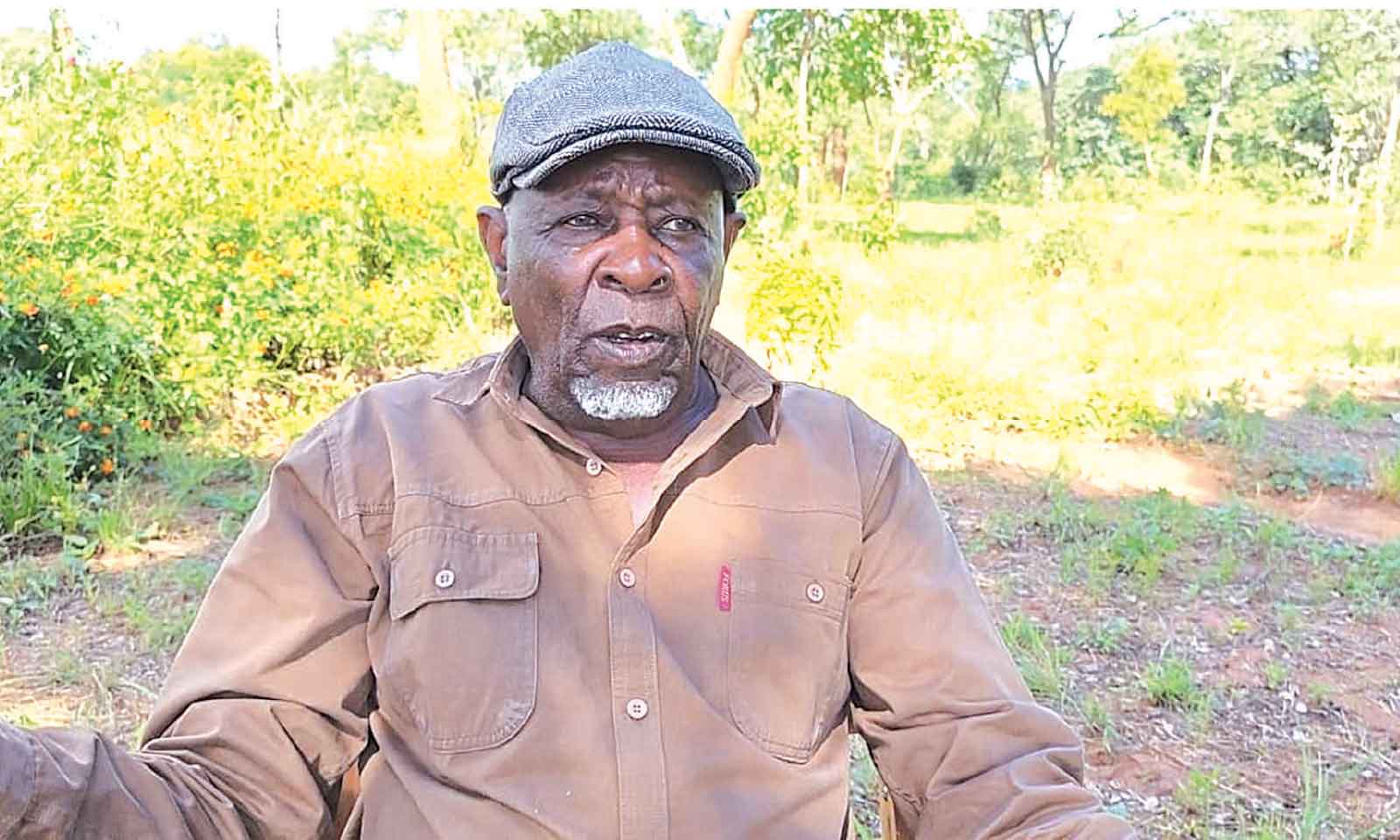
He is one of the nine comrades famously known for blowing up the Salisbury fuel tanks in December 1978, a defining moment in Zimbabwe’s liberation struggle. Throughout the war of independence, he survived numerous battles, serving as a decorated fighter, instructor and medic. Despite his impressive war credentials, he remains a jovial figure, recounting stories of the liberation struggle with humour, even as he reflects on the near-death experiences and hardships he endured. This week, we begin to chronicle the life of CDE DAVID MASHANGWE, whose Chimurenga name was Cde Lobo, who spoke to Zimpapers Politics Hub’s KUDA BWITITI.
************
Q: Cde Lobo, please give us your background.
A: My name is David Mashangwe. I was born in 1956 in Mbare, Harare, then known as Salisbury. I was born to my mother Agnes Xaba. She worked in home and dress décor jobs and was originally Xhosa.
My father, Brown Murerwa Mashangwe, was from Mhondoro-Mubaira. He worked for a metal company.
We were seven in our family, and I was the fourth-born. We lived in Mbare. I did my primary school in Mabvuku and my secondary school at what is now Harare High, in Mbare.
During my secondary school days, it became apparent that the whole of Africa was rising up to do away with colonialism.
In countries such as South Africa, Angola, Namibia and Malawi, the chorus was the same.
As youths, it was a driving force for us to be involved in this drive to do away with colonialism.
In Mozambique, Zambia and Malawi, the elements of resistance were rising.
Here in Rhodesia, there were movements that linked up with other like-minded organisations in neighbouring countries. Nationalist leaders such as Cdes Herbert Chitepo, Enos Nkala, Robert Mugabe, Joshua Nkomo and Simon Muzenda began to mobilise the people to speak with one voice against colonialism.
Q: As an individual, were there any incidents that made you even more determined to join the war?
A: What drove me to want to join the war was the system that we lived under. In the 1960s, I can say there were four classes of people, with the whites identifying themselves at the top of the hierarchy.
Coloureds and Indians followed, while we, the blacks, were at the bottom of the rank.
Q: Describe how this was implemented.
A: It was applied in almost every facet of life and services to the public. We were not allowed to vote. When it came to jobs, the whites would get the best ones. For example, the railway transport was very vibrant at that time.
Black people would only get jobs such as cleaning, while the better jobs in management and so forth went to all the other races.
We were not allowed to walk in certain areas in the city.
In the residential areas where we lived, we were always ill-treated. Many new laws were introduced to further suppress us.
This caused the nationalist leaders to mobilise the people to resist such laws and protest.
Many meetings were organised, particularly in Highfield, at Enos Nkala’s house.
I made it a point not to miss such meetings because as a youth I felt a deep sense of duty to play my part in the resistance efforts that were rising against white minority rule.
I saw it necessary to attend political meetings. The frequency of the meetings grew, and people like Cde Nkomo also organised strikes.
There was one particular incident that had a profound impact on me during one of these gatherings.
Q: Tell us about this meeting and what happened.
A: In Highfield, nationalist leaders organised a meeting to protest against white minority rule at Machipisa.
If I recall clearly, it must have been because the Rand Commission wanted to pass a certain law. Nationalists mobilised us to protest against that.
People were ferried from different areas to meet in Highfield. The address was supposed to be held, I think, at Gwanzura Stadium.
It turned into a massacre after Rhodesia’s security forces intercepted the meeting. This incident left about 35 people shot. The figure included women and children.
The sight was horrifying, as I witnessed it. I saw people being shot. We had been transported to the meeting, but after the shootings, the whole transport system was disrupted, and people had to walk long distances — as far as Mabvuku — to go back home.
I managed to escape unscathed at this meeting, but the sight of defenceless women and children being killed had a profound effect on me.
This incident did not gain much international attention, such as the Soweto Uprising of 1976, but it was something that I can relate to the South African incident.
Next week, Cde Lobo speaks about the dramatic way he crossed into Mozambique to join the struggle.