


 Online Reporter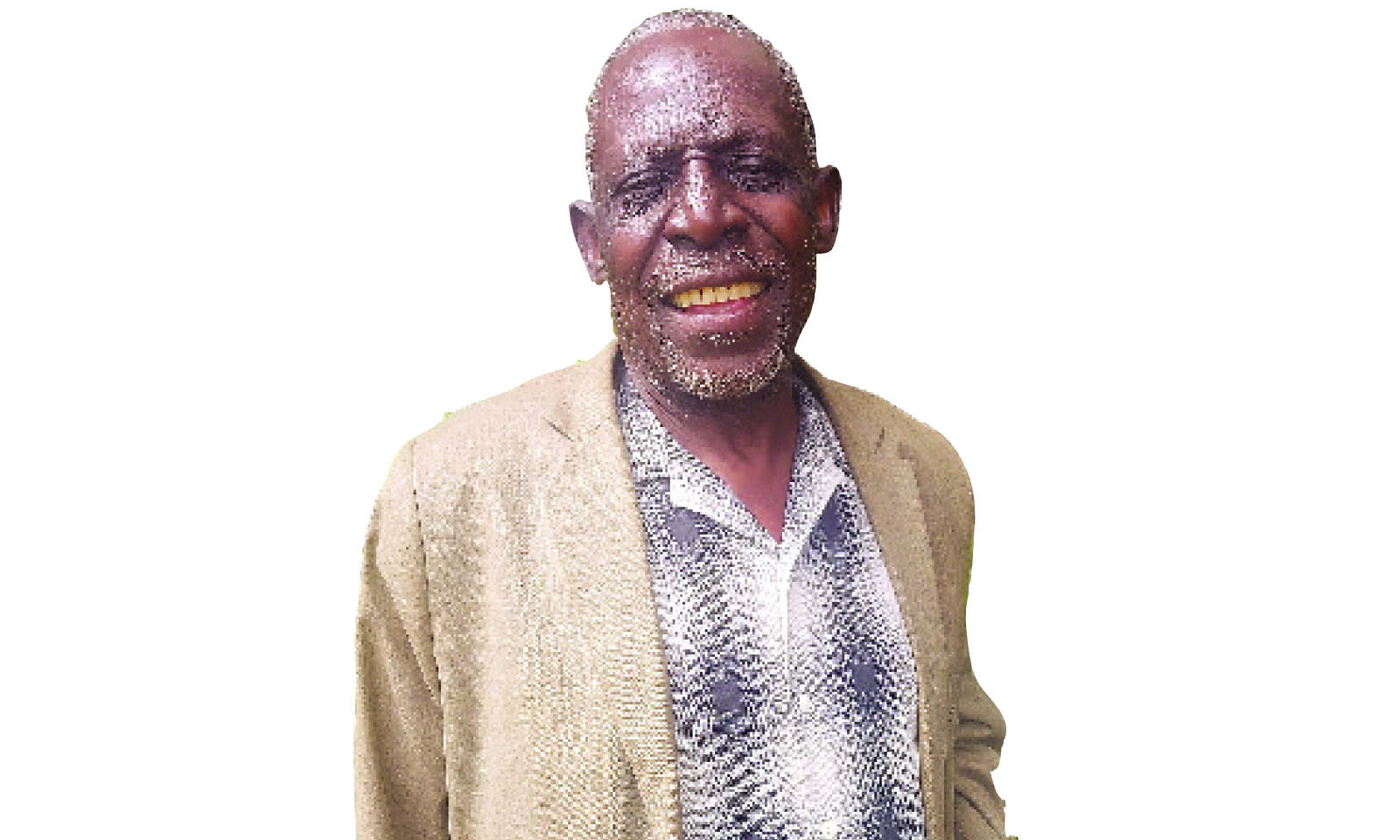
THIS WEEK, CDE WILFRED BALENI, whose Chimurenga name was Mlefu Somfula, recounts his dramatic escape from Rhodesian security forces. Charged with assisting in the transportation of new recruits out of the country to join the liberation struggle, Cde Baleni found himself surrounded by Rhodesian authorities. But through quick thinking and courage, he managed to evade capture. He narrates to our Society Editor PRINCE MUSHAWEVATO how he and his group successfully crossed the border into Botswana. From there, they were transferred to Zambia, where senior party leaders were already waiting to receive them.
***************
Q: Last week we ended our discussion when one of your colleagues, who was betraying you to the Rhodesian authorities, had offered you a lift, ostensibly to escape arrest. Can you carry on from there?
A: After learning that Sam was now a spy working with the Rhodesian police, we were terrified and knew our lives were in great danger. As we exited the Gweru Hospital gate after visiting his wife, who worked there, Sam flashed his car lights at us and shouted for us to join him. At that moment, we had no option but to comply since the authorities had surrounded the area.
Sam knew that all the railway exits were being manned by police looking for us, thus we had nowhere to run.
He did not hand us over to them, but dropped us off on the outskirts of the city and told us to travel on foot to catch a train at Dabuka. His plan was probably for us to go straight to the train station and get arrested in the process. But, since we now knew he was working with the enemy, we got a lift back into town and disembarked at Wimpy.
My colleague, Raymond Takavarasha, suggested we get some dresses to disguise ourselves since women were not searched, but I was against the idea.
After some careful reconnaissance, we proceeded to the train and managed to sneak in without being detected. We travelled to Bulawayo and met Sydney Malunga, to whom we had been referred by Cde Josiah Chinamano.
He had given us a note, which just had his signature, to pass on to him.
Malunga then arranged transport for us and informed the bus crew about our situation.
Q: Where was the bus crew supposed to take you?
A: They were heading towards the border with Botswana. We travelled with them until everyone disembarked.
After travelling for a distance, we got close to a mountain and the bus stopped.
The driver instructed us to continue the rest of the journey on foot until we got to Judah Ncube’s residence, which was along the way.
We complied and when we got there, we were well received and fed.
Around 3am, we were transported on bikes and dropped off at the Shashe River.
We still had the car keys for the vehicle we had left in Masvingo and decided to throw them into the river.
We crossed to Bobonong, Selebi-Phikwe and the next day we arrived in Francistown.
In Botswana, Noah Mvenge was already waiting for us. He arranged a flight for us to Lusaka, where we hoped to meet Joshua Nkomo since he had instructed us to come there. However, Xele was at the airport.
We had now been joined by other recruits. That is when we stayed at the transit camp.
There, we received visits from senior army personnel, the army commander and the chief of staff based in the country. We were then later taken to training camps; he (Takavarasha) went to a different one from mine.
This is how we officially joined the struggle.
Q: Can you take us through your journey in the training camps?
A: The training was so rigorous that at one point I regretted joining the military side of the struggle. Not because I regretted fighting the oppressors, no! It was the physical pain that made me regret it. The training was tough.
I remember meeting Brigadier-General Ambrose Mutinhiri (Retired), and he said, “We want more blood in the training camps and less blood on the battlefield.” And I knew the situation had moved to another level.
But after the training, you would start appreciating the process.
My camp commander was Ananias Gwenzi, who is now called Valerio Sibanda; he was our chief instructor.
Notable people I trained with include Elson Moyo, former Air Force commander, Sibusiso B. Moyo; Albert Ngulube; and Siziba, who was recently buried at the National Heroes Acre.
That was my group.
After training, we were sent to the next stage under the custody of the chief of operations, Enock Changane.
We were transferred to another camp, ready to be deployed to the front. However, I did not stay there for long.
Remember, during training, they did biographies for everyone.
While still in that camp, a few of us were taken from the centre and told that we were going for further training in the Union of Soviet Socialist Republics (USSR).
That is where I went.
Lookout Masuku, who was the army political commissar, took us there. He told us that was where he had trained and that theirs was the last group there.
I was enrolled at a party school, Communist Party of the Soviet Union. I trained there for some time before returning to Lusaka.
Q: Can you characterise the training camps regarding the personnel and how you related with each other?
A: One thing that most people do not know is that there were more Shona than Ndebele commanders at our training camps; I could say three quarters of the instructors, even the High Command. We had Ananias Gwenzi, Goronga from Bikita, Chizema from Mhondoro, Brighton Johns, among others.
I think Gaddie Ndlovu and Elias Ndau, who was from Beitbridge, were among the few Ndebele commanders there.
I remember very well when the likes of Brigadier-General Mutinhiri (Retd) and other commanders came for the parade; they would speak in Shona and we understood each other well.
Joshua Nkomo had instructed everyone to speak in their own languages.
I remember a guy who once said “angizwa” in response to an instruction by one of the commanders and he got into serious trouble.
Besides, we had come from a party (ZAPU) that had a national character, so we never really had a challenge in that regard.
You find that cadres from Plumtree, Tsholotsho, Jambezi, Hurungwe and Mashonaland Central, particularly Sipolilo (now Guruve), constituted most of the ZIPRA comrades around 1976 going into 1977.
Q: You can carry on.
A: When Mozambique was liberated and Abel Muzorewa was still at the helm of the movements’ union (ZAPU, ZANU and FROLIZI operating under the ANC), ZAPU leaders who had been released from prison were recruiting people. Most of the youths who went to Mozambique were ZAPU youths being recruited by people like Hananda, George Marange, Portis Takundwa and Katsande.
The recruitment practice was now part of the ZAPU leadership’s mandate, which was the ANC then.
It was easier to cross into Mozambique than to go to Zambia, especially when coming from areas like Manicaland or Mashonaland Central. I know of people from Masvingo who joined the struggle in odd ways.
For instance, there is a ZAPU cadre who crossed into Mozambique with a BAT truck. Perhaps he had stolen money and abandoned the vehicle at the border.
No one really knows what became of him.
But the issue I am trying to put across here is that they would later discover that there were no ZAPU cadres in Mozambique when returning was no longer an option.
Many comrades crossed that way.
But in Botswana, Francistown, there were two desks at a refugee camp where you would have the option of either choosing to join ZANLA or ZIPRA.
Q: You were trained and worked with some of the liberation stalwarts. Do you have any whom you wish to talk about today?
A: Perhaps I could talk about Brigadier-General Mutinhiri (Retd), who is one of the senior-ranking ZIPRA fighters alive and was instrumental in training a lot of fighters whom you know today.
The first time I saw him (Cde Mutinhiri), he was so impressive in leading us and encouraging us during the struggle.
He gave us the spirit to fight and we admired his combination with Commander Nikita Mangena. Their speeches were always quoted by comrades because they were highly motivational. He never lost hope, even when the situation was not working in our favour.
I remember one incident when we were in a training camp in Zambia; he gave us a speech, telling us that the enemy was now demoralised and that we had defeated them (the Rhodesians).
A few weeks later, the enemy attacked and bombed us and he came back and told us that those were the “last kicks of a dying horse”.
This was his character and spirit during the struggle. He never gave up!
This is what we always remember him for.
He was a true inspiration and was very eager to liberate the country and wanted to do it for our parents, who suffered the most during the colonial era. Every time he addressed us, we were left with more vigour to liberate the country. That is why I told you their combination with Mangena and Harold Chirenda was something else.
They were highly inspiring commanders.
Brigadier-General Mutinhiri (Retd) is the one who trained Rex Nhongo (Cde Solomon Mujuru) and many other figures who later became seniors during the struggle and even after independence.
When I was in the Soviet Union, that is when Cde Mangena passed away.
That is the time when Cde Mutinhiri became the acting army commander for ZIPRA until the time I came back to Lusaka.
However, a lot happened during this time. He was acting commander, but I am troubled by the changes that later happened.
He was supposed to eventually become the commander, but we were surprised that the then-army political commissar became the commander, replacing him.
Even when we came back home after independence, there were people whom I left in school in Russia, who were never near the camps, but came back and started claiming to be the leaders of the struggle at the assembly points. People knew Mangena, Lookout Masuku, Mutinhiri and Maseko as the leaders of the fighters during the struggle.
Even Masuku was almost overshadowed.
That troubled a lot of cadres, but we simply realised there were political decisions at play then.
Next week, Cde Baleni will conclude his narration by giving us insights into his journey after returning from the USSR, highlighting how the training transformed him into a vital cog of the ZIPRA administration team during the struggle.



