Online Reporter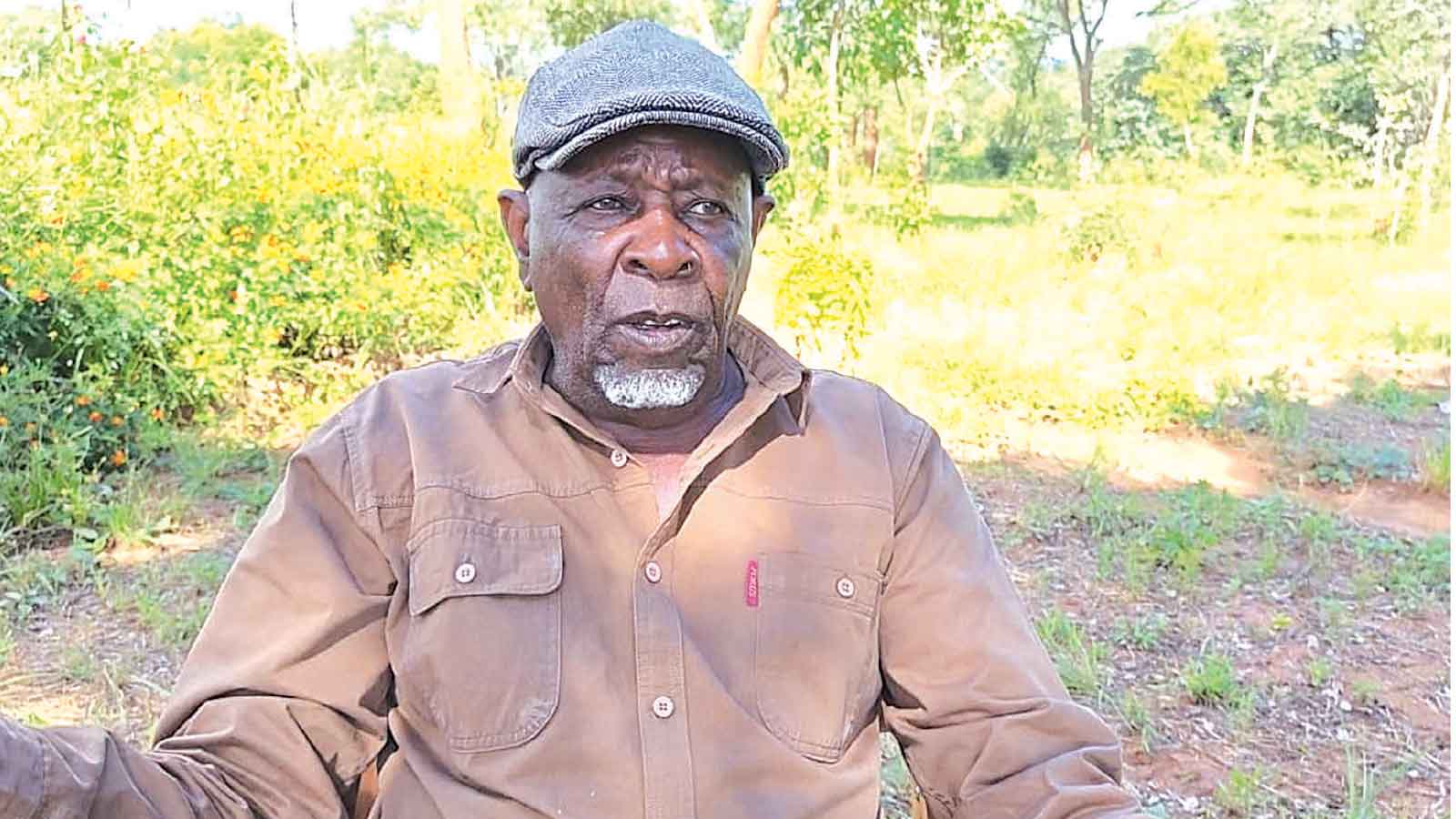
Last week, CDE DAVID MUSHANGWE, whose Chimurenga name was Cde Lobo, told Zimpapers Politics Hub’s KUDA BWITITI about how his group disguised themselves as church worshippers to cross into Mozambique and join the liberation struggle. He also revealed that their transporter, known as Cde Taffy, was later caught by the Rhodesian regime and hanged for ferrying comrades across the border. This week, Cde Lobo speaks about his time at Machazi Camp in Mozambique, their first destination after crossing into that country.
*************
Q: When you arrived in Mozambique, you lived at Machazi Camp. Tell us about the general conditions there.
A: We were welcomed by the people of Mozambique.
At that time, there were still some Mozambican colonial soldiers who posed a threat, although a ceasefire was in place. So, when we arrived, we stayed at Machazi Camp alongside FRELIMO comrades who protected us. We remained there for several weeks.
The well-known comrades I met there include the late national hero, Brigadier-General (Retired) Victor Chikudo Rungani, who was buried at the National Heroes Acre in 2025
Another prominent figure was Ambassador Mark Grey Marongwe, currently Zimbabwe’s Ambassador to Russia.
Our stay at Machazi Camp was far from rosy. We were told on several occasions that we would proceed to Tanzania for military training, but that process was delayed. Living conditions at Machazi were quite dire. We did not have enough food.
The camp was 90 kilometres from Chimoio, and what was depressing was that members of the local community (povo) knew our plight and would tell us that those at Chimoio had better supplies and were living in much better conditions. We longed to flee to Chimoio.
Q: How many of you were at Machazi?
A: We were in our hundreds and our numbers continued to swell, which made living conditions even worse because it meant more demand for food and supplies that were not available.
To put it bluntly, there was hunger at Machazi. Because we lived in hunger, we became prolific hunters.
If animals such as antelopes or rabbits entered our midst, we would hunt them down with agility — they stood no chance. Our hunger made us proficient. We would tear those animals apart like hungry lions.
Q: How long did you live under these conditions at Machazi?
A: Having arrived in late 1974, we lived there for about six months. It was a very difficult period because we had not anticipated staying that long. Several recruits also died at Machazi due to diseases like malaria and the deplorable living conditions.
Q: So it was that bad? Please tell us more.
A: It was common for people to die from malaria in Mozambique, so we lost several comrades to the disease. But I also remember another death at Machazi that was mysterious.
A female comrade named Jane Mbenguzana was the victim.
The incident showed us that Machazi was quite a dangerous place.
We suspected she died of poisoning because of the growing tensions with FRELIMO comrades we were living with. She was very vocal.
She spoke strongly against the conditions at Machazi.
The Frelimo comrades viewed her as an outspoken rebel and did not like her — they saw her as a ringleader.
Q: What caused the tensions with FRELIMO comrades?
A: They viewed themselves as superior to us. For example, they would give us errands as if we were their workers.
People like Cde Jane protested against this. There was a lot of friction, and even fistfights.
However, the FRELIMO comrades had the advantage of being armed, so they sort of bullied us because of this. We believed they poisoned Cde Jane because she was one of the most vocal.
Her death made us more determined to leave Machazi and proceed to Chimoio, where we knew we would get better treatment and serve our purpose of fighting Rhodesian colonial rule.
So, our group, which included Cde Mark Marongwe, decided to escape from Machazi and head to Chimoio, which was then called Vilaperi.
Q: How many of you were there when you escaped Machazi? Also tell us about the journey.
A: We were about 80. Many others remained behind. The journey took about a month to reach our destination. It took so long because, along the way, we were detained at some FRELIMO camps, since our departure from Machazi had not been approved.
It was a perilous journey indeed, fraught with many challenges.
For example, during the journey, some of the comrades, whose names were Pancho, Fani Nzirawo and Marowa, were left behind at some deserted spot in the bush because of hunger after we had stopped to drink water.
When they were left behind, I decided to look for them — they were my friends. I went back to the area and picked some pawpaw fruits.
I prepared the pawpaws, went to the river and gave the comrades water to drink. After that, they found some strength, and we were able to rejoin the group. Remember, the journey was 90 kilometres with little food to eat.
But after I helped them, they managed to reach the destination.
When we arrived, they received medical treatment at Chimoio Camp.
Most of the comrades had swollen legs. Many were sick.
We lived at Chimoio for a few days, receiving treatment, and after that, we proceeded to Nyadzonya.
Next week, Cde Mushangwe speaks about his time at the Nyadzonya Camp.