Online Reporter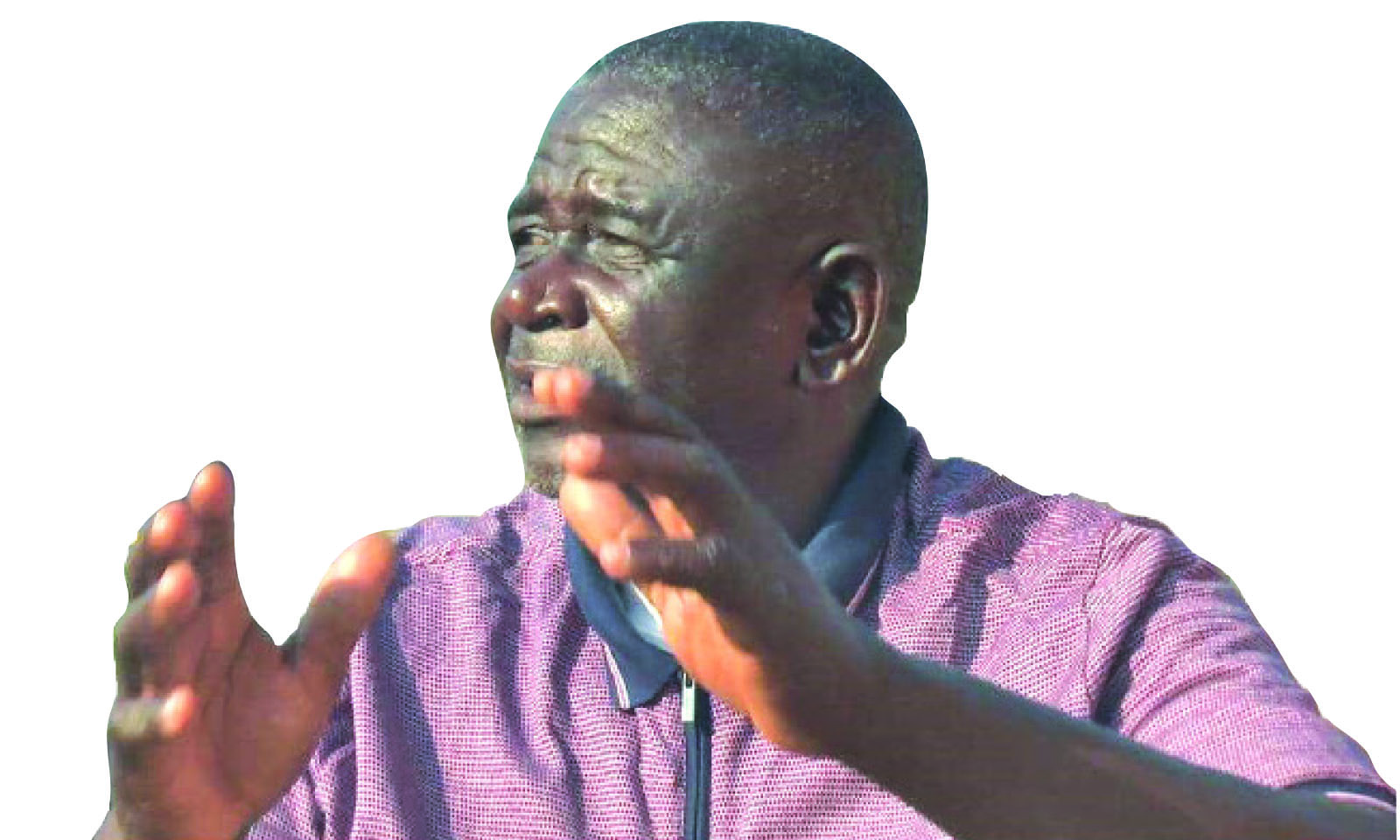
For CDE DAVISON JOHN TAKAWIRA MUPFUNYA, whose Chimurenga name was Red Number Mapondera Dzinopfuta, joining the struggle to liberate the country was a decision motivated by many factors. Among them were the brutal murder of his brother by the Rhodesian Security Forces, as well as inspiration from family members actively involved in African nationalism. He tells our Society Editor PRINCE MUSHAWEVATO the events that preceded his journey to join the liberation struggle.
***************
Q: Could you begin by introducing yourself?
A: My name is Davison John Takawira Mupfunya. I was born in 1955 in Goto village, Murewa, under Chief Mangwende. My liberation struggle name was Cde Red Number Mapondera Dzinopfuta. We were 10 in our family — seven boys and three girls. Sadly, six of my siblings have since passed away. We are now four: two boys and two girls. I attended Muchinjike Primary School up to Grade Seven.
After that, I moved to Salisbury (now Harare) to search for work, just like many young people were doing at the time. I was fortunate enough to get employed and stayed in the capital for a while. However, when I heard that comrades had moved into our rural area in September 1976, I immediately resigned and went back home.
Q: What was the primary reason behind this move?
A: A lot was happening during that time. There was widespread unfair treatment by the white colonisers. Also, I wanted to be home with my family to get a first-hand understanding of the situation following the arrival of the comrades.
Q: Could we say it was during this period that you were introduced to African nationalism?
A: In a way, it was. Like I said, a lot was happening, and that shaped a new course in my life.
While in the rural areas, I encountered a nasty scenario involving the Rhodesian soldiers who came to our village to address us. They gathered and separated us. The elderly men were placed in one group, while the youth were bundled into a different one. Unfortunately, the youth were beaten while being addressed. Our parents, however, could not see this.
The white soldiers were interrogating and thoroughly beating us, asking for the whereabouts of what they called “gingingi”, which referred to the comrades (magandanga). They did not believe us when we told them that we had heard of the liberation fighters being in the Uzumba area but were yet to meet them.
As the soldiers continued whipping us, my brother Raymond Dengwana, who was moulding bricks at the time, came over to where we were. Two armed Rhodesian fighters advanced towards him and instructed him to throw his axe down. They repeatedly shouted, “Ngaikande demo pasi.”
He resisted. The white men kept advancing towards him. When they got close, he attempted to strike one of them on the shoulder, but the white man was swift.
He managed to block and dodge the axe. It did, however, hit a part of his palm, causing serious injury. His colleague, who was by his side, responded by opening fire. My brother was hit and died on the spot.
Q: You can carry on.
A: A helicopter was summoned from Joko in Mutoko and came to collect my brother’s body. They hanged his corpse on the helicopter and paraded him to the whole village before taking it to Mutoko while he was still hanging. This was so disturbing — rather traumatising.
Everything that happened that day pained me so much. It was then that I thought of avenging my brother’s death by joining the fight to dismantle colonial rule.
It was a long while after the incident that the comrades finally visited our village. But by the time they came, two of my younger brothers had already skipped the border into Mozambique to join the liberation struggle. They had left while I was still working in Harare.
The fact that two of my family members had already joined the struggle made it a bit difficult for me to follow suit. However, when the comrades came into our area, I used to be a war collaborator (mujibha), going to their bases, assisting with crucial intelligence, conveying messages and, in some instances, organising food.
Q: Out of the 10 children in your family, how many participated in the liberation struggle?
A: Everyone in our family was generally involved in the liberation struggle in one way or another. My brother Cephas, the second-born, is an ex-detainee.
He was arrested in 1964 during the “tsuro, tsuro wee tamba naNkomo” song era. Cephas and his colleagues from the same village were arrested and sentenced to seven years in prison. He was incarcerated at the Harare Central Prison and released in 1971. My other elder brother, Wilson Mupfunya, who had finished his studies at Bernard Mizeki College, came back and joined serious activism.
He was the fifth-born and an active war collaborator whose exploits are well-documented in Mutoko, Uzumba and surrounding areas.
He became the first recognised coordinator in our area because of his participation in the struggle. The seventh-born, Mark Pfumai Mupfunya, was also a war collaborator.
Then we have my two younger brothers, Mambo Benjamin and Godfrey, whom I mentioned earlier. But of great interest is the issue of Mambo Benjamin, who was killed in Mozambique and eventually reburied here in Zimbabwe some decades later. We went to collect his remains in 2015.
Q: How did you manage to do that?
A: Mambo Benjamin, whose Chimurenga name was Cde Tichatonga Zimbabwe, was killed in the infamous November 23 Chimoio massacre. His remains were interred in the Chimoio mass grave that you all know about. His spirit directed us to where his remains were through a cousin, Evester Mupfunya, from one of our father’s siblings.
We successfully collected his remains and reburied them at our rural home on December 30, 2015. This is the same area where our father and my brother Godfrey are interred. We recently celebrated his (Cde Tichatonga Zimbabwe) 10th anniversary after returning home.
Next week, Cde Mupfunya will tell us how he crossed into Mozambique to join the liberation struggle.