admin
admin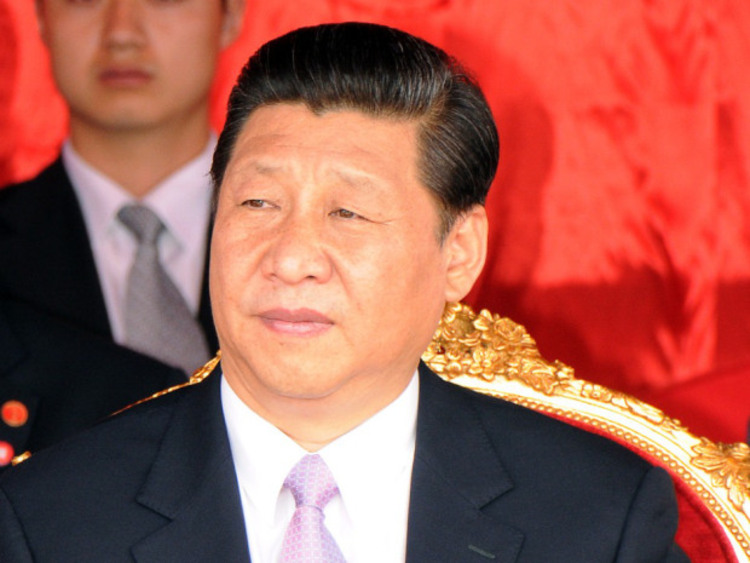
Munetsi Madakufamba
Since the formation of the China Africa Forum 15 years ago, relations between the two sides have continued to scale new heights in the areas of economic, cultural, political and security spheres.
The 2015 Johannesburg Summit of the Forum on China Africa Cooperation took further bold steps to cement mutual benefit between the two sides, while taking the ties to even higher levels, including a new US$60 billion Chinese fund to support development on the African continent.
Although relations between China and Africa span several centuries – from the pre-colonial relations which were largely trade driven through colonial era relations when political and military cooperation blossomed, to the post-colonial era when economic cooperation has taken centre-stage while political ties have remained important – China has recently shown unprecedented interest in Africa more than any other part of the world.
Focac has provided a more structured platform for deepening the ties between the two sides in a broad spectrum of fields from political to economic areas.
Latest figures indicate that trade between the two reached US$220 billion in 2014 while China’s direct investment in Africa topped US$30 billion in the same year.
In an address on the opening ceremony of the Johannesburg Summit of Focac on December 4, 2015; China’s President Xi Jinping announced 10 China Africa Cooperation Projects, which will be supported by a US$60 billion fund.
The plan covers development in a wide range of sectors of Africa, including improvement of the continent’s industrial capacity, agricultural modernisation, infrastructure development, upgrading rural and urban settlements, green development, trade and investment facilitation, poverty reduction, health improvement, culture and people-to-people exchange, and peace and security cooperation.
Outlining his country’s vision for Africa, President Xi said the fund, which consists of grants, favourable concessionary loans and other investment funds, will be channelled into areas selected by African countries as opposed to priorities imposed by others. He said China’s foreign policy on Africa was guided by five principles that include political equality and mutual trust, win-win economic cooperation, mutually enriching cultural and people-to-people exchanges, mutual assistance in peace and security, and solidarity and cooperation in international affairs.
On behalf of African leaders, African Union Chair President Mugabe said, “Here is a man representing a country once called poor, a country that never colonised us, doing what those who once colonised us ought to be doing.”
South Africa’s President Jacob Zuma said China has been a “consistent friend of Africa”.
He said the Summit theme, “Africa-China Progressing Together: Win-Win Cooperation for Common Development”, dovetails with Agenda 2063, Africa’s long-term vision. Everyone from the United States of America and Europe is seeking to do business with China, aiming for a share of the Asian giant’s US$4,3 trillion reserves. Africa is no exception.
Much more importantly, African leaders are seeking mutually-beneficial cooperation with China. Both Mugabe and Zuma made this point quite clear.
President Mugabe spoke for the majority of Africans when he said the West has a distorted view of relations between China and Africa.
He said the West has “sought to portray and reduce our relations to purely commercial eyes driven in their view, as they say, by China’s appetite for and desire to extract raw materials from our continent . . . On the contrary, reality, fortunately, does not conform to such distorted imaginative creations”.
He added that these “relations go much deeper than the extraction of resources”.
Perceptions around China moving into Africa for resources have been addressed by Chinese authorities on many occasions.
President Xi, in particular, has consistently spoken of the “new normal” where the world is undergoing profound changes.
Part of that “new normal” has, no doubt, manifested itself in the maturation of the Chinese economy, which is now seeking to shift from one that is resource hungry to a new economic system that is consumer-driven, with a strong middle class. It is an economy that is seeking to export some of its labour-intensive industries into Africa, for example building industrial parks that will take advantage of the continent’s demographic dividend.
Dr Nkosazana Dlamini-Zuma – the AU Commission Chair – said Africa is set to benefit from investment by Chinese enterprises as the continent “has a young population in an aging world”.
She said this was welcome given the continent’s quest to beneficiate and value-add in order to create jobs and hedge against the volatility of its primary commodity prices on the international market.
The 2015 Focac Summit was preceded by meetings of senior officials and ministers, and interfaces among the private sector, academia and the media.
Fifty African countries were represented, mostly at Head of State level. – sardc.net.


 Online Reporter