admin
admin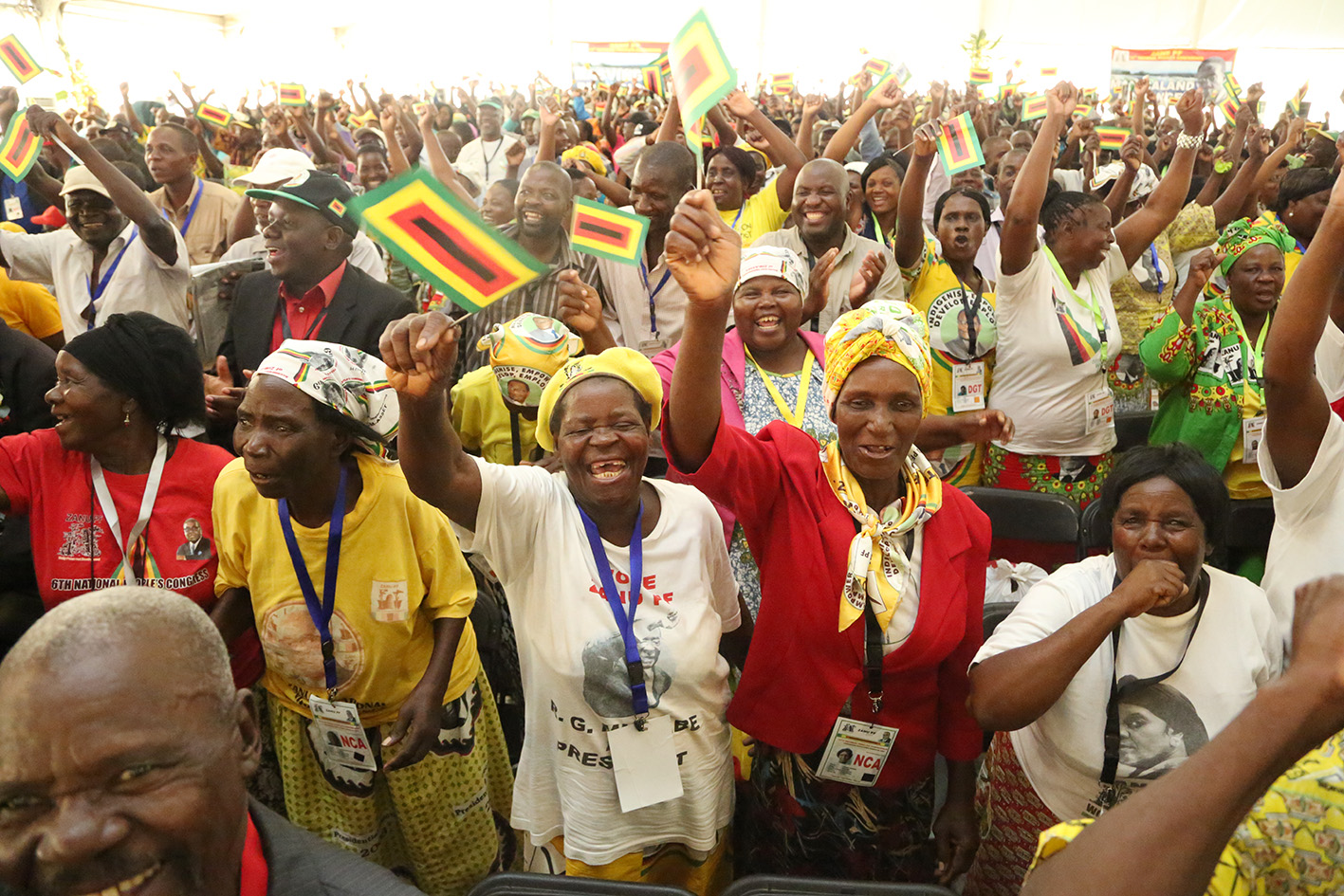
Joel Biggie Matiza MP
Through their proxies, the Rhodesians have resorted to all sorts of desperate devious means because in their warped thinking, the end is nigh for Zanu-PF.
Thirty-five years after independence, and 28 years after the Unity Accord between Zanu and PF Zapu is enough time for Zanu-PF to self-introspect and critically evaluate the forces seeking not just to undermine its rule, but to totally decimate its legacy as a founding revolutionary party in Zimbabwe.
As Zanu-PF supporters retreat to their respective bases after holding a very successful and highly engaging annual indaba, I feel it is critical that we candidly reflect on how members can create safety nests against a resurgent bid by detractors who are bent on destroying the party’s legacy.
As a revolutionary party, led by its revolutionary and visionary leader, President Mugabe, Zanu-PF has, against all odds, withered orchestrated attempts by the West, including the United States, at regime change via proxy parties like the MDC and some Rhodesian proxies who are still very active in the country’s political arena.
Even the imposition of sanctions, which was meant to make the economy “scream”, failed to dislodge Zanu-PF.
What probably made it easier for Zanu-PF to remain resolute was the fact that the enemy was easily identifiable and its tactics easily discernible.
It is an enemy that employed out-dated tactics of inducing economic hardships among the populace with the hope that this would foment distress and uprising.
Alas! Zimbabweans are an educated lot who understand the Machiavellian conduct of our erstwhile colonisers.
But the enemy that confronts Zanu-PF today is a more lethal one in that this is an enemy within, who, during the day, pretends to be one of us, while supping with the devil at night.
This is an enemy who has wormed his/her way through critical ranks and structures of our revolutionary movement with the sole aim of destroying the party from within.
It is not a coincidence that at a time when Zanu-PF is entering its third-year mandate of ruling after resoundingly trouncing the MDC, it finds itself engaging in self-destructive tendencies — bad-mouthing each other, escalating factional fights, lack of respect for the leadership, with a culture of impunity seemingly being the order of the day instead of consolidating and strengthening the party.
In my view, Zanu-PF has been infiltrated by some elements who have become pliable instruments of both Rhodesian elements and the Western regime change agenda who are bent on destroying the revolutionary party and its legacy.
This is the major menace that, in my view, is at the centre of the friction and discord within the party.
Surely, it cannot be a coincidence that certain individuals within the revolutionary movement are still vigorously and shamelessly protecting white interests, especially the interests of former white commercial farmers.
The truth of the matter, comrades, is that Rhodesians have suddenly found a way of weaving through the party through these individuals whose ultimate goal is to “de-Zanufy” the political fabric and destroy the national revolutionary legacy, including desecrating the graves of all those at our National Heroes’ Acre.
Most Rhodesians never at all accepted black rule.
Thus the coming of independence was a shock to most Rhodesians, who, in their cauldron of lives, resolved to fight the new black Government by any means necessary.
One does not need to go far in seeing the abstinence of Rhodesians in failing to smell the coffee than reading an account of the last Bastion of Rhodesian personified hegemonic power in Ian Smith, who, in his book “The Great Betrayal”, published in 1997, clearly showed his warped amnesia where he reminisces about Rhodesia’s possible comeback.
Initially scheduled for publication by Harper-Collins at the end of 1995, the book was cancelled last moment due to the demands by the publisher for Smith to change all references to President Mugabe and his comrades as “terrorists” to freedom fighters.
Smith’s refusal to change his identification of Cde Mugabe as a “terrorist” is indicative and synonymous of and with most Rhodesians’ refusal or denial of black majority rule.
This refusal is also aptly encapsulated in Rhodesians Never Die, a Rhodesian “patriotic song” written and recorded by Rhodesian singer-songwriter Clem Tholet in 1973.
Though originally released as a pop song, its lyrics caused iconic status among Rhodesian soldiers fighting Zanla and Zipra.
This refusal to accept black rule is further captured in Peter Godwin and Ian Hancock’s book “Rhodesians Never Die”, which tells of a story of how ill-prepared the Rhodesians were for black rule, and that they vowed to work towards its destruction from outside or within.
This was well before the Land Reform Programme, a nationalistic empowerment programme that further angered the Rhodesians and bolstered their resolve to fight the revolutionary movement using whatever financial muscle they still had.
And yes, while the majority left the country, wherever they are today with their off-spring, they have not rested in their endeavour to dislodge Zanu-PF from power.
Realising the futility of them ever assuming the political reins, Rhodesian remnants have since reactivated their old black contacts whom they are vigorously financing to cause despondence within the rank and file of the party.
Through their proxies, the Rhodesians have resorted to all sorts of desperate devious means because in their warped thinking, the end is nigh for Zanu-PF.
I am, however, glad to say that even our First Secretary and President Cde RG Mugabe is aware of the nefarious activities by some within the revolutionary movement as indicated by his official address at our 15th Annual National People’s Conference.
In his prepared speech, President Mugabe pointed out that: “We have seen a spectacle of indiscipline, spectacle of big-headedness. Dirty things and agenda are projected and pursued in the name of the President and his wife, in the name of Vice President Mnangagwa; in the name of Vice President Mphoko. In the name of this or that Party organ.’’
President Mugabe also alluded to the proliferation of little organisations that act and speak in the name of the party which do not exist in our structures and are unknown to the leadership, and certainly do not espouse the party’s ideology and its values.
Cde Mugabe further rhetorically asked: “Who are these people? Who is behind them? What is their goal? Who pays them, sends them, directs these confusionists?’’
These are critical questions that every conscientious Zanu-PF cadre must reflect upon, lest the past and the future are destroyed in the present.
These questions call on every member to reflect on how some individuals within the rank and file of our revolutionary party seem to have a hideous penchant of defending certain white interests and scuttling genuine empowerment programmes by the Government.
The truth of the matter is that these individuals, some of whom were booted out at the last Zanu-PF Congress, have now regrouped and are gearing up for a final onslaught on the revolutionary party.
However, what consoles my heart as a humble servant of the party is that the leadership seems aware of this devious Rhodesian element within as indicated by President Mugabe’s speech.
I fervently urge every member of our revolutionary party to remain vigilant and to be wary of individuals who pretend to be part of us, but act in a way that is contrary to the revolutionary party’s ideals, values and ideology.
As the curtain came down on our 15th Annual National People’s Conference yesterday, members must reflect on President Mugabe’s call for unity, discipline and remain vigilant against subversive elements, and desist from consorting with institutions hostile to our national interests.
We must be wary of Rhodesian elements and defend the revolution for posterity.
Cde Joel Biggie Matiza is Zanu-PF’s Mashonaland East Provincial Chair. He wrote this article for The Sunday Mail on the occasion of the party’s 15th Annual National People’s Conference



 Online Reporter