admin
admin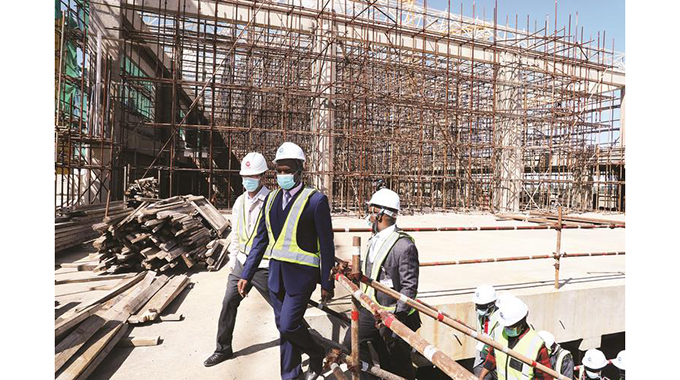
Guo Shaochum
Chinese Ambassador to Zim
In the Global Health Summit in late May, Chinese President Xi Jinping made fresh pledges on China’s support for the global fight against the Covid-19 pandemic, especially in developing countries.
The concrete and quantified goals include US$3 billion in international aid over the next three years for Covid-19 response and economic and social recovery in other developing countries, continued supply of vaccines and supporting transfer of technologies to and joint production of vaccines with other developing countries, .
The aid will support the World Trade Organisation and other international institutions in making an early decision on IP rights waiver on Covid-19 vaccines which China already endorses, and setting up an international forum on vaccine cooperation for vaccine-developing and producing countries, companies and other stakeholders to explore ways of promoting fair and equitable distribution of vaccines around the world.
This is not the first time China makes ambitious commitments to the world since the outbreak of the virus.
Similarly inspiring initiatives have been proposed by the Chinese leader at the Extraordinary G20 Leaders’ Summit on Covid-19, the 73rd World Health Assembly, the High-level Meeting to Commemorate the 75th Anniversary of the United Nation, the BRICS Summit, the APEC Economic Leaders’ Meeting, the G20 Leaders’ Summit, and the Extraordinary China-Africa Summit On Solidarity Against Covid-19. But China does not stop at words.
Under the leadership of President Xi, China is now carrying out its largest global emergency humanitarian campaign since the founding of the People’s Republic of China in 1949. Notwithstanding the limited production capacity and enormous demand at home, China has provided free vaccines to more than 80 developing countries in urgent need and exported vaccines to 43 countries.
China has availed US$2 billion as assistance for Covid-19 response and economic and social recovery in developing countries.
China has sent medical supplies to more than 150 countries and 13 international organisations, providing more than 280 billion masks, 3,4 billion protective suits and 4 billion testing kits to the world; China has established a cooperation mechanism that paired up Chinese hospitals with 41 African hospitals.
China has officially started the construction of the Africa CDC headquarters at the end of last year; China has become the leading G20 member in debt payment deferral for developing countries, putting off more than US$1,3 billion of repayment under the G20 Debt Service Suspension Initiative for Poorest Countries. Here in Zimbabwe, China’s genuine commitment to its pledges is visible everywhere.
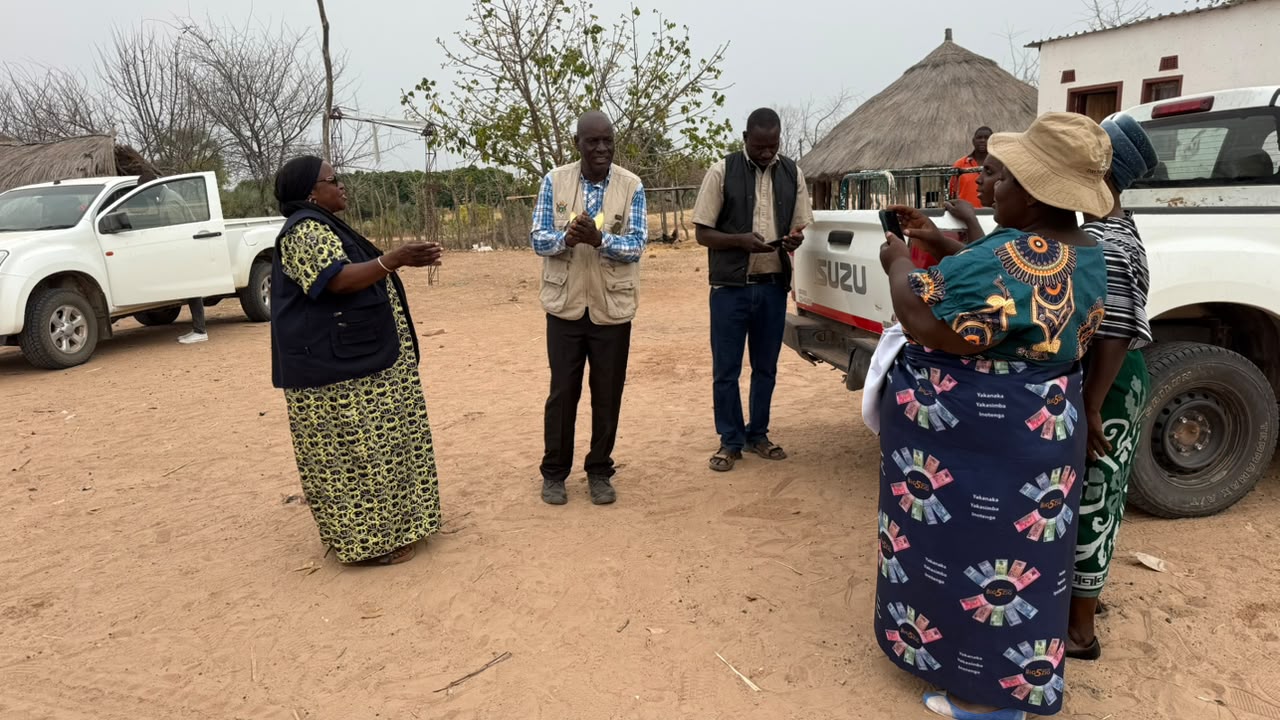
It is in the donation of nearly one million PPEs and dozens of critically-needed ventilators, in the field visits of leading Chinese medical experts to various parts of the country, in the 1,7 million doses of life-saving vaccines, in the ongoing flagship infrastructure projects such as the Hwange thermal power station, and in countless programmes that extend far and wide into the vulnerable segments of society.
We are encouraged that, despite the strong headwind of the pandemic, two of our leading joint projects, the expansion of the Robert Gabriel Mugabe International Airport and the new Parliament Building, are set to be completed next year and phase three of NetOne is getting off to a good start.
True, the virus caught all of us off guard.
It attacks the gaps in our immune system. It seeps into the vulnerable parts of our mind and awakes the slumbering prejudice, fear, ignorance, and selfishness. Manifestations of this have been many, not sparing the richest among us. Where does China’s conviction come from? It originates from China’s deeply held belief that human beings are inextricably linked in a community with a shared future.
The trends are clear. In today’s world, the speed with which technology, the economy and society is progressing is dazzling. Globalisation morphs but never stops. The fact that we are closely interconnected and interdependent has been laid bare by the numerous unconventional challenges we face, not least the ongoing pandemic.
For all of us to live better, the vulnerable among us must be first and foremost supported. Enhancing unity and cooperation with Africa has always been high on China’s diplomatic agenda. China and Africa fought shoulder to shoulder in the great liberation struggle.
Today, we continue to pursue development hand in hand and stand with each other on issues that are important to our core interests and are of major concern to us. Sadly, there are those who refuse to recognise the truth in solidarity with the developing world.
According to statistics, high-income countries, while accounting for only one-fifth of the global population, have purchased over half of all vaccine doses.
At the end of May, only 0,3 percent of vaccinations worldwide have been administered in low-income countries.
The rich ones are not only hoarding vaccines.
They keep playing the blame game to deflect attention from their chaotic organization to pandemic response at home and their lack of leadership and humanitarianism in the world.
They stick labels to China’s assistance to developing countries, particularly in Africa.
Coercing China into abandoning Africa will not work. Coercing Africa into rejecting its friends in China will not work either.
Development cannot wait. Our people cannot wait. A lot is on our work agenda. We will make this year’s FOCAC meeting even more fruitful.
We will deepen Belt and Road cooperation and forge strong complementarity between our development strategies. We will adopt new measures for health care, investment, trade, industrialization, agricultural security, climate change, peace and security, human resources and digital economy.
China will continue to provide assistance of vaccines and medical supplies to African countries in need, facilitate vaccine procurement by African countries from China, and advance cooperation on joint vaccine production.
China unequivocally supports African countries’ call to waive vaccine intellectual property rights.
China will speed up the construction of the African CDC headquarters.
We will make full use of opportunities created by China’s new development paradigm and the launch of the AfCFTA to conduct more high-standard collaboration projects.
China supports Africa’s integration efforts, its industrialization process, and its pursuit of self-driven and sustainable development.
China encourages Chinese companies to increase investment in Africa and do more trade with it, particularly importing quality African products. China will release a report on its private sector investment in Africa in the second half of this year, and explore more possibilities to boost China-Africa cooperation.
Our sustained development requires a favourable international environment. China and Africa need to uphold equity and justice and strengthen coordination in international affairs. We should jointly safeguard the basic norms governing international relations underpinned by the purposes and principles of the UN Charter and uphold the core role the United Nations plays in international affairs.
We should resolutely reject attempts to create new bloc-confrontation, oppose power politics of all forms and manifestations, and practice true multi-lateralism to safeguard the common interests of developing countries.
Through hard honest work and unity, there is no limit to what we can achieve.


 Online Reporter