Online Reporter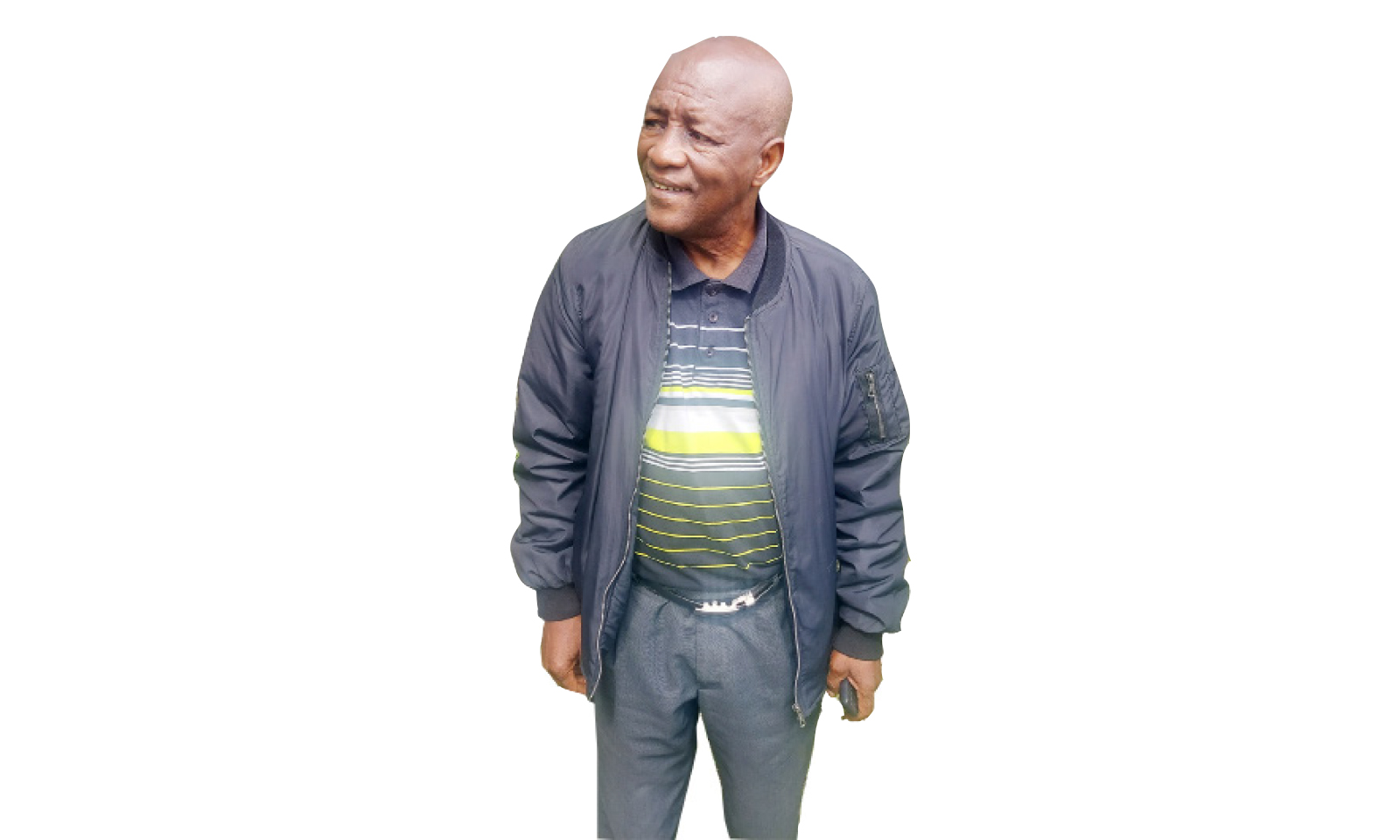
Chimirenga Chronicles
CDE RAYMOND DZINGAI TAKAVARASHA, whose nom de guerre was Cde Ray Che Ncube, joined the liberation struggle in what is probably a unique way.
At a very young age, he became an activist fighting white minority rule, transporting people across the border to join guerilla training camps.
He later became one of the few trained freedom fighters who had the opportunity to communicate with the masses through an established radio station in Lusaka, Zambia.
This week, he recounts his dramatic journey in the liberation struggle to our Features and Arts Editor PRINCE MUSHAWEVATO.
*********************
Q: Could you begin by introducing yourself?
A: My name is Raymond Dzingai Takavarasha.
I was born on August 20, 1952 at Morgenster Mission Hospital in Masvingo. I am the eldest of four children.
Sadly, one of my brothers, Alexander, is now deceased.
My other brother, Goldstein, and my sister, Shingairai, are still alive.
I completed Sub-A in 1958 at Morgenster Mission and then moved to Chibi Mission for Sub-B the following year.
In 1960, I transferred to Chikofa Primary School, where I studied for five years. After primary school, I enrolled at Fletcher High School from 1966 to 1967.
During my high school years, I studied fine art, which included watercolour and oil painting, portraits, landscapes, wildlife and so on.
I also participated in theatre, which I later pursued in Prague, Czechoslovakia — a story I will share in more detail later.
I was involved in various other arts-related activities as well.
After school, I returned home to manage a family business in Chivi.
Q: How were you introduced to African nationalism?
A: It is a rather long story, but I will try to keep it concise.
I will begin by giving you a brief overview of the formation of the African National Council (ANC) in Zimbabwe, an organisation I was once a part of.
This ANC significantly shaped my path and the paths of many others during the liberation struggle.
The ANC was formed in December 1971 by four individuals — two from the then-banned ZAPU and two from ZANU, which had also been banned by the colonial regime.
ZAPU was represented by Cephas Msipa and Josiah Chinamano, while Edson Sithole and Michael Mawema represented ZANU.
They came together and decided to form a united front to reject the Pearce Commission proposals, which were set by the British and intended to be implemented in the Rhodesia settlement.
Chinamano, being the most senior, was asked to lead the new organisation, the ANC.
However, he declined the proposal.
Chinamano and his wife had just been released from detention, and he realised that if he took charge of the organisation, it could also be banned.
That is when he suggested the need to find a religious figure to lead the organisation.
They all agreed to this proposal and approached Reverend Ndlela of the Methodist Church, but he also turned down the offer.
It was then that Chinamano suggested his relative, Abel Muzorewa.
Q: Could you clarify something before you continue? Was the ANC a political party?
A: The political environment at that time was extremely volatile.
There was a need to form an organisation that would continue pursuing the objectives of the struggle without being banned, as ZANU and ZAPU had been. Therefore, a church leader was seen as the ideal figurehead for a movement that was politically driven, yet not completely revealing its true nature.
So, the four ANC founders approached Muzorewa, who requested to first consult his synod in Melsetter (now Chimanimani) before accepting the offer.
The synod gave him their approval after about two weeks.
Msipa and the other comrades then wrote the inaugural speech, marking the formation of the ANC.
This is how Muzorewa entered politics, as the ANC leader.
Among the four founders, Chinamano was the treasurer, Msipa was responsible for administration, Sithole took charge of information and publicity, while Mawema became the organising secretary, what is now known as the commissariat.
There was also an ANC (African National Congress) in South Africa, which had been banned.
Therefore, the “C” in the local ANC stood for “Council” instead of “Congress” to avoid being classified as the same organisation and also banned.
After the formation of the ANC, local politics was revitalised.
Many nationalist leaders, like Joshua Nkomo, had been taken to Gonakudzingwa, around 1964, while others were at Sikombela.
We were told that several nationalists had been incarcerated.
So, from 1964 until around 1974, when they were detained, it was not easy to mention them in political discussions.
However, we all knew we had leaders who were detained.
Q: You can carry on.
A: When the nationalists began to be released, some had served about 10 years in detention.
Individuals like Chinamano, Msipa, Sithole and Mawema had been released a bit earlier and legally continued their activism against white minority rule.
When the British Commission, led by retired British judge Edward Pearce (Baron Pearce), eventually came to the country, they travelled extensively, ostensibly consulting with the people.
The ANC headquarters was in Harare, at Reliance House, on the 5th floor. That is where the United Methodist Church offices were located, so they took advantage of the machinery they had for printing, et cetera, to spread their message. Another office was in Highfield, but for administrative purposes, they used the one in the city centre.
In 1971, I became the Lomagundi provincial secretary of the ANC branch formed in Sinoia (now Chinhoyi) by former ZANU PF Central Committee member Cde Killian Bhebe.
My task was to organise people to reject the 1971 British government (Pearce Commission) proposals.
Bhebe had previously been at Gonakudzingwa and had been released before other nationalists were later freed in 1974.
He worked with the other individuals I mentioned above.
That is when I began my vibrant and documented activism, rejecting the Pearce proposals.
I was selected to be part of the organisation because I was already active, participating in the struggle in many different ways.
I used the Roman Catholic Church as cover, with the support of Father Chidavaenzi, to mobilise people to reject the colonial systems that were being imposed on us.
I became well-known for my activism in the area.
So, when Bhebe visited us, I was seconded to become secretary.
I worked closely with Cde Paraffin in the Chitomborwizi area.
There was also John Chirisa, who was famous in the area.
We diligently carried out our duties in the province, changing the face of the struggle. Even the colonial government officials felt the impact of our work, which resulted in malicious plots against us.
Next week, Cde Raymond Takavarasha will continue his narration, highlighting how he and other political activists successfully mobilised the public to vote “No” against the colonial proposals and how the Rhodesian security forces subsequently tried to arrest him.