Online Reporter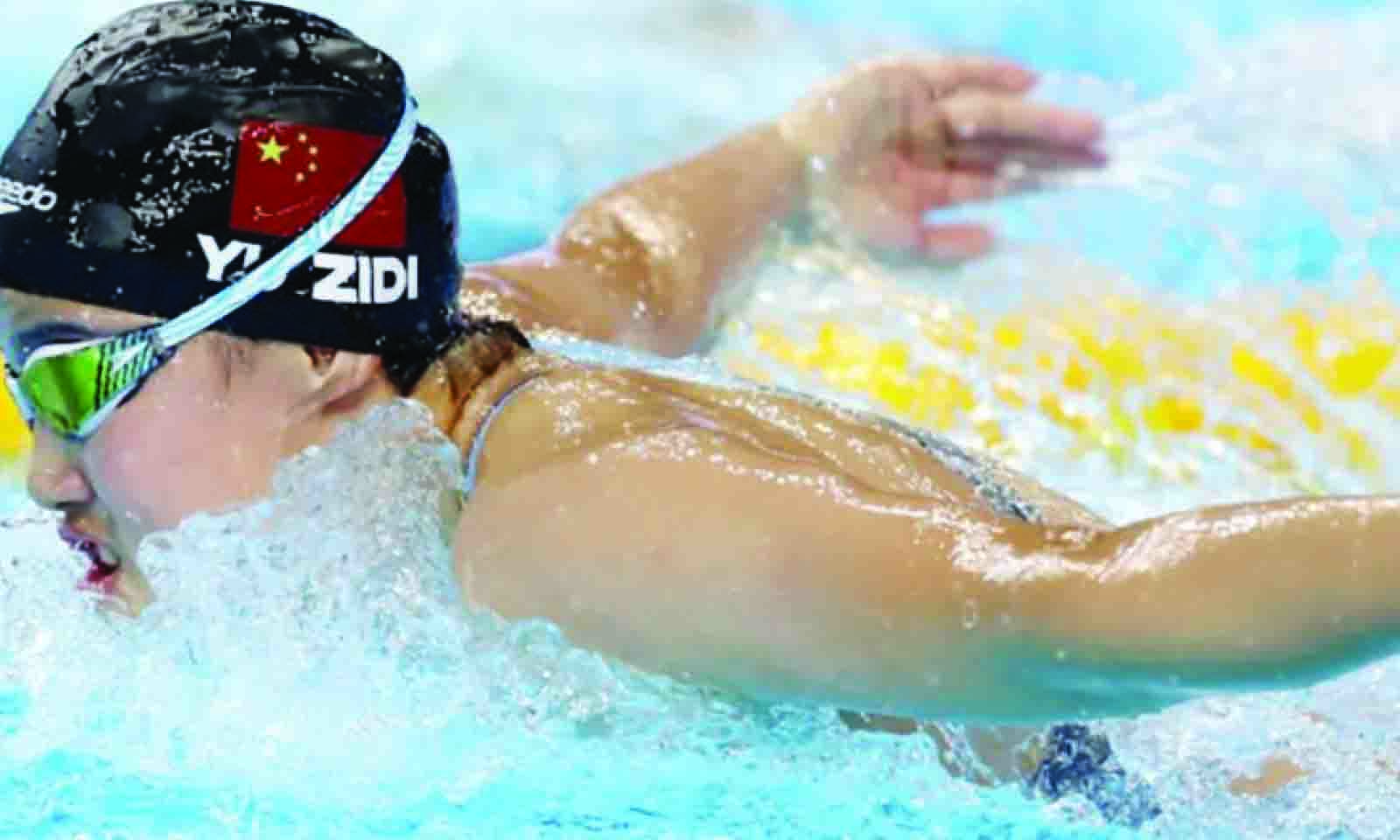
Beating a 12-year-old rival was once child’s play for an elite swimmer, but it has become an unlikely badge of honour when China’s Yu Zidi is in the race.
Only the very best in women’s swimming were able to beat Yu at the world championships, where the prodigy became the youngest medallist in the global meet’s 52-year history.
Yet even as the swimming world marvelled at Yu’s talent, her age raised questions about the ethics of someone so young competing at the highest level.In a sport where the mental and physical toll can prove overwhelming for adults, Yu’s success at the world championships was viewed dimly by some child protection advocates.
“Twelve years old is incredibly young in swimming,” author Linda Flanagan, a vocal opponent of children competing in elite sport, told Reuters.
“A 12-year-old does not train like an 18 or 20-year-old because their bodies aren’t equipped to handle the work involved. And also emotionally, it’s not in their best interest.
“It flies in the face of what psychologists say about what’s healthy for kids, which is not to put all your eggs in one basket, to spread your interests so you don’t become this narrow person.”
Adolescents are hardly rare in swimming, particularly in women’s competition, where athletes tend to reach peak performance earlier than men.
Far from being concerned about Yu’s wellbeing, Davies said the Chinese wunderkind, who won a relay bronze and came fourth in three individual events on her world championships debut, would have found it a thrill.
“It is a total misconception that that young girl would have been extremely nervous. It would have been the opposite,” Davies told Reuters in an interview.
“(When) I made that Olympic Games, I was just on cloud nine.
“There was nothing for me to lose and everything to gain. And it would have been the same for her: she had nothing to lose and everything to gain.”
There was little sign of Yu being overawed as she recorded personal bests in the 200m and 400m individual medley (IM), and 200 butterfly.
Yu’s may be the last world swimming medal won by a 12-year-old pending a World Aquatics review.
Although the global swimming body has a minimum age of 14 for the Olympics and world championships, its by-laws allow younger swimmers with qualifying times to compete.
Yu qualified at the national championships in May.
World Aquatics Executive Director Brent Nowicki said the governing body would have to take a look at the age rule.“I didn’t think I’d have this conversation, but now I think we have to go back and say, ‘Is this appropriate?’” Nowicki told reporters in Singapore.
“Do we need to do other things? Put other guardrails up? Do we allow it under certain conditions? I don’t know the answer.”
An International Olympic Committee consensus statement on elite youth athletes published last year noted adolescent athletes are more susceptible to “musculoskeletal injuries” while the intense physical and mental demands of sport can bring “psychosocial strain” and mental health challenges. -SuperSport.